Summary
- In the history of European art, few paintings contain the impact of Artemisia Gentileschi’s Judith Slaying Holofernes (1612–1613), housed in the Museo di Capodimonte in Naples.
- Baroque art frequently revisited the deuterocanonical story of Judith.
- “Early feminist art historians have frequently read the canvas as a powerful statement of visual retribution and catharsis, pointing out that Gentileschi painted Judith with her own facial features while bestowing Tassi’s likeness upon Holofernes.” Stylistically, the work demonstrates Artemisia’s absorption of Caravaggio’s tenebrism.
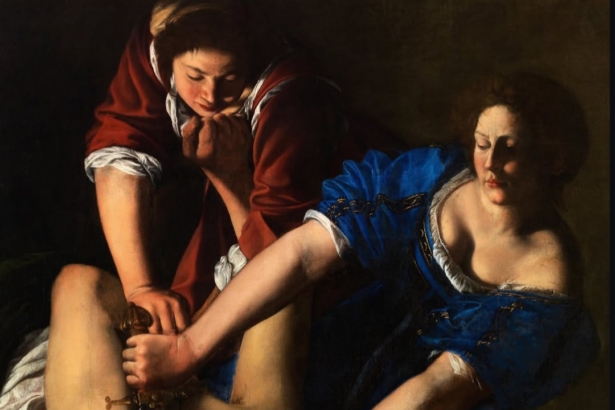
In the history of European art, few paintings contain the impact of Artemisia Gentileschi’s Judith Slaying Holofernes (1612–1613), housed in the Museo di Capodimonte in Naples. This masterpiece was painted when Gentileschi was only in her late teens. The canvas captures the climatic biblical moment of the Israelite heroine Judith, assisted by her maidservant Abra, beheads the invading Assyrian general Holofernes. Later, the decapitated head was delivered to her besieged city of Bethulia. Baroque art frequently revisited the deuterocanonical story of Judith. Gentileschi’s depiction shattered the established artistic conventions of her era. Her canvas showed a powerful portrayal of female agency, solidarity, and uncompromising physical force.
In earlier Renaissance and Baroque interpretations of the story, Judith was often rendered as hesitant, emotionally detached, or visibly repulsed by the act of violence. Maidservants were typically portrayed as passive observers or elderly bystanders waiting in the background. Gentileschi discarded this detached framing. And transformed the scene into a collaborative and grueling physical struggle. Abra is not merely a witness; she actively pins down Holofernes’ arms, applying her body weight to suppress his desperate struggles. Judith holds the general firmly by his hair. Her muscles taut and face composed in resolute determination as she drives the sword through his neck. The composition relies heavily on contrasting, thrusting arms that radiate outward from the central act of decapitation, pinning the viewer’s gaze directly onto the fatal fate. Traditional/Male Views: Judith hesitant, maid as onlooker. Gentileschi’s Vision: Physical force, sisterly ccollaboration.
Gentileschi created this initial version in Rome. It was shortly after enduring a highly public and harrowing trial against painter Agostino Tassi, who had raped her in 1611. During the proceedings, Artemisia was subjected to physical torture to verify her testimony.
“Early feminist art historians have frequently read the canvas as a powerful statement of visual retribution and catharsis, pointing out that Gentileschi painted Judith with her own facial features while bestowing Tassi’s likeness upon Holofernes.”
Stylistically, the work demonstrates Artemisia’s absorption of Caravaggio’s tenebrism. The dramatic contrast between theatrical light and suffocating shadows. However, unlike Caravaggio’s dark theatricality, Artemisia’s focus remains emotional and human. Gentileschi returned to this subject around 1620, producing a second famous version currently preserved at the Uffizi Gallery in Florence. The later Uffizi iteration features richer textiles, refined anatomical precision, and spurting arterial blood. However, the original Naples canvas retains a distinct emotional raw power. Naples Version (1612–13): Raw immediacy, dark emotional weight. Uffizi Version (1620): Refined detail, spurting blood.
Today, major international retrospective exhibitions such as showcases at Paris’s Musée Jacquemart-André and special loans across European institutions continue to highlight Artemisia Gentileschi’s triumphs. She became the first woman admitted to Florence’s prestigious Accademia delle Arti del Disegno. She proved that her mastery went far beyond novelty.
We welcome your contributions! Submit your blogs, opinion pieces, press releases, news story pitches, and news features to opinion@minutemirror.com.pk and minutemirrormail@gmail.com