Summary
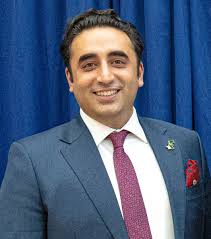
- ISLAMABAD: Pakistan Peoples Party (PPP) Chairman Bilawal Bhutto Zardari has called for renewed political dialogue to prevent the imposition of emergency measures, arguing that negotiations remain the best way to protect democracy and strengthen civilian supremacy.
- Bilawal reiterated his willingness to facilitate a political settlement, offering to personally ask Prime Minister Shehbaz Sharif to end emergency measures if PTI demonstrated a genuine commitment to combating terrorism and creating conditions for dialogue.
- Calling emergency provisions a “constitutional atom bomb,” Bilawal urged the government and opposition to exhaust political options before resorting to extraordinary measures.
ISLAMABAD: Pakistan Peoples Party (PPP) Chairman Bilawal Bhutto Zardari has called for renewed political dialogue to prevent the imposition of emergency measures, arguing that negotiations remain the best way to protect democracy and strengthen civilian supremacy.
Addressing the National Assembly, Bilawal questioned the lack of convincing constitutional, legal or political justification for opposing President Asif Ali Zardari’s decision, stressing that any such move must be supported by clear reasoning.
Bilawal revealed that he had received encouraging news late at night that negotiations with Pakistan Tehreek-e-Insaf (PTI) were progressing. According to him, an understanding appeared possible under which the federal government and the Khyber Pakhtunkhwa government would sign an agreement and designate certain areas as terrorist-affected. However, the negotiations ultimately collapsed.
Criticising Khyber Pakhtunkhwa Chief Minister Sohail Afridi’s reported refusal to combat terrorism on terms set by the federal government, Bilawal described the position as politically damaging. He argued that PTI had effectively undermined its own provincial government by failing to demonstrate the flexibility needed to address the security situation.
At the same time, the PPP chairman emphasised that restricting political space for one party would eventually affect every political organisation, political worker and Pakistani citizen. He maintained that protecting democratic freedoms was a collective responsibility rather than a matter concerning any single political party.
Bilawal reiterated his willingness to facilitate a political settlement, offering to personally ask Prime Minister Shehbaz Sharif to end emergency measures if PTI demonstrated a genuine commitment to combating terrorism and creating conditions for dialogue. He said negotiations could still prevent the need for extraordinary constitutional steps.
Describing emergency measures as a temporary arrangement, Bilawal said they could not be sustained indefinitely. He stressed that the federal government had made efforts to engage the opposition before considering such action.
Calling emergency provisions a “constitutional atom bomb,” Bilawal urged the government and opposition to exhaust political options before resorting to extraordinary measures. He maintained that emergency and Governor’s Rule were constitutional provisions but argued that dialogue should remain the preferred course.
Meanwhile, PTI leaders faced criticism over their response during parliamentary proceedings. Interior Minister Mohsin Naqvi claimed that several proposed amendments had been accepted and forwarded to Murad Saeed. PTI Chairman Barrister Gohar Ali Khan did not directly dispute the account, instead expressing concern that information intended to remain confidential had become public.
Former National Assembly speaker Asad Qaiser also came under scrutiny over his earlier statements concerning counterterrorism cooperation. In the Senate, PTI Senator Ali Zafar reportedly questioned the proposed measures and called for supporting evidence.
Naqvi further claimed that members of the Khyber Pakhtunkhwa cabinet believed Murad Saeed’s position had contributed to the breakdown of negotiations. MQM leaders Farooq Sattar and Khalid Maqbool Siddiqui also questioned where the final decisions within PTI were being made.
Bilawal framed his position within the democratic legacy of his mother, former prime minister Benazir Bhutto, and grandfather, former prime minister Zulfikar Ali Bhutto, whose government introduced the 1973 Constitution through parliamentary consensus. He also referred to Asif Ali Zardari’s constitutional reforms.
The PPP chairman’s central argument was that political engagement could still avert emergency measures. By offering to seek their withdrawal if an agreement became possible, Bilawal presented dialogue as an opportunity to protect democratic institutions and civilian authority.
Whether PTI accepts the offer remains uncertain, but Bilawal’s appeal has placed renewed focus on negotiations, counterterrorism cooperation and the future of parliamentary democracy.
We welcome your contributions! Submit your blogs, opinion pieces, press releases, news story pitches, and news features to opinion@minutemirror.com.pk and minutemirrormail@gmail.com