Summary
- ISLAMABAD: The federal budget for 2026-27 triggered an intense debate in the National Assembly on Sunday, with government representatives defending the fiscal plan as a people-friendly budget while opposition lawmakers questioned its effectiveness in addressing inflation, taxation, and economic challenges.
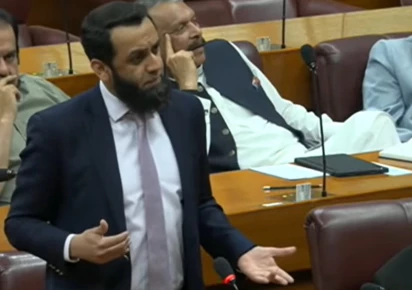
- Information Minister Attaullah Tarar described the budget as a significant step toward economic recovery, claiming that recent enforcement actions and reforms had helped recover nearly Rs800 billion in revenue.
- Reflecting on Pakistan’s recent economic challenges, Tarar said the country had faced severe financial uncertainty, rising inflation, and pressure on foreign exchange reserves.
ISLAMABAD: The federal budget for 2026-27 triggered an intense debate in the National Assembly on Sunday, with government representatives defending the fiscal plan as a people-friendly budget while opposition lawmakers questioned its effectiveness in addressing inflation, taxation, and economic challenges.
Information Minister Attaullah Tarar described the budget as a significant step toward economic recovery, claiming that recent enforcement actions and reforms had helped recover nearly Rs800 billion in revenue. He maintained that the government’s economic policies had laid the foundation for sustainable growth and stability after steering the country away from a financial crisis.
Tarar said the budget offers meaningful relief to salaried individuals, particularly low- and middle-income earners. He noted that individuals earning up to Rs50,000 per month would remain exempt from income tax, while those in higher income brackets would benefit from reduced tax burdens.
Highlighting reforms within the Federal Board of Revenue (FBR), the minister said measures had been introduced to improve transparency, strengthen tax collection, and curb corruption. He added that new systems, including digital customs processes and tax recovery mechanisms, had enhanced efficiency and increased government revenues.
The minister also pointed to support for housing, exports, and small businesses. According to him, incentives for the construction sector, tax reductions for exporters, and expanded access to housing finance would help stimulate economic activity and create employment opportunities.
Reflecting on Pakistan’s recent economic challenges, Tarar said the country had faced severe financial uncertainty, rising inflation, and pressure on foreign exchange reserves. He argued that improved economic indicators, including stronger foreign reserves, higher remittances, and growth in information technology exports, demonstrate that the economy is moving in the right direction.
However, members of the Pakistan Peoples Party (PPP) raised concerns over several aspects of the budget. PPP lawmaker Hussain Tariq questioned the government’s ambitious revenue targets, warning that the projected collection figures may be difficult to achieve. He argued that repeated shortfalls in tax targets often lead to disputes over revenue sharing and place additional pressure on taxpayers.
Tariq also highlighted the growing cost of living, noting that many essential goods have become more expensive despite a decline in overall inflation. He expressed concern over rising electricity costs, saying ordinary households are struggling to manage utility bills while meeting other basic needs.
Speaking on agriculture, he acknowledged some policy improvements but argued that farmers continue to face high production costs and insufficient support to modernise their operations. He stressed the importance of ensuring that development and investment are distributed fairly across all regions of the country.
Pakistan Tehreek-e-Insaf (PTI) leader Asad Qaiser used the debate to criticise the government’s political and economic policies, accusing it of failing to address public concerns. He also highlighted electricity shortages in his constituency and called for affordable power for consumers.
PPP MNA Sharmila Faruqui also questioned the government’s claim of providing substantial relief. She argued that salaried taxpayers continue to bear a disproportionate share of the tax burden while indirect taxes increase costs for ordinary consumers. Faruqui warned that growing poverty, unemployment, and demographic pressures require stronger policy interventions, particularly for young people.
She further criticised the country’s fiscal structure, saying rising debt servicing costs, pension obligations, and energy sector inefficiencies are consuming resources that could otherwise be directed toward development and public welfare.
Concluding the debate, lawmakers from both government and opposition benches agreed that economic growth remains a national priority. However, sharp differences persisted over whether the new budget can effectively balance fiscal discipline with meaningful relief for citizens facing rising living costs.
We welcome your contributions! Submit your blogs, opinion pieces, press releases, news story pitches, and news features to [email protected] and [email protected]