Summary
- According to reports, manufacturers in Egypt have turned increasingly to recycled plastics as imported raw materials have become more difficult to obtain, creating new opportunities for recycling businesses in Cairo’s Garbage City, officially known as Manshiyet Nasser.
- As imported materials have reportedly become less accessible, many Egyptian manufacturers have increasingly relied on recycled plastic produced domestically.
- While uncertainty has created challenges for manufacturers dependent on imports, it has simultaneously generated new opportunities for Egypt’s recycling sector, underscoring the growing importance of locally sourced recycled materials in supporting the country’s manufacturing industry.
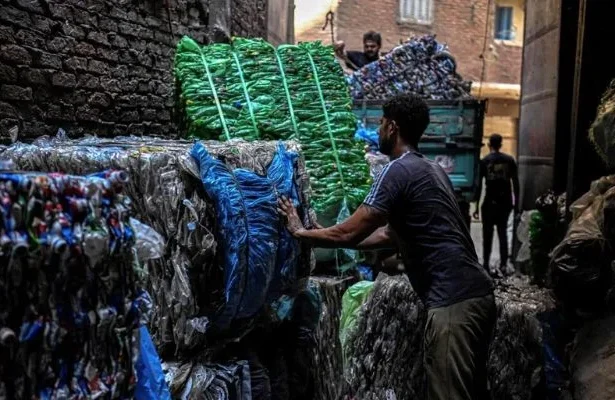
CAIRO: A neighborhood long known for its extensive recycling industry has reportedly experienced an unexpected increase in business following disruptions to regional plastic supply chains linked to tensions involving the United States, Israel, and Iran. According to reports, manufacturers in Egypt have turned increasingly to recycled plastics as imported raw materials have become more difficult to obtain, creating new opportunities for recycling businesses in Cairo’s Garbage City, officially known as Manshiyet Nasser.
Located beneath the Mokattam Hills and overlooking Cairo’s historic Citadel, Manshiyet Nasser is home to thousands of families, many of whom earn their livelihoods by collecting, sorting, and recycling waste. The district has long served as one of Egypt’s most important recycling hubs, processing large volumes of plastic and other recyclable materials that are later supplied to manufacturers across the country.
Among those benefiting from the increased demand is Peter Romany, a 25-year-old recycling specialist. Romany explained that business conditions have changed dramatically in recent weeks. Previously, recycling companies had to contact factories in an effort to sell their processed materials. However, he said manufacturers are now approaching recyclers directly, seeking immediate deliveries of recycled plastics to compensate for shortages in imported raw materials.
According to Romany, factories frequently ask how much recycled material is available and whether shipments can be delivered the same day. He described this shift as unprecedented during his years in the industry, noting that demand has increased considerably as manufacturers search for reliable local alternatives.
The reported increase in demand comes as concerns over shipping disruptions in the Strait of Hormuz have affected international trade in petrochemical products. The waterway is considered one of the world’s most important maritime routes for transporting oil, natural gas, and petrochemical feedstocks used in plastic production. Industry analysts note that a significant share of the Middle East’s seaborne polyethylene exports passes through the Strait, making any disruption to shipping particularly important for manufacturers dependent on imported raw materials.
Egypt imports approximately 40 percent of the raw materials used in its plastics industry, with major supplies coming from Gulf countries as well as Europe, China, and South Korea. As imported materials have reportedly become less accessible, many Egyptian manufacturers have increasingly relied on recycled plastic produced domestically.
Despite the recent improvement in business activity, living and working conditions in Manshiyet Nasser remain challenging. Many families continue to live alongside the waste they process, often separated from large piles of recyclable materials by only simple curtains or temporary partitions. Recycling work exposes residents to plastic fumes, dust, and other environmental hazards, while machinery used to cut, sort, and compress waste operates throughout the day, creating constant industrial noise within residential areas.
Business leaders have also reported growing demand for recycled materials. Fayrouz El-Sayed, Chief Executive of Sadat City Chemical Fibre Factory, said the company has worked in the industry for more than 16 years and has witnessed changing market conditions as manufacturers seek dependable sources of raw materials.
Similarly, Nesma El-Areef, Senior Marketing and Sales Manager at Uflex Egypt stated that demand for the company’s recycled plastic products has increased by around 40 percent. She explained that food and beverage manufacturers, in particular, have placed more orders because recycled materials have become more readily available than imported alternatives.
The developments highlight how regional geopolitical tensions and supply chain disruptions can significantly affect industrial markets. While uncertainty has created challenges for manufacturers dependent on imports, it has simultaneously generated new opportunities for Egypt’s recycling sector, underscoring the growing importance of locally sourced recycled materials in supporting the country’s manufacturing industry.
We welcome your contributions! Submit your blogs, opinion pieces, press releases, news story pitches, and news features to opinion@minutemirror.com.pk and minutemirrormail@gmail.com