Summary
- The initiative, led by Shanghai Xingshu Tiansuan Space Technology, is part of a long-term plan to establish a constellation of 1,000 satellites capable of processing data directly in space rather than relying solely on Earth-based computing systems.
- The newly launched satellite constellation forms part of China’s growing investment in space computing, an emerging field that aims to process data directly in orbit.
- By combining advances in aerospace engineering with artificial intelligence, the country aims to develop innovative computing solutions that could reshape the future of data processing, scientific research, and space exploration.
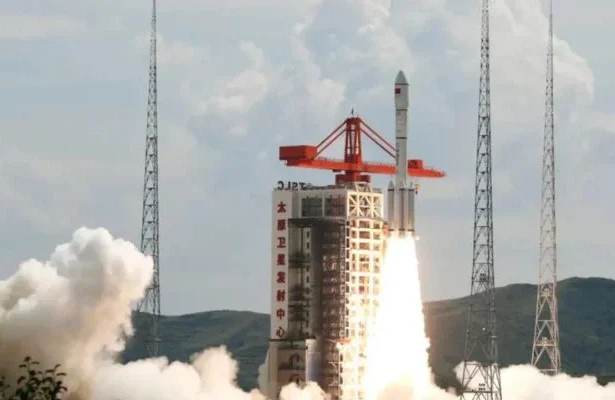
SHANGHAI: China has taken another significant step in the development of space-based artificial intelligence infrastructure with the launch of the first group of satellites in an ambitious orbital computing project. The initiative, led by Shanghai Xingshu Tiansuan Space Technology, is part of a long-term plan to establish a constellation of 1,000 satellites capable of processing data directly in space rather than relying solely on Earth-based computing systems.
The company announced the successful launch on Saturday, coinciding with the 2026 World Artificial Intelligence Conference (WAIC) in Shanghai, held from July 17 to 20. The timing of the announcement aligns with China’s broader efforts to showcase its technological progress during one of the country’s most prominent AI events.
Speaking at the conference, Chinese President Xi Jinping emphasized China’s ambition to play a leading role in shaping the future of artificial intelligence and its global governance. He called for greater international cooperation in AI development while highlighting China’s commitment to advancing innovation and establishing international standards for the rapidly evolving technology.
The newly launched satellite constellation forms part of China’s growing investment in space computing, an emerging field that aims to process data directly in orbit. Unlike conventional satellites, which transmit large volumes of raw information back to Earth for analysis, space-computing satellites are designed to analyze and process data while still in space. Only the final results or essential information are then transmitted to ground stations.
This approach offers several potential advantages. By reducing the amount of raw data that must be sent to Earth, space-based computing can significantly lower communication bandwidth requirements and reduce transmission delays. Such capabilities are particularly valuable for applications including Earth observation, environmental monitoring, disaster response, climate research, and distributed artificial intelligence systems that require rapid analysis of vast amounts of information.
China’s latest project is one of several national initiatives focused on establishing orbital computing networks. Other organizations pursuing similar technologies include Zhongke Tiansuan and Zhejiang Lab, which is leading the development of the Three-Body Computing Constellation. These projects share the common objective of creating large-scale satellite networks capable of supporting advanced computing tasks in space over the coming years.
The growing interest in orbital computing is not limited to China. The concept has also attracted attention from the private sector, particularly in the United States. SpaceX, the aerospace company founded by Elon Musk, has reportedly been exploring similar technologies as part of its long-term strategy to expand computing capabilities beyond Earth.
Interest in space-based computing gained additional momentum after SpaceX completed a full stock merger with xAI in February 2026. The combined valuation of the two companies was reported to be approximately $1.25 trillion, reflecting investor confidence in the future of artificial intelligence and space technology.
Musk has previously argued that placing AI computing infrastructure in orbit could help overcome some of the limitations faced by terrestrial data centers. Modern AI systems require enormous amounts of electricity and sophisticated cooling systems, placing increasing pressure on energy resources and physical infrastructure. According to this view, orbital computing platforms could eventually provide an alternative by reducing dependence on Earth-based facilities while supporting the continued expansion of AI technologies.
As global competition in artificial intelligence intensifies, China’s latest satellite launch demonstrates its determination to strengthen its position in next-generation technologies. By combining advances in aerospace engineering with artificial intelligence, the country aims to develop innovative computing solutions that could reshape the future of data processing, scientific research, and space exploration.
We welcome your contributions! Submit your blogs, opinion pieces, press releases, news story pitches, and news features to opinion@minutemirror.com.pk and minutemirrormail@gmail.com