Summary
- Qatari Foreign Ministry spokesman Majed al-Ansari said on Tuesday that negotiations between Iran and the United States were still ongoing, with both sides remaining engaged.
- Speaking at the Global Security Forum in Doha, Ansari said regional partners were also involved in discussions.
- Ansari also said an earlier attempt to use a ceasefire as a path towards negotiations had failed, with fighting resuming afterward.
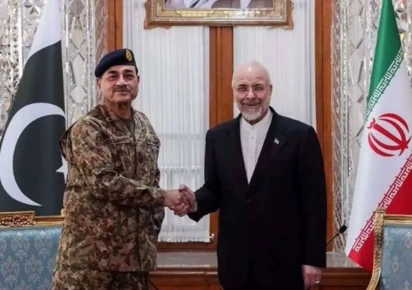
Chief of Defence Forces and Chief of Army Staff Field Marshal Syed Asim Munir arrived in Tehran on Tuesday with a delegation to meet senior Iranian officials, Iranian media reported. His visit comes as Pakistan continues efforts to bring Washington and Tehran back to negotiations amid rising regional tensions.
Iranian news agencies Mehr and Tasnim reported that Munir was expected to discuss Pakistan’s diplomatic initiatives to resolve the conflict between Iran and the United States. The talks are also expected to cover wider regional developments and efforts to prevent further escalation.
Pakistan has played a key mediating role between the two countries, maintaining contacts with both sides. Washington and Tehran signed the Islamabad Memorandum of Understanding in June to establish a framework for negotiations toward a final agreement. However, the process later stalled over disagreements regarding security guarantees and freedom of navigation through the Strait of Hormuz, a crucial route for global energy supplies and trade.
Meanwhile, Qatar has warned that continued escalation could push the region towards a wider conflict. Qatari Foreign Ministry spokesman Majed al-Ansari said on Tuesday that negotiations between Iran and the United States were still ongoing, with both sides remaining engaged.
Speaking at the Global Security Forum in Doha, Ansari said regional partners were also involved in discussions. He expressed hope that diplomatic efforts would eventually lead to an agreement but cautioned that conditions were becoming increasingly difficult.
He warned that unchecked escalation could trigger a regional war extending beyond the current areas of conflict. Ansari also said an earlier attempt to use a ceasefire as a path towards negotiations had failed, with fighting resuming afterward.
Describing a ceasefire as a starting point rather than a final solution, he stressed the need to address interconnected conflicts simultaneously. He also expressed concern over political statements from Israel, warning against using regional instability for domestic political purposes.
On Gaza, Ansari said prospects for a political settlement remained weak without a viable peace process. He questioned whether Israel’s political leadership was offering a credible path towards peace with the Palestinians and warned that continued violence would only deepen the conflict.
Separately, Iran warned that any US military strike would prompt retaliation. Foreign Ministry spokesman Esmaeil Baghaei rejected claims that Washington could attack Iran without facing a response, describing such expectations as unrealistic.
Speaking at his weekly press conference, Baghaei said Tehran would not leave a military attack unanswered. He warned that Iran’s response would be equal in force or stronger, rejecting the idea that the United States could launch strikes and withdraw without consequences.
We welcome your contributions! Submit your blogs, opinion pieces, press releases, news story pitches, and news features to opinion@minutemirror.com.pk and minutemirrormail@gmail.com