Summary
- Toichiro Asada, a newly appointed and resolutely dovish member of the central bank’s policy board, has publicly broken ranks to demand a fundamental shift in how the bank evaluates the country’s economic health.
- While the majority of the policy board looks to aggressively normalize monetary policy after decades of near-zero and negative rates, dissenters like Asada fear that tightening borrowing costs too quickly could sabotage a fragile, emerging domestic recovery.
- Appointed in late 2025 on a platform strongly reminiscent of the reflationist Abenomics doctrine, Takaichi has intentionally seeded the central bank with dovish policymakers designed to prioritize domestic income growth over rapid rate stabilization.
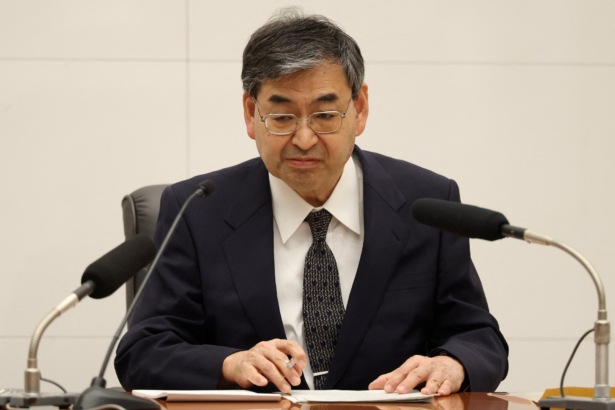
The Bank of Japan (BOJ) is navigating a complex internal debate following its historic decision to raise interest rates to a 31-year high. Toichiro Asada, a newly appointed and resolutely dovish member of the central bank’s policy board, has publicly broken ranks to demand a fundamental shift in how the bank evaluates the country’s economic health. Asada has made it clear that he will refuse to back any future interest rate increases until there is undeniable evidence of demand-driven inflation meaning price hikes fueled by strong consumer spending and robust wage growth, rather than geopolitical shocks.
The dispute highlights a growing philosophical divide within Japan’s economic leadership. While the majority of the policy board looks to aggressively normalize monetary policy after decades of near-zero and negative rates, dissenters like Asada fear that tightening borrowing costs too quickly could sabotage a fragile, emerging domestic recovery. The friction boiled over during the central bank’s June policy meeting, where board members voted 7-1 to lift the benchmark overnight call rate by 25 basis points to roughly 1.0%. The move represented a massive psychological milestone for the Japanese economy, pushing borrowing costs to their highest levels since 1995.
The hawkish majority, supported by Deputy Governor Shinichi Uchida, justified the decision by pointing to looming inflation risks. A severe energy price shock induced by military conflicts in the Middle East had spiked global crude oil costs, which quickly trickled down into Japanese business-to-business transactions. The bank’s leadership feared that these compounding costs would cause broader consumer prices to spiral, overshooting their long-held 2% stability target. Asada, however, cast the lone dissenting vote. He argued that the majority was misinterpreting the data. In his view, the external pressures of the geopolitical energy crunch threatened production and corporate employment far more than they threatened to permanently overheat the domestic market.
At the heart of Asada’s rebellion is a crucial distinction between two types of inflation. The current upward pressure on Japanese consumer goods is widely considered cost-push inflation. This occurs when external forces such as oil supply disruptions or a weak Japanese yen make importing raw materials more expensive, forcing companies to raise retail prices simply to survive. Asada argues that this form of inflation acts as an unofficial tax on citizens, draining household purchasing power rather than indicating an economic boom. He maintains that true, healthy economic stabilization can only occur through demand-driven inflation. This ideal economic cycle triggers when robust corporate profits lead to substantial, widespread wage increases for workers. Empowered by higher incomes, consumers naturally increase their spending, pulling prices upward through active market demand.
Asada maintains that Japan’s current domestic consumption remains too weak to handle higher interest rates. He warns that raising borrowing costs prematurely risks squashing what little momentum the local consumer market has left. Asada’s persistent skepticism is more than just a passing administrative hurdle for the BOJ; it reflects the broader political philosophy of Japanese Prime Minister Sanae Takaichi. Appointed in late 2025 on a platform strongly reminiscent of the reflationist Abenomics doctrine, Takaichi has intentionally seeded the central bank with dovish policymakers designed to prioritize domestic income growth over rapid rate stabilization. The internal balance of power is poised for further friction. Following Asada’s June dissent, another notably dovish member, Ayano Sato, has joined the policy board. While global market analysts still expect the central bank to deliver another potential rate hike late in the fourth quarter of 2026, the arrival of a reinforced dovish minority significantly elevates the hurdle for aggressive monetary tightening. For international investors and everyday Japanese citizens alike, Asada’s stance ensures that the central bank’s transition out of its ultra-loose era will be heavily contested every step of the way.
We welcome your contributions! Submit your blogs, opinion pieces, press releases, news story pitches, and news features to opinion@minutemirror.com.pk and minutemirrormail@gmail.com