Summary
- Constitutional Amendments versus Constitutional Governance: Pakistan’s constitutional history demonstrates that amendments have frequently been employed as instruments of political expediency rather than mechanisms of democratic consolidation.
- Political analysts have interpreted this episode in different ways, but it has undeniably raised broader questions concerning constitutional accountability, institutional autonomy, civilian authority, and the practical operation of Pakistan’s governance framework.
- Consequently, successive constitutional amendments—whether the Twenty-Seventh, Twenty-Eighth, or any that may follow—will achieve little if they merely rearrange institutional powers without addressing the causes of political instability, weak governance, and democratic fragility.
By Muhammad Imran, Staff Member, SAHSOL-LUMS and Asma Rahmat, Final Year Law Student, SLC, Superior University and Muhammad Ameer Hamza, Final Year Law Student, SLC, Superior University
Introduction: Pakistan appears to be entering yet another phase of constitutional uncertainty, engineering, or manipulation, where political developments, institutional pronouncements, and proposals for structural reforms are converging to reshape the national discourse. Recent statements by senior state functionaries have reignited debate over governance, federalism, constitutional amendments, and the future distribution of political power. Whether these developments represent genuine constitutional reform or another episode of constitutional engineering remains an open question.
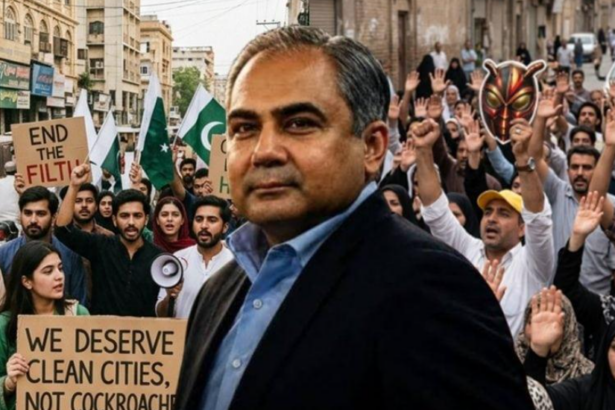
The debate was triggered during an Economic Summit when the Federal Interior Minister, Syed Mohsin Naqvi, observed that the existing “hybrid” governance arrangement had exhausted its utility. While acknowledging the efforts of the Prime Minister, he maintained that the present political system could no longer deliver effective governance and therefore required a comprehensive “reset.” He further warned that, unless structural reforms were undertaken, Pakistan risked witnessing the resurgence of what he described as the CJP as “Cockroach Janta Party”; do not take it as Chief Justice of Pakistan (CJP), a political phenomenon which, in his opinion, would be unsustainable.
Within twenty-four hours, Lieutenant General Ahmed Sharif Chaudhry, Director General of ISPR, echoed concerns regarding governance during his media briefing. He emphasized that Parliament bears the constitutional responsibility to devise solutions to persistent governance failures. He further argued that Pakistan’s rapidly expanding population necessitates a serious national debate on the creation of additional provinces to improve administrative efficiency, public service delivery, and democratic accessibility. More significantly, he linked good governance with national security, observing that sustainable counter-terrorism efforts require not only military preparedness but also effective civilian governance and institutional stability.
These successive statements have inevitably fuelled speculation regarding another phase of constitutional restructuring. Following the enactment of the person-specific (Justice Syed Mansoor Ali Shah) Twenty-Seventh Constitutional Amendment, which substantially altered Pakistan’s judicial architecture by establishing the Federal Constitutional Court (FCC) and redistributing the constitutional jurisdiction of the Supreme Court, political circles have begun discussing the possibility of a Twenty-Eighth Constitutional Amendment. Although no formal proposal has yet emerged, reports suggest that the Pakistan People’s Party (PPP) remains cautious about any constitutional initiative that may dilute the federal autonomy secured through the Eighteenth Constitutional Amendment, particularly the post-NFC fiscal arrangement.
Federalism and the NFC Question: Any discussion concerning new provinces inevitably intersects with Pakistan’s fiscal federalism. The Seventh National Finance Commission (NFC) Award and the Eighteenth Amendment fundamentally altered the Federation’s financial architecture by allocating a substantially larger share of federal revenues to the provinces. While these reforms strengthened provincial autonomy, they simultaneously reduced the fiscal capacity of the Federation.
Successive federal governments have therefore expressed concern regarding the shrinking financial resources available to discharge expanding national responsibilities. Similar proposals for revisiting the NFC framework surfaced during the Pakistan Tehreek-e-Insaf (PTI) government; however, they never materialized because constitutional amendments require a two-thirds parliamentary majority—a threshold that remained politically unattainable.
The Politics of New Provinces: The proposal to create additional provinces is hardly novel. For decades, constitutional scholars have argued that Pakistan’s demographic expansion justifies administrative decentralization. Provinces with populations exceeding those of many sovereign states inevitably face governance challenges, administrative inefficiencies, and unequal public service delivery. Yet constitutional necessity has consistently collided with political reality.
Pakistan’s two dominant political parties—the Pakistan Muslim League (Nawaz) (PML-N) and the Pakistan People’s Party (PPP)—have repeatedly expressed conditional support for provincial reorganization while demonstrating limited political willingness to implement it. Their reluctance is attributable not merely to the enormous financial burden of establishing new legislatures, governors’ houses, provincial secretariats, judicial institutions, police organizations, and civil services. More fundamentally, new provinces would inevitably redistribute political influence, electoral constituencies, financial resources, and administrative authority.
The current debate vividly illustrates this contradiction. The PPP has argued that provincial reorganization should begin with Punjab, Pakistan’s largest province by population. The PML-N, whose electoral dominance is centred in Punjab, has shown little enthusiasm for initiating such reforms within its own political base. Consequently, critics contend that the resistance to provincial restructuring reflects electoral calculations as much as constitutional considerations.
Constitutional Amendments versus Constitutional Governance: Pakistan’s constitutional history demonstrates that amendments have frequently been employed as instruments of political expediency rather than mechanisms of democratic consolidation. Whether enacted by military governments or elected administrations, constitutional amendments have often reflected prevailing political necessities instead of broad constitutional consensus.
The central question, therefore, is not whether another constitutional amendment should be enacted, but whether constitutional amendments alone are capable of resolving Pakistan’s chronic governance crisis.
Experience suggests otherwise: No constitutional amendment—regardless of its political significance—can compensate for weak institutions, ineffective governance, deficient accountability, or inconsistent adherence to constitutional norms. Constitutional text may reorganize institutions, but it cannot, by itself, transform political culture.
The Crisis of Democratic Representation: Pakistan’s more profound constitutional challenge lies elsewhere. A constitutional democracy derives its legitimacy from authentic political representation. Citizens must possess the genuine ability to elect representatives through elections that are free, fair, transparent, and universally trusted. Only under such conditions can Parliament legitimately exercise constituent authority on behalf of the people.
Critics of Pakistan’s constitutional evolution have long argued that recurrent political interruptions, institutional interventions, and governance deficits have prevented representative democracy from maturing into a fully autonomous constitutional order. Consequently, civilian supremacy—despite being an essential constitutional aspiration—has often remained institutionally fragile, docile and compliant.
Without addressing the quality and credibility of democratic representation, constitutional amendments risk becoming procedural exercises rather than substantive democratic reforms.
Institutional Power and Constitutional Accountability: Recent political developments have also revived debate regarding the practical distribution of constitutional authority among state institutions.
The Federal Interior Minister’s public assertion that the existing political system had “collapsed,” while continuing to serve in one of the most influential positions within the federal cabinet, generated significant constitutional commentary. Political analysts have interpreted this episode in different ways, but it has undeniably raised broader questions concerning constitutional accountability, institutional autonomy, civilian authority, and the practical operation of Pakistan’s governance framework.
Such debates underscore a larger constitutional reality: stable governance depends not merely upon the formal allocation of powers under the Constitution but also upon consistent respect for constitutional boundaries, democratic conventions, and institutional restraint.
Conclusion
Pakistan undoubtedly requires substantial governance reforms, including administrative decentralization, stronger provincial institutions, enhanced institutional capacity, and, where genuinely necessary, carefully considered constitutional amendments. However, constitutional engineering must not be mistaken for constitutional development. Reorganizing or redistributing institutional powers cannot, by itself, address the structural weaknesses undermining Pakistan’s democratic and constitutional order. The real solution lies in strengthening constitutionalism itself through democratic legitimacy, credible elections, judicial independence, parliamentary supremacy within constitutional limits, fiscal responsibility, institutional accountability, and unwavering adherence to the rule of law. Constitutional democracy cannot flourish through textual amendments alone; it requires institutions to respect both the letter and spirit of the Constitution.
Electoral integrity is central to this process because the electioneering is the first gate of democracy. Unless political parties and relevant state institutions ensure that elections are conducted transparently and impartially, without interference through the Results Transmission System (RTS), Returning Officers (ROs), or irregularities involving Forms 45 and 47, the establishment of genuinely representative government will remain compromised. Elections are not merely administrative exercises; they are the constitutional means through which citizens confer legitimacy upon those who govern them. Their votes must be counted for whom they voted – it will be a peaceful revolution. We need a peaceful revolution; here, peaceful means in accordance with Law and the Constitution.
This is particularly important for Pakistan’s poor, marginalized, and politically vulnerable citizens, who participate in elections with the hope that their votes can influence government, protect their rights, and improve their lives. Any deliberate compromise of electoral integrity therefore goes beyond procedural irregularity: it undermines public confidence, weakens institutional legitimacy, and betrays citizens’ constitutional faith in democracy. When the sanctity of the vote is compromised, democracy risks becoming an exercise in institutional formalism rather than genuine popular sovereignty. Consequently, successive constitutional amendments—whether the Twenty-Seventh, Twenty-Eighth, or any that may follow—will achieve little if they merely rearrange institutional powers without addressing the causes of political instability, weak governance, and democratic fragility. The durability of a constitutional order depends not on how frequently its text is amended, but on how faithfully its principles are observed.
Ultimately, Pakistan needs not merely more constitutional amendments, but a deeper constitutional commitment. Constitutional development will become meaningful only when institutions respect constitutional limits, elections genuinely reflect the will of the people, courts remain independent, Parliament performs its constitutional functions, governments remain accountable, and citizens—especially the most vulnerable—can trust that their vote, voice, and fundamental rights are protected. Only then can constitutional democracy become a durable instrument of democratic governance, social justice, and political transformation.
We welcome your contributions! Submit your blogs, opinion pieces, press releases, news story pitches, and news features to opinion@minutemirror.com.pk and minutemirrormail@gmail.com