Summary
- The Crimean Bridge strike also sent queues stretching several kilometres on both sides.
- Why the Crimean Bridge strike matters Stretching 19 kilometres, the bridge links Russia’s Krasnodar region with Crimea, which Russia seized from Ukraine in 2014.
- For now, the Crimean Bridge strike leaves traffic and ferry links in doubt.
A Crimean Bridge strike on Monday limited traffic across the Kerch Strait, according to the peninsula’s Russian-backed governor, Sergei Aksyonov.
Aksyonov did not describe the damage. In a Telegram post, he said traffic on the bridge would stay limited until around midday. He also said emergency teams had set up a headquarters in Kerch.
What officials said about the Crimean Bridge strike
Aksyonov wrote that the enemy had struck the Crimean Bridge. He added that he was supervising the situation himself. He also shared how residents could get updates on ferry links between Crimea and the Russian port of Kavkaz.
The Ukrainian side stayed quiet. Kyiv has not responded, and a Ukrainian news site could not check the damage on its own. The picture came mostly from Telegram channels, so details remain unconfirmed.
A pro-Ukrainian monitoring channel reported a hit on an arch of the shipping span at 5:38am local time. A Russian channel said about 2,000 cars were stuck on the bridge after drones attacked it. Another claim said the structure tilted, but nobody has confirmed it. The Crimean Bridge strike also sent queues stretching several kilometres on both sides.
A much larger drone raid
The hit looked like one piece of a vast Ukrainian drone barrage that reached 15 Russian regions, Moscow among them. Russia’s defence ministry claimed its units downed 2,049 drones within a day. Sergei Sobyanin, the mayor of Moscow, said roughly 600 drones headed for the capital region overnight. Air defences stopped most of them.
On those figures, it would rank as the largest drone raid of the whole war. However, the numbers come from Russian officials, and Ukraine has not issued its own account.
Why the Crimean Bridge strike matters
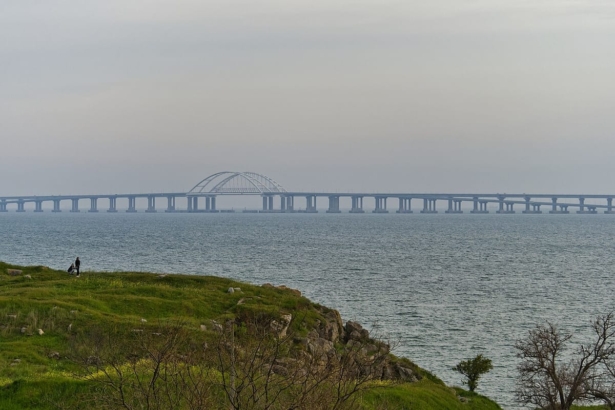
Stretching 19 kilometres, the bridge links Russia’s Krasnodar region with Crimea, which Russia seized from Ukraine in 2014. It is Europe’s longest bridge, and many see it as one of President Vladimir Putin’s signature projects. Cars began crossing in 2018, and trains joined them a year later.
Ukraine has targeted it several times since the full-scale war began in 2022. A truck bomb that October killed four people and cut capacity for months. In July 2023, Ukrainian sea drones hit it again.
In June, Ukrainian forces also hit targets on both sides of the bridge, including oil transport facilities and an oil depot in Kerch. Two days after that, they said they had wrecked a rail bridge over the North Crimean Canal, which carries Russian military cargo. So the latest attack fits a pattern of pressure on transport links.
Russia, for its part, has stepped up strikes on bridges in Ukraine, including in Kyiv, over recent months.
Talks and the wider war
It came days after peace talks led by the US, their first round in nine months, ended without a breakthrough.
On Friday, European Union leaders argued that the continent’s security set-up is off the table in those negotiations. They left open who would represent Europe in later rounds.
The Kremlin said it would welcome European countries at the table if they showed readiness to help. German Chancellor Friedrich Merz called that “the same old game.” He said there would be no discussions about Ukraine without Ukraine, and none about Europe without Europe.
In Moscow on Thursday, US negotiator Jared Kushner said he had started discussing Europe’s security architecture with European partners.
For now, the Crimean Bridge strike leaves traffic and ferry links in doubt. Also, the full extent of the damage should become clearer once officials report on inspections.
We welcome your contributions! Submit your blogs, opinion pieces, press releases, news story pitches, and news features to opinion@minutemirror.com.pk and minutemirrormail@gmail.com