Summary
- The Vulcan rocket failure on Sunday destroyed 40 Amazon Leo satellites and handed United Launch Alliance the first mission loss in its history.
- Now Amazon must wait for the Vulcan rocket failure investigation before it tries again with this rocket.
- For now, the Vulcan rocket failure leaves ULA and Amazon waiting on answers.
The Vulcan rocket failure on Sunday destroyed 40 Amazon Leo satellites and handed United Launch Alliance the first mission loss in its history.
Boeing and Lockheed Martin jointly own United Launch Alliance, which flew the rocket from Florida. About 10 minutes into the flight, it failed to deliver its cargo to orbit. The company said it had no data yet on the cause.
What went wrong in the Vulcan rocket failure
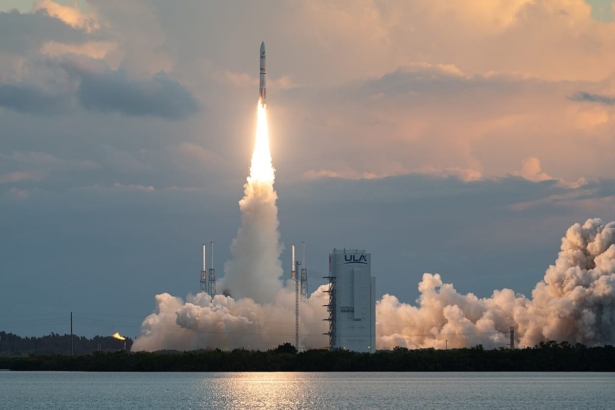
ULA said its launch director saw an anomaly shortly after the Vulcan left Space Launch Complex 41 at Cape Canaveral. The statement confirmed that the vehicle did not deliver the Amazon mission. Reports said the solid-fuel strap-ons worked normally and the two BE-4 engines kept climbing, though they seemed to burn longer than planned.
Something then went wrong during the burn of the hydrogen-fuelled Centaur upper stage. ULA gave no further detail. Instead, it promised to work with its customer to find the cause and return to flight quickly.
The path to Sunday’s launch was bumpy. A Friday attempt stopped after a gaseous nitrogen plant failed. Network problems between the rocket and ground systems forced a delay on Saturday. On Sunday, controllers held the countdown at 20 seconds, then fixed the issue and launched at the end of the window.
Why the Vulcan rocket failure hurts ULA
Vulcan had flown just four times before, and Sunday ended a nine-month gap. ULA and its supplier Northrop Grumman had spent that time fixing nozzle problems that marred two earlier flights. Both of those missions reached orbit.
Still, the Pentagon had yet to approve Vulcan for new national security missions. Sunday’s performance was meant to answer that question. Instead, the Vulcan rocket failure will bring a lengthy technical review that could ground the rocket for months.
ULA formed in 2006, when Boeing’s Delta programme merged with Lockheed Martin’s Atlas programme. Since then, the company had kept a perfect mission record. Before the merger, the Delta and Atlas lines had failed only a handful of times across decades.
Amazon waits for another ride to orbit
Amazon bought 38 Vulcan launches, and this was the first. ULA had already flown eight Leo missions on Atlas 5 rockets. The retailer also booked 24 launches on Blue Origin’s New Glenn, 24 on the European Ariane 6 and 13 on a Falcon 9.
Fourteen launches since 2025 have put 398 Leo satellites in orbit. Amazon needs 3,236 for worldwide service, so the fleet stands at roughly 12% of the goal. Sunday’s flight would have lifted the total to 436, and the company had hoped to start initial service this year. Now Amazon must wait for the Vulcan rocket failure investigation before it tries again with this rocket.
New Glenn has its own troubles. It exploded on the pad in May, days before it was due to carry Amazon satellites. Investigators traced that blast to an oxygen valve in one of its seven BE-4 engines, and Blue Origin retrofitted the engines it supplies to ULA.
It is unclear whether the BE-4 played any role on Sunday. The failure seemed to come after the second stage separated from the first stage, which those engines power.
The loss widens a gap behind SpaceX. Starlink counts over 11,000 satellites, and SpaceX flies them on rockets it owns. Other firms pay billions of dollars for outside rides, many on vehicles that have faced groundings and failures. Meanwhile, SpaceX has stopped taking bookings for the Falcon 9, ahead of that rocket’s retirement.
NASA Administrator Jared Isaacman offered help with the investigation. He said the agency stands ready to assist ULA with the review and the repairs.
For now, the Vulcan rocket failure leaves ULA and Amazon waiting on answers. Also, the US launch market faces a tighter squeeze while engineers study the data.
We welcome your contributions! Submit your blogs, opinion pieces, press releases, news story pitches, and news features to opinion@minutemirror.com.pk and minutemirrormail@gmail.com