Summary
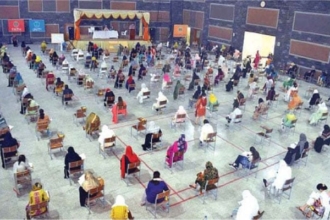
- LAHORE: The Centre for Social Justice (CSJ) screened a documentary in Lahore highlighting Pakistan’s historical transition from the separate electorate system to the joint electorate and the decades-long campaign for equal political participation of religious minorities.
- The film places the movement for a joint electorate within Pakistan’s broader constitutional and political history and examines continuing questions surrounding equal citizenship, electoral participation and representation.
- Following the screening, a discussion was held on the political participation of religious minorities under the joint electorate system.
LAHORE: The Centre for Social Justice (CSJ) screened a documentary in Lahore highlighting Pakistan’s historical transition from the separate electorate system to the joint electorate and the decades-long campaign for equal political participation of religious minorities.

Titled A Separation Refused, the 20-minute documentary examines the introduction of the separate electorate system in 1979 and the subsequent movement seeking its restoration, particularly during the 1990s and leading up to 2001. Pakistan eventually restored the joint electorate system in 2002 after 22 years of separate electorates.
According to the CSJ, the restoration represented an important development in the debate over equal citizenship and political representation for religious minorities.
The documentary was co-produced by the CSJ and co-directed by award-winning filmmaker Dawood Akhtar Murad and Peter Jacob. It draws on historical records and more than a dozen interviews with political figures, civil society representatives, religious community leaders and human rights activists who were associated with the campaign.

Among those featured in the documentary are human rights advocate Hina Jilani, Cardinal Joseph Coutts, Dr Charles Amjad Ali and historian Dr Yaqoob Bangash.
The film places the movement for a joint electorate within Pakistan’s broader constitutional and political history and examines continuing questions surrounding equal citizenship, electoral participation and representation.
Following the screening, a discussion was held on the political participation of religious minorities under the joint electorate system. Farah Zia, Director of the Human Rights Commission of Pakistan, Human Rights Defender Tanveer Jahan and former Provincial Minister for Human Rights and Minorities Affairs Ijaz Augustine participated in the discussion.
Representatives from journalism, academia, civil society and the human rights sector also attended the event.
The original soundtrack of the documentary, titled Hum Juda Nahin (We Are Not Separate), was also premiered. The song focuses on themes of unity, dignity and an inclusive vision for Pakistan.
Speaking at the event, Ijaz Augustine said that although the joint electorate system had shortcomings, its advantages outweighed those of the separate electorate. He said the system had created greater opportunities for minority citizens to participate in mainstream politics and engage with political parties and the broader electorate.
Farah Zia said the debate over joint and separate electorates could not be considered separately from the broader question of equal citizenship in Pakistan. She noted that while the Constitution contains provisions against discrimination, it also includes articles that, in her view, have discriminatory implications.
Zia further observed that non-Muslim citizens continue to have limited representation through general seats, while reserved seats present separate challenges. She called attention to the political exclusion faced by communities that remain inadequately represented.
Tanveer Jahan described equal citizenship as a shared objective for both majority and minority communities. She said integrating minorities into the electoral process was an important step towards achieving equal political participation.
CSJ Executive Director Peter Jacob said the documentary preserved archival material and personal recollections from the campaign for restoration of the joint electorate. He said the experience of the separate electorate offered important lessons about divisive political policies and the need to continue promoting equality and citizens’ rights.
The event concluded with calls for continued discussion on equal citizenship, participatory democracy and constitutional rights, with the documentary serving as a record of a significant chapter in Pakistan’s democratic history.
We welcome your contributions! Submit your blogs, opinion pieces, press releases, news story pitches, and news features to opinion@minutemirror.com.pk and minutemirrormail@gmail.com