Summary
- Shazia Sobia said the government must seriously focus on national health programmes, including Human Immunodeficiency Virus and Acquired Immunodeficiency Syndrome, polio, hepatitis C and diabetes.
- Responding to criticism that Sindh has not done enough in health, she said the National Institute of Cardiovascular Diseases is operating in Karachi and the Sindh Institute of Cardiovascular Diseases network is working across the province.
- Shazia Sobia said these are real health initiatives taken by the Sindh Government and should be acknowledged.
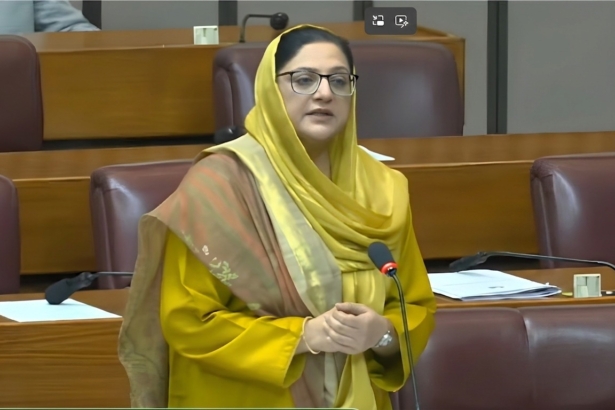
Islamabad: Member National Assembly Dr. Shazia Sobia Aslam Soomro criticized the federal budget, calling it unfriendly to the public at a time when the country faces inflation, unemployment, poverty and serious economic difficulties. She also demanded urgent action on water shortage in Sindh and Balochistan, heavy taxation on salaried people, weak health and education spending, drug supply in educational institutions and severe power outages in Pano Aqil.
Speaking during the budget debate in the National Assembly, Dr. Shazia Sobia Aslam Soomro said the people expected a budget that would reduce their difficulties, create jobs, support economic growth and bring relief to ordinary citizens. However, she said important sectors did not receive the attention they deserved.
She said Pakistan’s biggest strength is its youth, but the budget does not show enough investment in employment, skills training, business support and advanced technology. She warned that if young people are not given proper opportunities, they will not be able to play their full role in national development.
Dr. Shazia Sobia said Pakistan is an agricultural country and agriculture is the backbone of the national economy. She said agriculture can move forward only when farmers and stakeholders are taken into confidence while making agricultural policy.
She demanded relief for farmers in the form of subsidies on urea, DAP fertilizer, pesticides, diesel and electricity. She said crops can only be grown properly when farmers receive water at the right time.
Raising a serious concern over water distribution, she said Sindh and Balochistan must receive their constitutional and basic water rights under the Water Accord. She said water theft from the share of Sindh and Balochistan must be discussed because farmers cannot complete timely cultivation without their due water share.
She said rice cultivation in Sindh usually begins in the summer season, but due to the non availability of water on time, the process was delayed and farmers in Sindh faced serious distress.
Referring to the Pakistan Economic Survey, she said the use of wheat, rice and pulses has declined because their cultivation has also gone down. She questioned why the country imports such food items instead of making a strong policy to support its own farmers.
Turning to education, Dr. Shazia Sobia said education is the sign of a living nation. She referred to surveys by the United Nations Educational, Scientific and Cultural Organization, the National Commission for Human Development and Alif Ailaan, saying more than 26 million children are out of school, with girls forming the largest share.
She said the government needs a long term policy to bring out of school children back into classrooms. However, she regretted that education was not treated as a priority in the budget.
She also drew the attention of Prime Minister Shehbaz Sharif and Interior Minister Mohsin Naqvi toward the increasing trend of drug supply in national educational institutions. She said the youth are becoming addicted to this poison and must be protected through a serious policy.
Speaking on health, she said no country can develop if public health is not served on a priority basis. She said the World Health Organization recommends that a country’s health budget should be 5 percent of gross domestic product, but Pakistan’s health budget is only around 1 percent, which she called highly disappointing.
She referred to The Lancet, an international medical journal, and said maternal mortality and infant mortality remain very high in rural areas of Pakistan because people do not have access to basic health facilities.
Dr. Shazia Sobia said the government must seriously focus on national health programmes, including Human Immunodeficiency Virus and Acquired Immunodeficiency Syndrome, polio, hepatitis C and diabetes. She said Pakistan ranks fifth in the world in diabetes, which should be treated as a serious national health concern.
She also asked the Prime Minister to pay attention to the long delayed Polyclinic Extension Hospital planned in G-11 Islamabad. She said the project has not been completed for years and needs urgent attention.
Dr. Shazia Sobia praised the Government of Sindh and the provincial health minister for taking major health initiatives in the province. She said Sindh has worked on Basic Health Units, Rural Health Centres, the Sindh Institute of Urology and Transplantation, Gambat Institute of Medical Sciences and the National Institute of Cardiovascular Diseases.
Responding to criticism that Sindh has not done enough in health, she said the National Institute of Cardiovascular Diseases is operating in Karachi and the Sindh Institute of Cardiovascular Diseases network is working across the province.
She said Sindh has 10 major cardiovascular hospitals and centres in Larkana, Tando Muhammad Khan, Hyderabad, Sehwan, Sukkur, Shaheed Benazirabad, Mithi, Khairpur, Lyari Karachi and Baldia Town Karachi.
She also listed around 30 chest pain units in different areas, including Keamari, near Gizri Flyover, Sindh High Court Bar Association, Jinnah Postgraduate Medical Centre, Musa Lane Lyari, New Karachi, near Karimabad Flyover, Karachi Institute of Heart Diseases, Nagan Chowrangi, Gulshan e Iqbal Chowrangi Flyover, Airport Security Force Medical Centre, Landhi, Qayyumabad, Quaidabad, Malir Halt, Malir Cantonment, Gulshan-e-Hadeed, Orangi Town, Tando Bago, Makli, Dadu, Tando Allahyar, Bhiria City, Jacobabad, Kashmore, Shikarpur, Ghotki, Mirpurkhas, Sanghar and Umerkot.
Dr. Shazia Sobia said these are real health initiatives taken by the Sindh Government and should be acknowledged.
She also responded to remarks about OZT funds, saying Rs. 48 billion is not the only amount utilized at the district level through local governments. She said the Sindh Government also provides around Rs. 200 billion through local governments for use at the local level.
On the K IV water project for Karachi, she said the project can bring 260 million gallons of water per day to Karachi if the federal government plays its part. She said if the federal government brings water up to the existing system, the Sindh Government will make water supply to Karachi its priority.
She said if work begins on pipelines and roads are broken for the project, the same people who are currently complaining about K IV will be the first to criticize the construction work.
Discussing taxes, Dr. Shazia Sobia said the budget has imposed too many taxes and most of the burden has been placed on the salaried class. She said sometimes this burden comes in the name of petroleum levy and sometimes in the name of climate levy.
She strongly objected to a proposed 40 percent tax on award money received by children, calling it shameful. She said children should be encouraged, not taxed harshly for receiving awards.
She said if the government wants to impose taxes, it should tax nicotine and tobacco products, sugary and energy drinks, and processed foods that are damaging the health of children and youth.
Dr. Shazia Sobia also raised the issue of gas and electricity load-shedding in her constituency, Pano Aqil. She said whether it is winter or summer, the people of the area continue to face gas and electricity shortages.
She said Pano Aqil faced prolonged power outages during extreme heat, when temperatures were touching around 49 to 50 degrees Celsius. She said people sitting in air conditioned homes, cars and offices cannot understand what it means to live without electricity in such heat.
She demanded that relevant departments be called and a proper meeting be held on the issue. She said problems cannot be solved by closing one’s eyes to them.
At the start of her speech, Dr. Shazia Sobia congratulated the people of Pakistan, President Asif Ali Zardari, Prime Minister Shehbaz Sharif, Field Marshal Asim Munir, Deputy Prime Minister Ishaq Dar and Interior Minister Mohsin Naqvi. She said their hard work, timely decisions and policies during a sensitive period helped save the world from another war and raised Pakistan’s dignity.
She said Pakistan has always spoken for peace and has always wanted peace. She said the country proved before the world that it stands for peace.
She also congratulated Pakistan Peoples Party Chairman Bilawal Bhutto Zardari and First Lady Bibi Aseefa Bhutto Zardari, saying their efforts helped democracy and the Pakistan Peoples Party achieve success in Gilgit-Baltistan.
Dr. Shazia Sobia also appreciated the government for increasing the allocation of the Benazir Income Support Programme from Rs. 838 billion to Rs. 857 billion. She said this is a positive step for women who want to live with dignity, become economically independent and take better care of their children.
Concluding her speech, she said every decision should be made for the betterment of Pakistan. She said her only wish is that Pakistan remains strong, stable and prosperous.
We welcome your contributions! Submit your blogs, opinion pieces, press releases, news story pitches, and news features to [email protected] and [email protected]