Summary
- The Federal Constitutional Court (FCC) has ruled that administrative and ministerial employees of the Khyber Pakhtunkhwa police are not entitled to risk allowance, distinguishing their duties from those of uniformed personnel engaged in operational policing.
- In its judgement, authored by Justice Farooq, the court explained that uniformed police personnel and administrative employees perform different functions and operate under separate service rules.
- The bench also observed that the high court had not adequately examined whether the employees seeking the allowance performed duties comparable to those of personnel already receiving it.
The Federal Constitutional Court (FCC) has ruled that administrative and ministerial employees of the Khyber Pakhtunkhwa police are not entitled to risk allowance, distinguishing their duties from those of uniformed personnel engaged in operational policing.
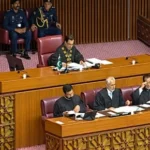
A two-member bench, headed by Justice Aamer Farooq and comprising Justice Syed Arshad Hussain Shah, announced the verdict on Wednesday. The court overturned an April 10, 2025, decision by the Peshawar High Court’s Mingora Bench in Swat, which had extended the allowance to administrative staff.
The case centred on whether employees working in the KP Police Department’s administrative establishment qualified for risk allowance under the relevant laws. The employees had argued that other personnel in the department received the benefit and that denying it to them violated Article 25 of the Constitution, which guarantees equality before the law.
After the police department refused to grant the allowance, the employees approached the high court, which ruled in their favour. The matter was subsequently challenged before the FCC.
In its judgement, authored by Justice Farooq, the court explained that uniformed police personnel and administrative employees perform different functions and operate under separate service rules.
The bench observed that uniformed officers may face physical danger while conducting raids, making arrests, maintaining law and order, controlling crime and carrying out security operations. Administrative and ministerial employees, meanwhile, primarily perform clerical and office-related duties.
The court noted that administrative staff were governed by their own recruitment procedures and service regulations under the KP Police Act, 2017, and the KP Police Department Ministerial Service Rules, 1974. These rules did not require them to perform active policing duties.
The judgement clarified that working for the same department did not automatically entitle employees to identical benefits. According to the court, allowances linked to the risks and hazards of specific duties could not be claimed by every employee simply because they belonged to the same organisation.
Addressing the argument of discrimination, the FCC said the constitutional guarantee of equality did not require the government to treat employees with different responsibilities and working conditions identically.
The court explained that reasonable classifications were permissible under Article 25 when they were based on clear distinctions relevant to the purpose of a policy. In this case, the difference between operational police personnel and administrative staff provided a reasonable basis for separate treatment.
The bench also observed that the high court had not adequately examined whether the employees seeking the allowance performed duties comparable to those of personnel already receiving it.
The FCC concluded that the claim of discrimination could not succeed solely on the basis of departmental affiliation. It set aside the high court’s ruling and rejected the employees’ plea, holding that withholding risk allowance from administrative and ministerial staff did not violate their constitutional right to equality.
We welcome your contributions! Submit your blogs, opinion pieces, press releases, news story pitches, and news features to opinion@minutemirror.com.pk and minutemirrormail@gmail.com