

Summary
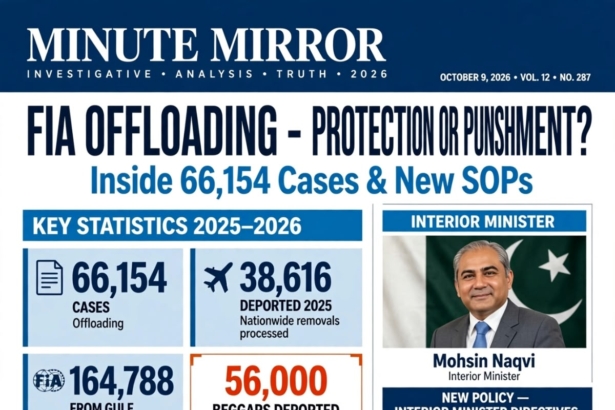
- The Federal Investigation Agency (FIA) offloaded 66,154 Pakistani passengers at airports in 2025, while 38,616 Pakistanis were deported from Gulf countries during the same year, according to official figures cited in parliamentary discussions.
- Deportations and trafficking concerns Official figures cited in the supplied records show that Saudi Arabia deported 108,029 Pakistanis over five years, followed by the UAE with 40,497.
- New directives aim to improve transparency Interior Minister Mohsin Naqvi has directed officials to prevent unnecessary harassment of passengers carrying valid travel documents while intensifying action against fraudulent agents and trafficking networks.
The Federal Investigation Agency (FIA) offloaded 66,154 Pakistani passengers at airports in 2025, while 38,616 Pakistanis were deported from Gulf countries during the same year, according to official figures cited in parliamentary discussions. Over the past five years, deportations from Gulf states reached 164,788, highlighting concerns over illegal migration, document fraud, human trafficking and organised begging networks.
The figures have reignited debate over whether airport offloading protects vulnerable travellers or unfairly penalises passengers with genuine travel intentions.
A recent case at Karachi’s Jinnah International Airport has brought the issue into focus. FIA immigration officials reportedly stopped a mother travelling to the United Arab Emirates with her two daughters on visit visas. According to records obtained bMinute Mirror, the daughters’ passports listed them as 22 years old, while NADRA records reportedly showed their actual ages as 16 and 17.
Officials also identified concerns regarding an allegedly unverified return ticket, unpaid hotel booking and third-party financial transfers. A forensic examination reportedly recovered WhatsApp messages referring to a job at a Dubai club paying Rs600,000 monthly. One daughter allegedly disclosed previous exploitation in UAE clubs, raising suspicions of possible re-trafficking.
The family maintained that an agent had promised employment and denied knowingly violating the law. The alleged agent, Haris, denied involvement in exploitation, claiming he only arranged tickets. The case was reportedly referred for further investigation.
Deportations and trafficking concerns
Official figures cited in the supplied records show that Saudi Arabia deported 108,029 Pakistanis over five years, followed by the UAE with 40,497. In 2025, Saudi Arabia accounted for 27,692 deportations, while the UAE deported 6,794 Pakistanis.
Authorities have also raised concerns about begging networks, illegal employment and travel routes used by human smugglers. The supplied figures indicate that thousands of Pakistanis travelled to Cambodia and Myanmar before reportedly becoming trapped in suspected scam operations. Deportations from Iran have also highlighted the risks associated with irregular migration towards Europe.
FIA officials argue that early screening can prevent travellers from facing detention, deportation or exploitation abroad. However, affected passengers have complained about inadequate explanations, financial losses and difficulties challenging offloading decisions.
New directives aim to improve transparency
Interior Minister Mohsin Naqvi has directed officials to prevent unnecessary harassment of passengers carrying valid travel documents while intensifying action against fraudulent agents and trafficking networks. Proposed measures include facilitation desks, clearer screening procedures and assistance before passengers purchase tickets.
FIA Director General Dr Usman Anwar has also emphasised risk-based screening and transparent enforcement. Under the reported Standing Order No. 02/2026, passengers should receive written reasons for being offloaded and have access to an appeal process through immigration officials and zonal grievance committees.
Authorities are also using passenger databases, document verification systems and intelligence-led screening to identify suspicious travel arrangements.
Balancing protection with passengers’ rights
Legal experts and victim-protection organisations have stressed that suspected trafficking victims, particularly minors, should receive protection, counselling and appropriate support rather than being treated as offenders. They have also called for independent grievance mechanisms to address complaints involving genuine travellers.
The proposed way forward includes verifying documents before departure, regulating travel agents, strengthening legal overseas employment channels and pursuing trafficking organisers rather than vulnerable passengers.
The central challenge for the FIA remains ensuring that enforcement targets credible risks without undermining the right of genuine Pakistanis to travel. Effective implementation of transparent procedures and accessible appeals will be essential to achieving that balance.
We welcome your contributions! Submit your blogs, opinion pieces, press releases, news story pitches, and news features to opinion@minutemirror.com.pk and minutemirrormail@gmail.com