
Summary
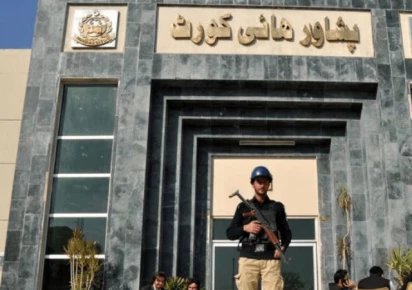
- PESHAWAR: Pakistan’s judicial system appears to be moving towards a more litigant-focused approach, with recent administrative measures at the Peshawar High Court coinciding with a broader reform agenda at the Supreme Court aimed at improving case management, public facilitation and timely disposal of cases.
- The latest development has come from the Peshawar High Court, where urgent cases, particularly those involving NADRA-related matters, are being given greater scope for human review instead of relying solely on automated case fixation.
- The developments at the Supreme Court and Peshawar High Court point towards a common administrative theme: case management is increasingly being linked with the actual needs of litigants rather than merely with the mechanics of court scheduling.
PESHAWAR: Pakistan’s judicial system appears to be moving towards a more litigant-focused approach, with recent administrative measures at the Peshawar High Court coinciding with a broader reform agenda at the Supreme Court aimed at improving case management, public facilitation and timely disposal of cases.
The latest development has come from the Peshawar High Court, where urgent cases, particularly those involving NADRA-related matters, are being given greater scope for human review instead of relying solely on automated case fixation.

According to Circular No. 1004/AR(Judl), issued on September 15 by Additional Registrar (Judicial) Hidayat Ullah Khan, cases submitted with an Urgent Form will be manually fixed after the genuineness of the urgency is examined. The circular also provides for manual consideration of motion cases that have been assigned what are described as unreasonably distant dates.
The measure was taken following a decision of the High Court’s IT Committee at its meeting on September 11, with the stated objective of addressing difficulties faced by litigants and lawyers in the early fixation of urgent NADRA-related matters.
The circular also provides a mechanism for complaints regarding case fixation to be brought before the Additional Registrar (Judicial), giving litigants and lawyers a direct administrative channel to raise concerns.
The move reflects a growing recognition within the judiciary that technology can streamline court administration but cannot, by itself, determine the human urgency attached to an individual case.
The Peshawar initiative comes as the Supreme Court is simultaneously pursuing a wider programme of institutional and technological reform under Chief Justice of Pakistan Justice Yahya Afridi.
Addressing the opening ceremony of the New Judicial Year 2026-27 on September 14, the Chief Justice reiterated the Supreme Court’s commitment to speedier justice, improved case management, better services and measurable institutional reform. The reform agenda covers technology-enabled service delivery, access and transparency, strengthening of the legal and regulatory framework, use of available resources and revitalisation of justice-sector institutions.
The Supreme Court has reported substantial progress in several categories of cases. According to the figures presented by the Chief Justice, 613 death sentence appeals have been disposed of as the Court advanced its work on appeals dating from 2015 to 2026. In bail-before-arrest matters, 2,972 petitions have been decided, while 2,926 bail-after-arrest petitions have also been disposed of.
The Court has also expanded digitisation, barcoding, e-filing, electronic transmission of judgments and orders, and paperless court processes. A National Standardised E-Filing Framework is being pursued to bring greater consistency to filing procedures across the Supreme Court, High Courts and district judiciary.
Public facilitation has emerged as another important component of the reforms. The Supreme Court has highlighted the role of its Public Facilitation Centre, digital communication channels and structured feedback mechanisms in making court services more accessible to litigants and lawyers. The Lahore Registry’s Public Facilitation Centre is also targeted for completion by mid-November, according to the official account of the judicial year proceedings.
The Supreme Court has further reported that 40 per cent of old cases have been fixed, while measures have been introduced to reduce unnecessary discretion in out-of-turn fixation. The Registrar’s presence at the Public Facilitation Centre for grievance redressal is another component of the new approach.
The developments at the Supreme Court and Peshawar High Court point towards a common administrative theme: case management is increasingly being linked with the actual needs of litigants rather than merely with the mechanics of court scheduling.
For people involved in NADRA disputes, family matters, bail proceedings, service cases and other time-sensitive litigation, the date of hearing can have consequences beyond the courtroom. Delays may affect employment, documentation, travel, education and access to essential services.
The reform process, however, will ultimately depend on implementation. Digital systems, automated scheduling and institutional reforms can improve efficiency, but their effectiveness will also depend on accurate categorisation of cases, timely identification of urgent matters and accessible channels through which litigants can raise genuine grievances.
The Supreme Court itself has emphasised that effective case management requires coordination among the Court Office, Bench and Bar, including accurate categorisation, timely fixation, effective hearing management and avoidance of unnecessary adjournments.
The Peshawar High Court’s latest circular therefore represents more than an administrative adjustment to case fixation. It illustrates an emerging balance between automation and human discretion in judicial administration.
From Islamabad’s push for digitisation and public facilitation to Peshawar’s decision to manually review urgent fixation requests, the focus is increasingly shifting towards making court systems more predictable, accessible and responsive.
For the millions of Pakistanis who interact with the justice system not as lawyers or judges but as ordinary litigants, the success of these reforms will ultimately be measured not by the number of circulars issued or systems digitised, but by whether urgent cases are heard when they genuinely need to be heard and whether access to justice becomes faster and more practical.
We welcome your contributions! Submit your blogs, opinion pieces, press releases, news story pitches, and news features to opinion@minutemirror.com.pk and minutemirrormail@gmail.com