



Summary
- Designer Tatyana Bramaretskaya said Moscow Fashion Week had helped increase sales and advertising reach, while also providing an opportunity to present her work at China Fashion Week in Beijing.
- The designer said participating in Moscow Fashion Week had increased the brand’s recognition and helped secure contracts with major retail stores.
- Levitskiy said participation in Moscow Fashion Week had helped the brand attract buyers, sign contracts and establish a showroom presence in Moscow.
By Waqas Habib Rana
MOSCOW — Cyberpunk-inspired streetwear, futuristic interpretations of Russian folk traditions, contemporary Indian design and the opulence of 18th-century France took centre stage as Moscow Fashion Week’s second day delivered a striking showcase of contrasts.
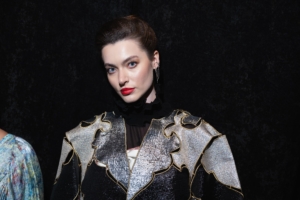
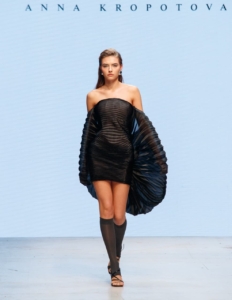
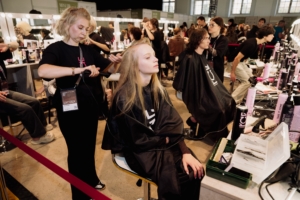
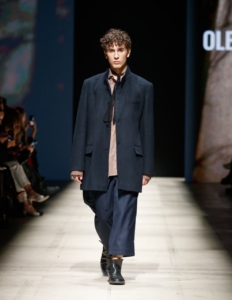
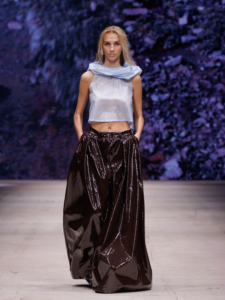
The September 27 programme brought together emerging designers, established Russian labels and international participants, with collections drawing inspiration from cultural heritage, art, nature and everyday observations. From a frozen puddle to historical French fashion, designers transformed unexpected references into contemporary runway statements.
The day highlighted the diversity of Russia’s regional fashion industry while demonstrating how international platforms can help designers expand their audiences, establish commercial relationships and reach new markets.
Siberian cyberpunk and Russian heritage
The programme opened with Designer. Made in Siberia, a project from Novosibirsk that brought emerging and established designers together on the runway.
Moving beyond conventional interpretations of regional folklore, the collections combined Buryat-Mongolian motifs with cyberpunk aesthetics, fur, sequins and sculptural forms. Traditional patterns acquired three-dimensional shapes, while futuristic accessories challenged familiar images of Siberia.
Designer Viktoria Molonova, whose five-look collection explored the transformation of Buryat patterns into three-dimensional forms, described participation as a significant professional milestone.
The futuristic mood continued with Brand Brama from Komsomolsk-on-Amur. Its Monochrome Amur collection featured oversized quilted bombers, cargo trousers, long straps and woollen coats in vivid pinks and deep blacks.
Designer Tatyana Bramaretskaya said Moscow Fashion Week had helped increase sales and advertising reach, while also providing an opportunity to present her work at China Fashion Week in Beijing.
Traditional Russian aesthetics received a contemporary reinterpretation at the Institute of Arts at Kosygin State University of Russia. Its presentation progressed from restrained grey and white looks to red garments, kokoshniks and sarafans, culminating in Legends of Veliky Ustyug, a collaboration with Ded Moroz JSC.
The collection demonstrated how traditional folk-costume elements could move beyond museum displays and find new expression in contemporary silhouettes.
International designers bring fresh perspectives
Indian label KGL, founded by Kanika Goyal and presented through the Fashion Design Council of India (FDCI), offered a distinctly modern interpretation of Indian fashion.
Its Arc Echo collection explored déjà vu through woven denim, hybrid jackets, mosaic knitwear and bold colour combinations. Rather than relying on conventional folkloric references, the designs used graphic forms and vibrant colours to create a distinctive visual identity.
Goyal praised Moscow Fashion Week’s scale and its opportunities for emerging designers to present collections internationally. FDCI chairman Sunil Sethi also highlighted the benefits of collaboration, noting the positive reception Russian designers had received at fashion events in New Delhi and Mumbai.
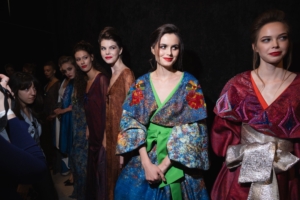
UK-based Black Crown Label presented a theatrical collection inspired by Iraqi musician Naseer Shamma. Long kimono-like dresses, rhinestones, oversized belts and dramatic hemlines defined the presentation.
Founder Nohad Al Samarrie said the Moscow visit had encouraged the label to explore the Russian market and establish relationships with local advisers and partners, with the long-term ambition of opening a boutique in Russia.
Nature becomes a design language
Some of the day’s most compelling collections drew inspiration from the natural world.
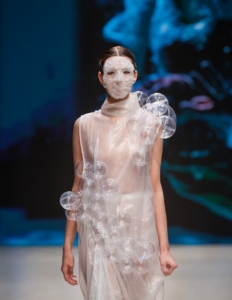
Irkutsk-based label s e n sus, founded by Victoria Istomina and Alyona Gulenko, explored water and its changing states. Translucent dresses evoked vapour, rigid silhouettes suggested ice, and glass details added a crystalline quality. Jewellery by local brand Bright Me complemented the collection.
Istomina said the brand’s first Moscow Fashion Week appearance had generated collaboration offers, including requests to rent runway pieces for photo shoots, alongside increased brand awareness and sales.
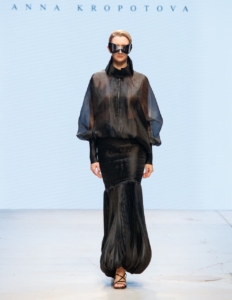
Designer Anna Kropotova from Rostov-on-Don found inspiration in a frozen puddle. Cracks in the ice informed crinkled textures, transparent silicone, organza and chiffon, while layered fabrics and generous volumes created the impression of ice suspended in motion.
Murmansk-based Gapanovich took a broader view of nature and time with Weathered Light. Inspired by ammonites and the marks time leaves on materials, the collection featured asymmetrical draping, shell-like shapes, oversized sequins and washed fabrics. Yelets lace was integrated into garment construction rather than used merely as decoration.
Founder Alexandra Gapanovich described the event as an important platform for local designers, saying participation had contributed to the growth of her brand and team.
Rococo meets contemporary dressing
At the other end of the stylistic spectrum, Kartashova from Kemerovo travelled back to 18th-century France with its Boudoir collection.
Corsets, lace, sheer dresses, voluminous skirts and fur collars evoked Rococo influences. However, the strongest looks reinterpreted historical references rather than reproducing period costumes, incorporating corsets into modern outfits and bringing lingerie-inspired layers into view.
The result suggested a contemporary Marie Antoinette, with historical opulence adapted for modern wardrobes.
The designer said participating in Moscow Fashion Week had increased the brand’s recognition and helped secure contracts with major retail stores.
Other designers explored different approaches to reinvention. Moscow-based Edder introduced a cruise line within its spring/summer 2027 collection, using looser suits, relaxed shirts and fluid womenswear while retaining its signature aesthetic.
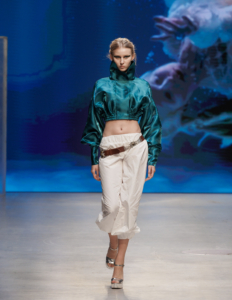
At SOL Selivanova Olga, a collaboration with artist Adele Levitova translated the colours and movement of her painting Flights in a Waking Life into bright blouses, bomber jackets, dresses and shimmering details.
Krasnodar-based Oleg Levitskiy presented Relic, a collection that appeared to have been recovered from an old trunk. Faded fabrics, irregular silhouettes, scorched lace and muted colours created a deliberately weathered aesthetic.
Levitskiy said participation in Moscow Fashion Week had helped the brand attract buyers, sign contracts and establish a showroom presence in Moscow.
We welcome your contributions! Submit your blogs, opinion pieces, press releases, news story pitches, and news features to opinion@minutemirror.com.pk and minutemirrormail@gmail.com






