Summary
- The weeks preceding this election have borne unsettling similarities to the political climate that accompanied Pakistan’s 2024 general election, raising questions about whether the democratic process has been afforded the openness, fairness, and neutrality it requires.
- Democratic legitimacy depends not merely upon the conduct of polling day but upon the existence of a political environment in which all participants are afforded a fair and equal opportunity to compete.
- The people of Gilgit-Baltistan have repeatedly demonstrated their commitment to democratic participation; they are entitled in return to responsive governance, meaningful representation, and a genuine voice in determining their political future.
Muhammad Imran, Staff Member, SAHSOL-LUMS
Asma Rahmat, Final Year Law Student, SLC
Muhammad Ameer Hamza, Final Year Law Student, SLC
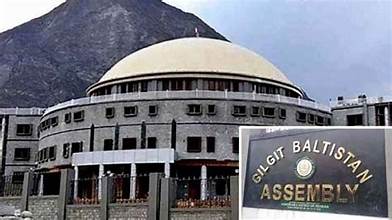
The people of Gilgit-Baltistan go to the polls today to elect a new Assembly of 24 members, participating in a democratic exercise whose significance extends far beyond the formation of the region’s next government. Situated at the crossroads of South Asia, Central Asia, and China, Gilgit-Baltistan occupies a position of immense strategic importance. It serves as Pakistan’s northern gateway, hosts vital segments of the China-Pakistan Economic Corridor (CPEC), and borders regions of considerable geopolitical sensitivity. Yet despite its pivotal location and immense contribution to the national interest, many of the political and constitutional questions confronting the region remain unresolved. It is pertinent to mention here that GB is not the province of Pakistan but under the administrative control by virtue of a UN Resolution.
As in previous electoral cycles, the campaign has been dominated by enduring concerns regarding Gilgit-Baltistan’s constitutional status, the rights and representation of its people, and ownership of the region’s indigenous resources. These are not merely local issues. They touch upon broader questions of federalism, democratic inclusion, and the relationship between the state and one of its most strategically significant territories. Political parties have advanced ambitious promises and competing visions for the future. The responsibility now rests with the electorate to determine which of these claims deserves its confidence.
It is hoped that voter turnout will be robust, that the electoral process will proceed without hindrance, and that the mandate delivered by the people will be respected without qualification. Yet such expectations are tempered by legitimate concerns. The weeks preceding this election have borne unsettling similarities to the political climate that accompanied Pakistan’s 2024 general election, raising questions about whether the democratic process has been afforded the openness, fairness, and neutrality it requires.
Reports of uneven political conditions have persisted throughout the campaign. Candidates affiliated with one political party have reportedly been compelled to contest without a recognizable electoral symbol, while the party’s leadership has repeatedly alleged that significant obstacles impeded its ability to campaign effectively. Other political actors, particularly those aligned with the federal government, appear to have faced no comparable constraints. Such perceptions, whether justified or otherwise, inevitably erode confidence in the electoral process. Democratic legitimacy depends not merely upon the conduct of polling day but upon the existence of a political environment in which all participants are afforded a fair and equal opportunity to compete.
The credibility of this election will therefore be judged not by official declarations but by whether the outcome reflects the freely expressed will of the electorate. In a democratic system, the ballot derives its legitimacy from public confidence that every vote carries equal weight and that the collective verdict of citizens will neither be diluted nor disregarded. Preserving that confidence is essential not only for Gilgit-Baltistan but for the broader health of Pakistan’s democratic institutions.
Whoever forms the next government will inherit responsibilities that extend far beyond electoral promises. For years, residents of Gilgit-Baltistan have expressed concern that successive administrations have appeared more responsive to political imperatives emanating from Islamabad than to the needs and aspirations of the communities they were elected to serve. Whether fair or not, this perception has persisted across governments and political parties alike. The incoming administration must therefore demonstrate, through both policy and practice, that its foremost obligation is to the people of the region.
This responsibility carries added weight because Gilgit-Baltistan is not merely another administrative unit. It is home to some of the world’s highest mountain ranges, the headwaters of critical river systems, vast mineral wealth, and infrastructure corridors central to Pakistan’s economic and strategic ambitions. Its glaciers constitute a crucial national water reserve, while its geographic location places it at the heart of regional connectivity initiatives. Yet many residents continue to argue that the benefits derived from these assets have not been matched by corresponding progress in political empowerment, economic development, or institutional representation.
Among the most consequential challenges awaiting the next government is the question of Gilgit-Baltistan’s constitutional future. The issue featured prominently throughout the campaign and was repeatedly invoked by political leaders seeking public support. It is a matter of profound importance, encompassing questions of representation, citizenship, governance, and Pakistan’s constitutional architecture. Any meaningful progress will require careful deliberation, broad political consensus, and sustained engagement at both the regional and federal levels.
At the same time, the complexity of the issue cannot be allowed to justify perpetual inaction. For decades, promises of reform have surfaced during election campaigns only to recede once the ballots have been counted. Having once again occupied center stage in the political debate, the question now demands more than expressions of intent. The people of Gilgit-Baltistan are entitled to a credible process, a clear sense of direction, and a genuine commitment to addressing an issue that has remained unresolved for far too long.
Beyond constitutional questions, the region faces a range of pressing challenges. Climate change has accelerated glacial melt and heightened the risk of floods, landslides, and other environmental hazards. Infrastructure gaps continue to constrain economic growth, while concerns regarding education, healthcare, employment, and public service delivery remain significant. At the same time, the growing strategic and economic importance of the region underscores the need for development policies that are both inclusive and sustainable, ensuring that local communities are not merely spectators to progress but active beneficiaries of it.
Today’s election is therefore about more than the transfer of political authority. It is about defining the relationship between a strategically vital region and the state, reconciling national priorities with local aspirations, and ensuring that development is accompanied by representation and accountability. It is an opportunity for the people of Gilgit-Baltistan to shape their collective future through the ballot box and to reaffirm their faith in democratic participation.
The hope is not merely that votes will be cast and counted, but that the mandate they produce will be respected faithfully and without reservation. Gilgit-Baltistan has long occupied a position of immense strategic importance in Pakistan’s geography, economy, and national security calculus. Yet no region can be expected to remain content with serving national interests while its own aspirations remain inadequately addressed. The people of Gilgit-Baltistan have repeatedly demonstrated their commitment to democratic participation; they are entitled in return to responsive governance, meaningful representation, and a genuine voice in determining their political future.
Today’s election is therefore more than a contest for political office. It is a test of democratic credibility, a measure of the state’s commitment to representative governance, and an opportunity to begin addressing questions that have remained unresolved for far too long. If conducted fairly and followed by governance that places public welfare above political expediency, this election could mark an important step towards a more inclusive and confident future for the region. For a territory that stands at the crossroads of continents, civilizations, and strategic interests, the challenge is not merely to acknowledge its importance but to ensure that its people are afforded the dignity, rights, and opportunities that such importance demands.
We welcome your contributions! Submit your blogs, opinion pieces, press releases, news story pitches, and news features to [email protected] and [email protected]