Summary
- The aggregate profits generated by profit-making SOEs declined to PKR 709.9 billion, compared to PKR 820.7 billion in FY2024, representing a 13% reduction.
- The total losses declined from PKR 851.4 billion in FY2024 to PKR 833 billion in FY2025, representing a reduction of just 2%.
- During FY2025, total government support to SOEs increased to PKR 2,078.5 billion, compared to PKR 1,512.9 billion in FY2024, representing a 37% increase.
The authorities sent 6 amendments to SOE-dedicated laws to parliament in January 2026 for approval. They now need to progress with the remaining 3 SOEs with dedicated laws (end-August 2026 SB). The authorities have also finalized and will soon submit draft SWF Law amendments to parliament. These amendments clarify the legal mandate of the SWF as a holding company, strengthen SWF governance, ensure that SWF-owned SOEs remain under the same high-quality governance structures and accountability standards as all other SOEs, require transparent and competitive procedures for divestment and procurement, and introduce key fiscal safeguards (MEFP 36b). The adoption of these amendments (end-March 2026 SB) without further delay is essential to maintain reform momentum. The operationalization of the SWF will remain on hold until these legal changes are enacted—IMF Country Report No. 26/101 – Page 21
State-Owned Enterprises (SOEs) have long occupied a dominant place in Pakistan’s economic landscape. These entities were established to support industrialization, develop critical infrastructure, address market failures, and provide essential public services, to serve both economic and strategic objectives. Their footprint extends across energy, transportation, telecommunications, financial services, manufacturing, hospitality, and numerous other sectors where ownership or control rests with either the federal or provincial governments. Beyond their commercial functions, SOEs have played an important role in employment generation, revenue creation, and the delivery of public services considered essential for national development.
According to the latest Consolidated SOE Position released by the Ministry of Finance, the country currently has approximately 212 SOEs operating across various sectors of the economy. These comprise 88 commercial SOEs, 55 non-commercial SOEs, including companies established under section 42 of the Companies Act of 2017, non-profit organizations, trusts, and universities, as well as 69 subsidiaries of commercial SOEs.
The commercial SOEs, which form the primary focus of financial and operational performance assessments, operate across a broad range of sectors including power, oil and gas, infrastructure, transport and communications, manufacturing, mining and engineering, finance, industrial estate development and management as well as wholesale, retail, and marketing.
The scale of these enterprises remains significant. SOEs continue to maintain a dominant market presence in key sectors such as power generation and distribution, energy, aviation, and railways. During fiscal year (FY) 2024-25, the combined revenues of all SOEs stood at approximately PKR 12.4 trillion, whereas the book value of their assets reached PKR 37.9 trillion. Despite this substantial asset base and market presence, financial performance continues to be a matter of concern.
Commercial SOEs collectively recorded net losses of PKR 122 billion during FY2024-25, representing a sharp deterioration from the PKR 30.64 billion net losses reported in FY2023-24. This increase of nearly 300% highlights the growing financial pressures facing several public-sector entities.
The power sector remains particularly prominent within the SOE landscape. It accounts for the largest number of independent commercial SOEs, with 24 entities, and holds the largest share of assets within the overall SOE portfolio, amounting to more than PKR 7.8 trillion.
The aggregate revenues across the SOE sector also weakened during the year. The total revenues declined from PKR 13.52 trillion in FY2024 to PKR 12.4 trillion in FY2025, reflecting a contraction of more than PKR 1 trillion, or approximately 8%. Though the declining revenues are concerning, a closer examination of profitability trends reveals deeper structural challenges.
Historically, SOE performance has often been assessed through the distinction between profit-making and loss-making entities. Even among the traditionally profitable segments, performance weakened considerably during FY2025. The aggregate profits generated by profit-making SOEs declined to PKR 709.9 billion, compared to PKR 820.7 billion in FY2024, representing a 13% reduction.
This trend is particularly concerning because it suggests that even entities that have historically generated profits are facing increasing operational and financial pressures. According to the report, the decline was driven by a combination of rising operating costs, delayed tariff adjustments, and subdued commercial data.
Profitability within the sector also remains highly concentrated. More than 50% of total profits generated by profit-making SOEs originated from only four entities: Oil and Gas Development Company Limited (OGDCL), Pakistan Petroleum Limited (PPL), National Bank of Pakistan (NBP), and WAPDA.
On the other side of the ledger, aggregate losses incurred by loss-making SOEs showed only marginal improvement. The total losses declined from PKR 851.4 billion in FY2024 to PKR 833 billion in FY2025, representing a reduction of just 2%. Though this may appear to be progress at first glance, the underlying structural weaknesses remain largely unchanged.
An annual loss of PKR 832.8 billion translates into approximately PKR 3 billion in losses every single day. Such losses highlight the urgent need for structural reforms and the resolution of long-standing issues including overstaffing, pricing distortions, weak governance, and operational inefficiencies.
Similarly, losses are also concentrated among a small number of entities. The combined losses of the four largest loss-making SOEs accounted for approximately 67% of the total losses across the SOE portfolio during FY2024-25. These entities include the National Highway Authority (NHA), Quetta Electric Supply Company (QESCO), Peshawar Electric Supply Company (PESCO), and Pakistan Railways.
The fiscal burden associated with sustaining SOEs also continued to grow. During FY2025, total government support to SOEs increased to PKR 2,078.5 billion, compared to PKR 1,512.9 billion in FY2024, representing a 37% increase. The growth in fiscal support was driven primarily by higher equity injections, increased government lending, and expanded sovereign guarantees.
The equity injections alone reached PKR 728.9 billion during FY2025. A significant portion of this support was associated with the one-off clearance of circular debt within the power sector and payments made to Independent Power Producers (IPPs). These transactions were reflected as equity injections intended to strengthen the financial position and balance sheets of key state-owned entities.
Government lending also increased substantially. The loans extended to SOEs rose by 34%, increasing from PKR 263.3 billion in FY2024 to PKR 354.1 billion in FY2025. This reflects the government’s continued reliance on direct financial support to sustain operations, support restructuring initiatives, and address liquidity requirements across various entities.
On the contrary, grants and subsidies declined. The grants fell by 27% to PKR 269.2 billion, whereas subsidies decreased by 7% to PKR 726.3 billion. These reductions suggest a shift in the composition of state support, with greater emphasis being placed on capital support and financing mechanisms rather than direct fiscal transfers.
The sovereign guarantees expanded significantly as well. The outstanding guarantees increased from PKR 1,419.0 billion in FY2024 to PKR 2,164.0 billion in FY2025, representing a 52% increase. Importantly, this rise was not attributable to the issuance of new guarantees but largely reflected in the accounting treatment of existing self-liquidating guarantees already on the government’s books.
The magnitude of support becomes even more apparent when viewed in the context of federal tax collections. During FY2025, the federal government collected PKR 11,744 billion in tax revenue. Of this amount, approximately PKR 2,078 billion, or roughly 17.7%, was redirected to SOEs through a combination of subsidies, equity injections, grants, and loans. Put differently, for every PKR 6 collected from taxpayers, approximately PKR 1 was absorbed by the state-owned enterprise sector.
These figures raise fundamental questions about the long-term sustainability of Pakistan’s SOE model. Persistent losses, declining profitability among traditionally successful entities, and growing fiscal support requirements indicate that many SOEs continue to face deep rooted structural challenges.
Governance issues, including political interference, limited managerial autonomy, weak accountability mechanisms, and operational challenges, have hampered performance and competitiveness. At the same time, bureaucratic barriers, outdated technologies, limited innovation, and human resource challenges have hindered modernization efforts.
As Pakistan’s economy becomes increasingly integrated with global markets and technological change accelerates, the pressure on SOEs to improve performance and financial sustainability will only intensify. Therefore, without meaningful governance reforms, operational restructuring, stronger accountability frameworks, and commercial discipline, many of these enterprises will continue to place a substantial burden on the national exchequer while falling short of their intended economic and strategic objectives.
_____________________________________________________________
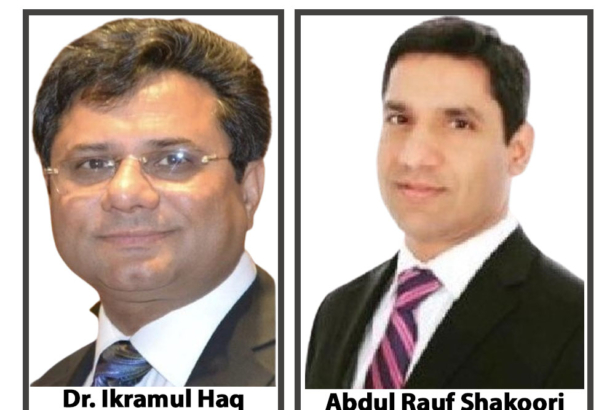
Dr. Ikramul Haq, Advocate Supreme Court, specializes in constitutional, corporate, environment, media, ML/CFT related laws, IT, intellectual property, arbitration and international tax laws. He holds an LLD in tax laws with specialization in transfer pricing. He was full-time journalist from 1979 to 1984 with Viewpoint and Dawn. He served Civil Services of Pakistan from 1984 to 1996.
He established Huzaima & Ikram in 1996 and is presently its chief partner. He studied journalism, English literature and law. He is Chief Editor of Taxation. He is country editor and correspondent of International Bureau of Fiscal Documentation (IBFD) and member of International Fiscal Association (IFA).
He is Visiting Faculty at Lahore University of Management Sciences (LUMS) and member Advisory Board and Visiting Senior Fellow of Pakistan Institute of Development Economics (PIDE).
He has coauthored with Huzaima Bukhari many books that include, Tax Reforms in Pakistan: Historic & Critical Review, Towards Broad, Flat, Low-rate, and Predictable Taxes (third edition, 2024), Pakistan: Enigma of Taxation, Towards Flat, Low-rate, Broad and Predictable Taxes (revised/enlarged edition of December 2020), Law & Practice of Income Tax, Law , Practice of Sales Tax, Law and Practice of Corporate Law, Law & Practice of Federal Excise, Law & Practice of Sales Tax on Services, Federal Tax Laws of Pakistan, Provincial Tax Laws, Practical Handbook of Income Tax, Tax Laws of Pakistan, Principles of Income Tax with Glossary and Master Tax Guide, Income Tax Digest 1886-2011 (with judicial analysis).
He is author of Commentary on Avoidance of Double Taxation Agreements, Pakistan: From Hash to Heroin, its sequel Pakistan: Drug-trap to Debt-trap and Practical Handbook of Income Tax. Two books of poetry are Phull Kikkaran De (Punjabi 2023) and Nai Ufaq (Urdu 1979 with Siraj Munir and Shahid Jamal).
He regularly writes columns/article/papers for many Pakistani newspapers and international journals and has contributed over 3000 articles on a variety of issues of public interest, printed in various journals, magazines and newspapers at home and abroad.
X (formerly Twitter): DrIkramulHaq
_______________________________________________________________
Abdul Rauf Shakoori, Advocate High Court, is a subject-matter expert on AML-CFT, Compliance, Cyber Crime and Risk Management. He has been providing AML-CFT advisory and training services to financial institutions (banks, DNFBPs, Investment companies, Money Service Businesses, insurance companies and securities), government institutions including law enforcement agencies located in North America (USA & CANADA), Middle East and Pakistan.
His areas of expertise include legal, strategic planning, cross-border transactions including but not limited to joint ventures (JVs), mergers & acquisitions (M&A), takeovers, privatizations, overseas expansions, USA Patriot Act, Banking Secrecy Act, Office of Foreign Assets Control (OFAC).
Over his career he has demonstrated excellent leadership, communication, analytical, and problem-solving skills and have also developed and delivered training courses in the areas of AML/CFT, Compliance, Fraud & Financial Crime Risk Management, Bank Secrecy, Cyber Crimes & Internet Threats against Banks, E–Channels Fraud Prevention, Security and Investigation of Financial Crimes. The courses have been delivered as practical workshops with case study driven scenarios and exams to ensure knowledge transfer.
His notable publications are Rauf’s Compilation of Corporate Laws of Pakistan, Rauf’s Company Law and Practice of Pakistan and Rauf’s Research on Labour Laws and Income Tax and others.
His articles include: Revenue collection: Contemporary targets vs. orthodox approach, It is time to say goodbye to our past, US double standards, Was Due Process Flouted While Convicting Nawaz Sharif?, FATF and unjustly grey listed Pakistan, Corruption is no excuse for Incompetence, Next step for Pakistan, Pakistan’s compliance with FATF mandates, a work in progress, Pakistan’s strategy to address FATF Mandates was Inadequate, Pakistan’s Evolving FATF Compliance, Transparency Curtails Corruption, Pakistan’s Long Road towards FATF Compliance, Pakistan’s Archaic Approach to Addressing FATF Mandates, FATF: Challenges for June deadline, Pakistan: Combating the illicit flow of money, Regulating Crypto: An uphill task for Pakistan. Pakistan’s economy – Chicanery of numbers. Pakistan: Reclaiming its space on FATF whitelist. Sacred Games: Kulbhushan Jadhav Case. National FATF secretariat and Financial Monitoring Unit. The FATF challenge. Pakistan: Crucial FATF hearing. Pakistan: Dissecting FATF Failure, Environmental crimes: An emerging challenge, Countering corrupt practices .
X (formerly Twitter): Abdul Rauf Shakoori
The recent publication, coauthored by these writes with Huzaima Bukhari is:
Pakistan Tackling FATF: Challenges & Solutions, available at:
https://aacp.com.pk/book-detail/pakistan-tackling-fatf-challenges-and-solutions-35
https://www.amazon.com/dp/B08RXH8W46
We welcome your contributions! Submit your blogs, opinion pieces, press releases, news story pitches, and news features to [email protected] and [email protected]