Summary
- As the conflict involving Iran unfolds, Beijing finds itself positioned to derive significant economic, political, and potentially military advantages from the crisis.
- Israel, a central actor in this geopolitical contest, has repeatedly justified military actions against Iran and its regional allies on the grounds of national security and the prevention of Iranian nuclear weapons development.
- In this sense, Iran can be viewed not only as an energy partner but also as a strategic partner whose experiences generate valuable insights for China’s broader geopolitical ambitions.
Uswa Fatima, Law Student (SAHSOL-LUMS)
Amna Ali Dahri, Law Student (SAHSOL-LUMS)
Tragedy is more than a sorrowful event. In the tradition of ancient Greek theatre, tragedy is a catastrophe born from forces that appear unavoidable. Geopolitics, perhaps more than any other sphere of human activity, embodies this tragic dimension. Nations pursue strategic interests in the name of survival, power, security, and influence, often producing consequences that extend far beyond their original intentions. In the contemporary geopolitical landscape, few states have demonstrated greater strategic patience and calculation than China. As the conflict involving Iran unfolds, Beijing finds itself positioned to derive significant economic, political, and potentially military advantages from the crisis.
The current war involving Iran is a tragedy in its own right, yet its roots stretch deep into history. The story begins in 1901, when the British Empire recognized that oil would become the indispensable fuel of modern industrial and military power. Following the discovery of the first major commercial oil field at Masjed Soleyman in 1908, the Anglo-Persian Oil Company was established in 1909. This marked the beginning of a relationship that would profoundly shape both Iran’s future and the balance of power in the Middle East.
After the Second World War, Britain faced severe economic hardship. Its treasury was depleted, its industries weakened, and its debts to the United States substantial. At this critical moment, Persian oil became one of the pillars supporting Britain’s economic recovery. Under concession agreements that overwhelmingly favored British interests, the vast majority of profits generated from Iranian oil flowed abroad. While the exact figures remain debated by historians, the broader reality was unmistakable: the wealth extracted from Iranian soil disproportionately benefited foreign powers, while many Iranians saw comparatively limited returns from their own natural resources. Oil flowed from Iranian territory, Iranian labor sustained its production, yet the greatest rewards accumulated elsewhere. This arrangement exemplified the mechanisms through which imperial powers converted resource control into economic and political dominance.
Unsurprisingly, decades of perceived exploitation generated deep resentment within Iran. These tensions culminated in the nationalization of the Anglo-Iranian Oil Company in 1951 under Prime Minister Mohammad Mossadegh. The British response was particularly revealing. Many British officials portrayed the nationalization as a form of “theft,” a characterization that illustrates the strategic role of political language in shaping public perception. Such rhetoric sought to recast the dispute from one concerning sovereignty and resource ownership into one centered on the alleged expropriation of British property. Language, in geopolitics, is rarely neutral; it is often deployed as an instrument of power.
A similar struggle over narrative emerged following the 1979 Iranian Revolution. The overthrow of Mohammad Reza Shah Pahlavi—a key Western ally—and the establishment of the Islamic Republic under Ayatollah Ruhollah Khomeini transformed Iran’s relationship with the West. From a Western perspective, the revolution represented the loss of a strategically vital partner in the Middle East. For many Iranians, however, it symbolized a rejection of foreign influence and external control. The competing interpretations of these events continue to shape international discourse surrounding Iran today.
The contemporary conflict involving Iran extends beyond historical disputes over oil and foreign intervention. It encompasses a broader struggle involving regional power dynamics, security concerns, ideological rivalries, and competing visions of Middle Eastern order. Israel, a central actor in this geopolitical contest, has repeatedly justified military actions against Iran and its regional allies on the grounds of national security and the prevention of Iranian nuclear weapons development. Critics, however, argue that Israeli actions form part of a broader regional strategy designed to weaken adversarial states and non-state actors across the Middle East. The resulting debate illustrates how competing narratives often define international conflicts as much as military realities do.
Throughout modern history, Iran has frequently found itself at the center of larger geopolitical contests among global and regional powers. Yet despite external pressures, sanctions, military threats, and diplomatic isolation, Iran has continued to pursue policies intended to preserve its sovereignty and strategic autonomy. Whether one agrees with those policies or not, the persistence of the Iranian state under sustained external pressure remains a significant feature of contemporary international politics.
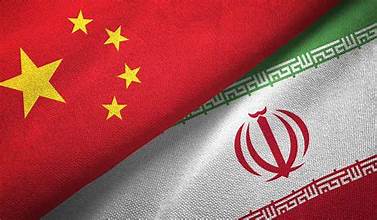
China’s relationship with Iran emerged as an increasingly important factor within this broader geopolitical framework. Diplomatic relations formally expanded in 1971 when Iran recognized the People’s Republic of China. Following the Iran-Iraq War, economic cooperation deepened substantially. As China’s economy entered a period of extraordinary growth, its demand for energy resources surged. Iran, possessing some of the world’s largest oil and natural gas reserves, became a natural partner. Over time, China evolved into the largest purchaser of Iranian oil, creating a relationship characterized by significant economic interdependence.
This partnership reached a new level in 2021 with the signing of a comprehensive 25-year cooperation agreement reportedly valued at hundreds of billions of dollars. The agreement encompassed energy cooperation, infrastructure development, trade expansion, and broader strategic coordination. Consequently, developments in the Iran-Israel conflict carry important implications for Chinese interests. While China’s growing use of renewable energy and electric vehicles may reduce immediate vulnerability to oil supply disruptions, prolonged instability could still threaten critical energy routes and economic interests.
One of the most significant concerns is the security of the Strait of Hormuz, through which a substantial portion of global energy supplies pass. Any sustained disruption could affect international markets and complicate China’s long-term energy strategy. Moreover, both China and Iran share an interest in mitigating the impact of American sanctions and preserving alternatives to Western-dominated financial and political systems.
The military dimension of the Sino-Iranian relationship has attracted increasing attention. Some analysts argue that improvements in Iranian missile accuracy may reflect access to more advanced guidance technologies. A frequently cited possibility is Iran’s utilization of China’s BeiDou Navigation Satellite System, developed as an alternative to the United States’ Global Positioning System (GPS). Following concerns about strategic dependence on American-controlled technologies, China invested heavily in developing its own satellite navigation network, culminating in the launch of BeiDou’s global service in 2020.
Compared to earlier generations of satellite navigation systems, BeiDou offers extensive global coverage and enhanced positioning capabilities. Missile systems operating over long distances often require satellite-assisted navigation to correct accumulated errors and improve targeting precision. Consequently, some observers speculate that integration with BeiDou could contribute to enhanced accuracy in Iranian missile operations. However, direct evidence concerning the extent of such cooperation remains limited and is often subject to competing interpretations.
Similarly, reports of Chinese military technology exports, including advanced radar systems, have fueled discussions regarding the depth of strategic cooperation between Beijing and Tehran. From China’s perspective, the conflict offers more than economic benefits. It may also provide an opportunity to observe the performance of technologies, doctrines, and systems in real-world operational environments. In this sense, Iran can be viewed not only as an energy partner but also as a strategic partner whose experiences generate valuable insights for China’s broader geopolitical ambitions.
Ultimately, the Iran-Israel conflict represents more than a regional confrontation. It is part of a larger geopolitical contest involving energy security, technological competition, strategic alliances, and the shifting balance of power in the twenty-first century. For China, the conflict presents both risks and opportunities. While prolonged instability threatens vital economic interests, it also creates circumstances through which Beijing can expand its influence, strengthen partnerships, and challenge existing power structures. As history repeatedly demonstrates, great powers rarely remain passive observers during moments of geopolitical upheaval. Instead, they adapt, reposition, and seek advantage amid the unfolding tragedy.
We welcome your contributions! Submit your blogs, opinion pieces, press releases, news story pitches, and news features to [email protected] and [email protected]