Summary
- Finance Minister Muhammad Aurangzeb has said the government remains committed to reducing the uneven tax burden by broadening the country’s tax base.
- Aurangzeb added that broadening the tax base is a structural reform goal aimed at bringing more sectors into the tax system.
- The finance minister said the government is not introducing new taxes for the next fiscal year.
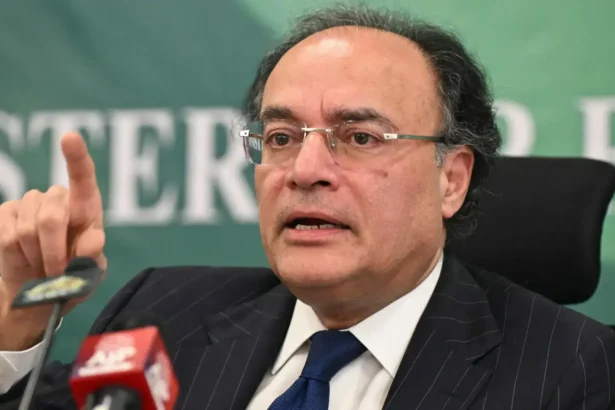
Finance Minister Muhammad Aurangzeb has said the government remains committed to reducing the uneven tax burden by broadening the country’s tax base.
He made the remarks during a television interview after presenting the federal budget for the upcoming fiscal year.
Aurangzeb said the government has provided relief to key sectors, including exporters, manufacturers, the IT industry, construction, and salaried individuals.
He added that the next phase of reforms will focus on expanding the tax net and improving compliance across the economy.
According to him, the government is following a two-pronged strategy of tax deepening and tax broadening.
He explained that tax deepening involves plugging leakages, improving enforcement, and reducing tax evasion.
He said stronger compliance measures and anti-corruption steps would significantly improve revenue collection.
Aurangzeb added that broadening the tax base is a structural reform goal aimed at bringing more sectors into the tax system.
The finance minister said the government is not introducing new taxes for the next fiscal year.
Instead, the focus is on increasing revenue through enforcement and system reforms within the Federal Board of Revenue (FBR).
He said the FBR is being modernised with artificial intelligence–based systems to reduce manual intervention and improve transparency.
Aurangzeb also said provincial cooperation is essential for fiscal management and development planning.
He noted that some provinces face security challenges, which require greater resource allocation for law enforcement agencies.
He thanked all provincial governments for supporting federal economic measures.
The minister further said that global geopolitical tensions may continue to affect Pakistan’s economy in the coming year.
Despite challenges, he said the government’s priority remains boosting exports and production capacity.
He added that incentives are being provided to large industries and exporters through financing schemes to support growth.
Aurangzeb concluded that Pakistan’s economic strategy is focused on stability, reform, and long-term expansion rather than short-term tax increases.
We welcome your contributions! Submit your blogs, opinion pieces, press releases, news story pitches, and news features to [email protected] and [email protected]