Summary
- Yet, this tragedy transforms into a harrowing human and social catastrophe when Gujrat—a historical city that stands as a profound and luminous metaphor for history, scholarship, Sufi heritage, industry, and craftsmanship—is subjected to monsoon rains every single year, reducing it to a vast pool of stagnant water.
- From the central arteries, historic alleys, the inner city, Ghareeb Pura, Jail Road, Jinnah Road, Bhimber Road, Qamar Sialvi and Alipura Road, to prominent commercial hubs like Katchery Road, Muslim Market, Sargodha Road, and Railway Road—and even affluent housing enclaves like Shadman and Model Town—when engulfed by filth-laden water, Gujrat’s systemic anarchy stands as a bitter testament to the reality that fundamental urban planning, visionary foresight, and the very concept of public welfare perished long ago within our collective machinery.
- When the Water and Sanitation Agency (WASA) was established in the city to stem the tide of this severe crisis, citizens breathed a sigh of relief, trusting that the chronic inefficiencies of the traditional municipal setup would finally be remedied and that long-standing drainage issues would be resolved along modern, scientific lines.
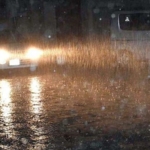
Rain is never a simple natural phenomenon of clouds gathering and the earth being quenched; rather, it serves as the ultimate, unforgiving test of the administrative competence of any civilized society, welfare state, and responsible governance structure. When drops descend from the sky, the grand claims of states, the deceptive rhetoric of development, and all paper-thin fortresses of public service delivery are invariably washed away. Yet, this tragedy transforms into a harrowing human and social catastrophe when Gujrat—a historical city that stands as a profound and luminous metaphor for history, scholarship, Sufi heritage, industry, and craftsmanship—is subjected to monsoon rains every single year, reducing it to a vast pool of stagnant water. Descending from the skies, this water ceases to be a mercy for the locals, turning instead into a terrifying torment, an endless cycle of agony, and a manifestation of social exploitation where the very rhythm of life becomes completely paralyzed.
From the central arteries, historic alleys, the inner city, Ghareeb Pura, Jail Road, Jinnah Road, Bhimber Road, Qamar Sialvi and Alipura Road, to prominent commercial hubs like Katchery Road, Muslim Market, Sargodha Road, and Railway Road—and even affluent housing enclaves like Shadman and Model Town—when engulfed by filth-laden water, Gujrat’s systemic anarchy stands as a bitter testament to the reality that fundamental urban planning, visionary foresight, and the very concept of public welfare perished long ago within our collective machinery. Today, the city’s residents demand answers to a burning question: How long will this historical region continue to be fed to the furnace of incompetence, corruption, and criminal administrative negligence, and how long will celebrations echo within the halls of power and the palaces of WASA over the utter ruin of the impoverished populace?
Peering beneath the surface of this deteriorating crisis reveals that Gujrat’s geographical layout and physical topology were once guarantors of its natural beauty and an efficient drainage system. The city rests on natural slopes where rainwater would inherently discharge toward the natural flow of the Chenab River and local natural nullahs. Yet, over the past few decades, unbridled, unplanned, and aggressive concrete expansion has ruthlessly choked this natural ecological balance. Supported by political patronage, the abuse of authority, and the blessings of a commission mafia, housing societies, commercial plazas, and illegal encroachments constructed directly over the city’s ancient ponds, natural nullahs, and water runoffs have permanently sealed every single path of drainage. When concrete ramparts are erected across these eternal and natural pathways of water, the water is inevitably forced to carve its own course—and this remains the fundamental reason why even moderate rainfall triggers devastating urban flooding across Gujrat’s central and low-lying neighborhoods. Filthy, sewage-mixed water breaches people’s homes, kitchens, and places of worship, making mere survival an uphill battle, particularly for the marginalized strata of society.
When the Water and Sanitation Agency (WASA) was established in the city to stem the tide of this severe crisis, citizens breathed a sigh of relief, trusting that the chronic inefficiencies of the traditional municipal setup would finally be remedied and that long-standing drainage issues would be resolved along modern, scientific lines. Yet, the tragedy is that the birth of WASA has proven to be less of a convenience and much more of a heavy financial curse for the residents of Gujrat. The operational reality of this institution is such that while no substantial development or sanitation work is visible on the ground throughout the year, heavy water and sewerage bills along with draconian tax demands arrive at citizens’ doorsteps month after month with clockwork precision. The poor and middle classes, already crushed between the raging storm of inflation and the country’s economic decay, are forced to pay these unjust WASA taxes in exchange for nothing more than shattered roads, ruptured pathways, and foul-smelling, stagnant pools of wastewater. When monsoon rains submerge the city, all of WASA’s claims and paperwork preparations are washed away. Millions of rupees are embezzled under the guise of emergency funds, while the ground reality remains that pumping machinery is either malfunctioning from the outset or lacks timely provisions for fuel and electricity.
Another painful and shameful facet of this entire tragedy is the deceptive and bizarre narrative surrounding the current monsoon season. This year, an eerie silence or the artificial noise of manufactured administrative activity grips the city streets. A select coterie of social media artists and sponsored scribes patronized by the corridors of power are beating the drums, claiming that pumping machinery is operating day and night across the city in full swing, while the administration stages photo-ops at designated spots to proudly declare that all urban pumps are fully operational. But the critical question arises: If these claims hold any truth and the pumps are genuinely functioning, why does the entire city submerge, why do streets transform into lakes, and why does foul water flood the homes of the poor? The reality is that the people of Gujrat know all too well that this entire uproar over pumps is nothing more than a mirage and an intellectual deception—a feeble attempt to apply temporary ointment to the deep, bleeding wounds of the city. The city’s low-lying settlements and historic neighborhoods stand as living proof that until the fundamental principles of urban planning and natural waterways are completely restored, these temporary, photo-op-driven pumps will remain nothing more than walls of sand against any major storm or continuous downpour. Behind this illusion of pumping miracles lies a familiar nexus of administrative compromise and authoritarian coercion, because when citizens knocked on the district magistrate’s door last month to protest persistent power outages and GEPCO’s criminal negligence, the hanging sword of severe FIRs for peaceful assembly was wielded solely to silence the populace from uttering a word about their fundamental rights.
This urban devastation does not end here; the most terrifying aspect of this tyrannical system is that its entire burden is borne by society’s working class, laborers, and middle-income families. Sheltered inside affluent localities and gated enclaves, the elite remain protected behind elevated foundations and modern protective barriers, or simply shift their offices to gymkhanas when water breaches their premises—serving as a fresh colonial scar upon the battered chest of Gujrat. Conversely, when the residents of Gujrat’s old neighborhoods and lower-income quarters are engulfed by this contaminated water, their hard-earned savings of years, their children’s school bags, annual food rations, and human dignity are entirely submerged. The deadly diseases spawned by the mixing of rainwater and sewage open a secondary gateway to economic ruin for impoverished households, leaving daily-wage laborers entirely unable to bear escalating medical costs. On the commercial front, water flooding retail shops locks down the livelihoods of small shopkeepers, destroying millions in inventory and leaving the business community a picture of utter helplessness.
The performance of the Punjab government fares no better, prioritizing TikTok videos and fabricated claims over tangible structural reforms on the ground. The authoritarian posture of the district administration remains the darkest chapter of this crisis; had the administration not expended its entire year building an army of sycophantic social media activists and singing praises of its own non-existent efficiency, Gujrat would never have descended into this abyss. Whenever citizens take to the streets, attempts are made to crush them through the weaponization of FIRs—a practice that resurrects the darkest memories of the colonial apparatus. Escaping this harrowing reality requires far more than routine rhetoric and rhetorical posturing; saving Gujrat demands the absolute elimination of all encroachments, the comprehensive reform of WASA, the rigorous upholding of citizens’ constitutional rights, the adoption of international models such as “Sponge Cities” and modern underground storage tanks, and making sustainable drainage systems a mandatory legal prerequisite before any construction begins—ensuring that the proud, resilient inhabitants of this historic city are finally granted a secure and dignified future.