Summary
- By Ali Abbas Pakistan’s Higher Education Commission (HEC) new weighted research policy has surely raised an eyebrow among a few academics nationwide.
- However, not to undermine the researchers whose genuine intent surrounds a higher number of publications in less time with real contribution, it is a welcoming sign for authors who stay away from relationship-based and aided research.
- This is where HEC might have to respond and find this weighted policy as damage control. Well, this research’s credibility is not Pakistan’s dilemma only, but something that is a world issue in a higher education setting.
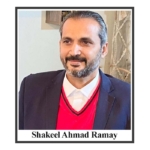
By Ali Abbas
Pakistan’s Higher Education Commission (HEC) new weighted research policy has surely raised an eyebrow among a few academics nationwide. Before further dissecting the policy and its implications, it is pertinent to understand the role of HEC as a regulatory authority, which can help clear the air to a greater extent. As stated, “Regulatory”, it is important to accept that the Higher Education Commission of Pakistan is there to implement quality checks irrespective of the decision being popular or unpopular. So, with this lens, it is easy to understand why HEC is weighing this bold step of assigning weights to authorship and what must have been the shortcomings in the previous policy, despite the earlier policy’s apparent benefits.
The new policy values first authors and corresponding authors more, acknowledging a reward for the initiators and potential stakeholders in the event that there are more than 3 authors. While HEC is not stopping co-authorship, it aims to credit researchers who have genuine contributions and are adding value as a lead or major contributor. It is entirely up to contributors to choose the number of other co-authors and their desired contribution and commitment in the research article. In fact, this should rather be seen as a measure of transparency that researchers who are expecting to get fewer marks for co-authorship will be doing less work in contrast to the first author. That can actually act as a yardstick for them to allocate their time to multiple projects to get their respective share/ count. However, not to undermine the researchers whose genuine intent surrounds a higher number of publications in less time with real contribution, it is a welcoming sign for authors who stay away from relationship-based and aided research.
So, HEC, being a quality custodian of education and research practices for HEIs, has come up with a stance to curb research mills, fraudulent research, and fake authorship, where publications in friends’ journals and contributions following quid pro quo are compensated. And one never knows when these researchers who have worked as co-authors or fall last in the author list make it to the classes; their share of knowledge and impact may be a concern at times as well. The problem is even bigger, as not only papers with 20+ authors can be found, but researchers are co-authoring in different fields that may be beyond cross-domain collaboration. This is where HEC might have to respond and find this weighted policy as damage control. Well, this research’s credibility is not Pakistan’s dilemma only, but something that is a world issue in a higher education setting. And when HEC addresses these concerns, it might act as a benchmark for other nations’ education systems, especially for the education and accreditation councils of similar demographics. Whether one favors or opposes it, HEC has devised something that raises major concerns, and that is to curb the need to distinguish between real and fake contributors.
Now comes the point of demotivating international contributions from this weighted system, as raised by the affected prospective contributors. Well, though not every policy can avoid its collateral, the overall gain may be exploited as well. It is to be remembered that international collaborators are not to be linked with those weights; they can continue to collaborate at any number in the author list as they used to be, i.e., first or second or third, etc. In this case, the logic for local authors will remain the same as stated above about their respective contributions and rewards. The time and effort can then help in identifying multiple avenues as well. Again, there are always two sides to a coin, and in the current dynamics, where co-authorship has appeared to be a business deal, the side with the assigned weights policy bears more weight. Also, on the other hand, the offset can be made by allocating funds and instructing HEIs to devote funding to Gold open access, thus accelerating the pace of the first-author research. All in all, the new policy hints at increasing competitiveness and research credibility while leaving it to the test of time to see if it turns out to be a value addition for researchers by choice or by chance.
About the author:
Ali Abbas, PhD, works at Beaconhouse National University.
He can be reached at aabbas724@gmail.com