Summary
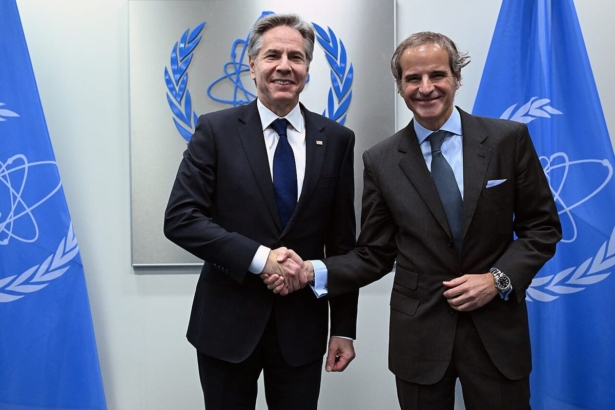
- IAEA inspectors should return to Iran quickly, agency chief Rafael Grossi told UN member states on Friday, but a restart of talks must come first.
- Return of IAEA inspectors, he said, “requires a return to the negotiating table.”Also, Iran has tightly limited access since June 2025.
- For now, the return of IAEA inspectors to Iran depends on talks that remain stalled, even though Grossi says the technical work is ready.
IAEA inspectors should return to Iran quickly, agency chief Rafael Grossi told UN member states on Friday, but a restart of talks must come first.
Grossi presented the International Atomic Energy Agency‘s yearly report to the General Assembly. In it, he said the groundwork on technical issues is complete.
However, he stressed that the basis for a diplomatic agreement exists, and he asked countries to use it.
What Grossi said about IAEA inspectors
Grossi asked the parties to redouble their efforts toward a diplomatic fix that keeps the agency’s verification role. Without that role, he warned, no agreement can last.
Return of IAEA inspectors, he said, “requires a return to the negotiating table.”
Also, Iran has tightly limited access since June 2025. Also, in that war with Israel, which lasted 12 days, strikes hit its nuclear sites. Washington struck the sites last year, and then the US and Israel began a fresh war on February 28.
In March, the agency estimated that just over 200 kilograms of uranium enriched to 60 percent remained at Isfahan. More material sits at Natanz.
In September, the board of governors passed Iran’s non-compliance to the Security Council. Tehran contests that step.
Dialogue and other crises
Grossi argued that the world’s non-proliferation system rests on dialogue. As examples, he pointed to Syria and Ukraine, where the agency brokered eight local ceasefires so crews could repair power lines at the Zaporizhzhia plant.
Since the full-scale invasion in 2022, the agency has run 287 missions in Ukraine. Zaporizhzhia, Europe’s largest nuclear plant, remains in a precarious position, he said. It suffers frequent power losses, it holds limited back-up diesel, and military activity threatens it.
On North Korea, Grossi said a growing programme with no IAEA oversight shows the cost of crossing red lines. He also noted worrying reports that other countries, which he did not name, talk of acquiring nuclear weapons.
On Syria, he reported significant progress on old questions about its nuclear activities. Because of engagement with interim President Ahmad al-Sharaa, the uncertainty of nearly two decades is easing. In September, he said that the government ousted in December 2024 had built a reactor set up to make fissile material for possible weapons use.
Nuclear power growth
By 2060, Grossi forecast, nuclear power use could more than triple. Rising electricity demand, AI-powered data centres and the appetite of technology firms for reliable, carbon-free power will drive the growth, he said.
In 2025, over 400 operating reactors in more than 30 countries made 10 percent of the world’s electricity. They supplied a quarter of its low-carbon power. Builders are working on more than 60 new reactors, and projections for future capacity have jumped.
He said a growing number of countries see nuclear energy as key to energy security. Moreover, he called it as safe as any other option, and he noted that demand for reliable power keeps rising.
For now, the return of IAEA inspectors to Iran depends on talks that remain stalled, even though Grossi says the technical work is ready.
We welcome your contributions! Submit your blogs, opinion pieces, press releases, news story pitches, and news features to opinion@minutemirror.com.pk and minutemirrormail@gmail.com