Summary
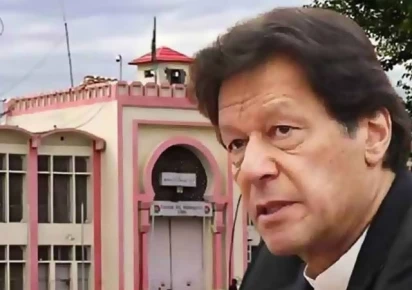
- RAWALPINDI: The Supreme Court’s directive to move former prime minister Imran Khan from Adiala Jail to Shifa International Hospital has sparked intense political and legal debate, with analysts speculating that the development could signal a possible shift in the political landscape.
- Some have also linked the development to discussions surrounding political reconciliation, the creation of new provinces and the possibility of a national government involving major political forces.
- Former federal minister Fawad Chaudhry also welcomed the Supreme Court’s decision, saying it could mark the beginning of a new phase of political engagement.
RAWALPINDI: The Supreme Court’s directive to move former prime minister Imran Khan from Adiala Jail to Shifa International Hospital has sparked intense political and legal debate, with analysts speculating that the development could signal a possible shift in the political landscape.
The court has directed the federal government to arrange Khan’s transfer within two days. The decision has generated speculation about whether political space could be opening for the Pakistan Tehreek-e-Insaf (PTI) after years of political confrontation and exclusion.
Several political and legal observers have suggested that the possibility of a broader political understanding with Khan cannot be dismissed. Some have also linked the development to discussions surrounding political reconciliation, the creation of new provinces and the possibility of a national government involving major political forces.
The ruling Pakistan Muslim League-Nawaz (PML-N), however, has reacted with uncertainty. Some senior party figures have questioned the legal basis of the Supreme Court’s decision, while Senator Nasir Butt described the development as a possible conspiracy against former prime minister Nawaz Sharif. He also suggested that Khan could eventually be allowed to move from the hospital to his residence.
Law Minister Azam Nazeer Tarar has said the federal government will file a review petition against the order. He also questioned why the court directed Khan to be transferred to a private hospital rather than a government facility.
A senior government law officer similarly raised concerns about the broader implications of allowing prisoners to receive treatment at private hospitals and questioned the maintainability of the petition through which the directions were issued.
Some senior lawyers, however, viewed the ruling as a significant development in Pakistan’s political and constitutional environment. Former additional attorney general Tariq Mahmood Khokhar described the decision as a sign of a possible political transformation, arguing that the existing political arrangement had failed to resolve the country’s deeper crises.
Khokhar suggested that the development could eventually contribute to a political settlement involving the PTI and possibly lead to the formation of a broader national government. He also argued that Pakistan needed political inclusion rather than continued exclusion of major political forces.
Former federal minister Fawad Chaudhry also welcomed the Supreme Court’s decision, saying it could mark the beginning of a new phase of political engagement. He claimed that negotiations between the government and PTI appeared to be moving in a positive direction and stressed that political opponents should be given space to negotiate contentious issues.
Chaudhry also called for dialogue on matters including the creation of new provinces, saying Imran Khan’s willingness to participate in such discussions would be important.
Former law officer Waqar Rana described the ruling as a positive development and said it reflected the constitutional rights of an imprisoned political leader. He argued that Pakistan needed meaningful political and institutional reforms and should move away from what he called a politics of exclusion.
Rana also urged reforms in the judicial system and said Pakistan could learn from countries that had undergone major political transitions.
Not everyone, however, viewed the Supreme Court’s intervention positively. A senior lawyer criticised several aspects of the proceedings and argued that the delay in addressing Khan’s health concerns raised questions about the functioning of the judicial system.
The lawyer also expressed concern over what he described as restrictions on Khan’s political speech. He questioned the legal basis for limiting the political expression of a leader and argued that imprisonment does not automatically extinguish fundamental rights.
He further raised questions about reports that members of Khan’s family might be required to submit an affidavit, asking what would happen if they refused to do so.
According to the lawyer, the wider significance of the case would depend on whether the court’s decision represented a purely judicial intervention or formed part of a broader political understanding.
The development has therefore opened a fresh debate over the future of Pakistan’s political landscape, with supporters seeing the hospital-transfer order as a possible step towards reconciliation while critics remain concerned about its constitutional and political implications.
We welcome your contributions! Submit your blogs, opinion pieces, press releases, news story pitches, and news features to opinion@minutemirror.com.pk and minutemirrormail@gmail.com