Summary
- NEW DELHI: A massive youth-led protest in India’s capital has taken an unusual turn after thousands of demonstrators responded to a police crackdown not only with slogans but also with memes, short videos and social media posts.
- Once internet services were restored, social media platforms were flooded with videos recorded during the protest.
- Young demonstrators also explained that recording videos had become a natural part of participating in modern protests.
NEW DELHI: A massive youth-led protest in India’s capital has taken an unusual turn after thousands of demonstrators responded to a police crackdown not only with slogans but also with memes, short videos and social media posts. The online campaign has become a powerful extension of the street movement, with young protesters using humour to document their experiences and keep public attention focused on their demands.
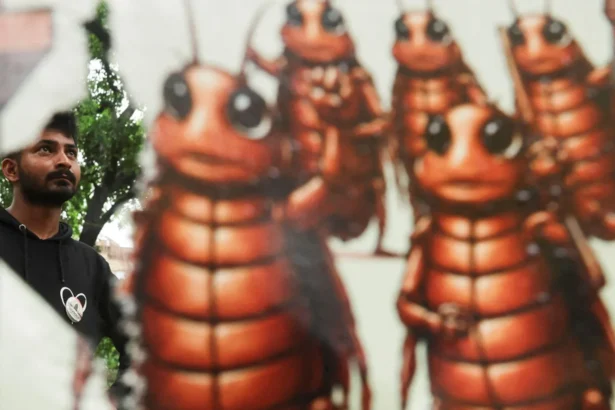
The demonstrations were organised by supporters of the Cockroach Janta Party (CJP), a youth movement that first emerged over allegations of examination paper leaks and irregularities in government recruitment. Over time, the campaign expanded into a broader call for transparency, accountability and reforms in India’s education and recruitment systems.
Tens of thousands of protesters marched towards Parliament in New Delhi, demanding the resignation of Education Minister Dharmendra Pradhan. Demonstrators accused the government of failing to stop repeated examination leaks that they say have damaged the future of millions of students. The minister has rejected the allegations and insisted that opposition parties are using students for political purposes.
Police blocked the march before protesters could reach Parliament. Security personnel used tear gas and baton charges to disperse the crowd after demonstrators attempted to cross security barriers. Authorities also suspended mobile internet services around the protest area, saying the measure was necessary to maintain law and order.
Both protesters and police reported injuries during the clashes. Demonstrators claimed that many participants were beaten during the operation, while police said several officers were also injured.
Once internet services were restored, social media platforms were flooded with videos recorded during the protest. Instead of sharing only images of violence, many young protesters posted humorous clips showing themselves preparing for the march, running from tear gas and joking about the day’s events.
Several participants uploaded “fit check” videos before joining the protest. The popular social media trend, usually used to show clothing and fashion, was transformed into political content. Some joked that they were dressed for a protest where they expected to face police action. Hours later, many of those same individuals were posting videos from the streets after the clashes.
Other protesters shared short clips reviewing the effects of tear gas in a humorous style or laughing about the long distances they ran while escaping baton charges. The humour quickly attracted millions of views and became one of the defining features of the protest movement online.
Participants said the jokes were never meant to make light of the violence. Instead, they described humour as a way to deal with fear and emotional stress. Many said laughing together helped them remain calm during an extremely tense situation.
Young demonstrators also explained that recording videos had become a natural part of participating in modern protests. Smartphones allowed them to document events from their own perspective and preserve evidence of what happened on the streets.
Researchers who study digital culture say the protests highlight how political activism is changing among younger generations. Unlike traditional demonstrations that relied mainly on speeches, banners and newspapers, today’s movements increasingly use short videos, memes and online storytelling to spread their message.
Experts believe internet humour has become an effective political tool because it reaches audiences who may not normally follow current affairs. A single viral video or meme can introduce complex political issues to millions of young people in a simple and engaging way.
Observers also note that humour has always played an important role in protest movements around the world. Songs, cartoons, street theatre and satire have historically helped protesters build unity, reduce fear and maintain morale during difficult campaigns. Social media has simply given those traditions a new digital form.
We welcome your contributions! Submit your blogs, opinion pieces, press releases, news story pitches, and news features to opinion@minutemirror.com.pk and minutemirrormail@gmail.com