Summary
- Iran’s Armed Forces General Staff has issued a nationwide passive defence plan covering three possible scenarios as the conflict with the United States continues.
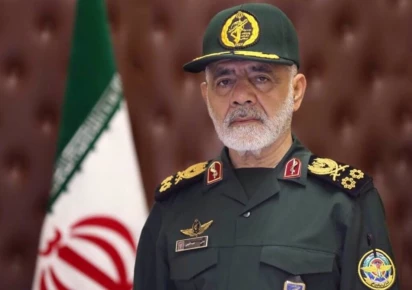
- The directive, issued by Armed Forces Chief of Staff Major General Ali Abdollahi, outlines preparations for the possible end of the war, a ceasefire without a final settlement, and a full-scale conflict.
- In the event that the war formally ends, Iran plans to proceed with scheduled exercises, training programmes and other public activities under its passive defence programme.
Iran’s Armed Forces General Staff has issued a nationwide passive defence plan covering three possible scenarios as the conflict with the United States continues.
The directive, issued by Armed Forces Chief of Staff Major General Ali Abdollahi, outlines preparations for the possible end of the war, a ceasefire without a final settlement, and a full-scale conflict.
Under the full-scale war scenario, authorities would suspend large public gatherings and in-person events. The focus would instead shift to maintaining essential services, managing resources, supporting civilians and coordinating emergency measures.
If a ceasefire is reached but fighting could resume, the plan calls for greater public preparedness and vigilance. Authorities have also been instructed to strengthen protection against hybrid warfare and information-security threats.
In the event that the war formally ends, Iran plans to proceed with scheduled exercises, training programmes and other public activities under its passive defence programme.
The directive also orders authorities to update operational plans based on lessons learned from what Iranian officials describe as the country’s second and third “imposed wars”.
Iran has issued similar passive defence instructions in previous years. However, the latest plan comes amid heightened tensions and explicitly prepares authorities for different outcomes of the ongoing conflict.
Meanwhile, security concerns have also increased around key waterways in the region.
Oman’s Maritime Security Centre said an oil tanker flying the Panama flag was being towed to an Omani port after suffering an engine-room fire following an attack. The vessel, identified as EL GAIA, was located around 103 nautical miles northeast of Musandam.
An Omani naval vessel evacuated 23 crew members, while two others remained missing, according to authorities.
In Lebanon, US Ambassador Michel Issa visited the southern village of Zawtar al-Gharbiya, which recently came under the control of the Lebanese army under a framework agreement involving Israel.
An Israeli drone was reportedly seen surveying the area during the visit. Israeli forces continue to maintain positions in parts of southern Lebanon that they describe as a security zone.
The developments came as Iran’s Foreign Minister Abbas Araghchi prepared to travel to China on September 16 for talks with Chinese Foreign Minister Wang Yi.
China has called for political and diplomatic efforts to resolve the US-Iran conflict. Chinese Foreign Ministry spokesperson Guo Jiakun said Beijing was closely monitoring developments in the Middle East and Gulf and urged the parties to settle their disputes through diplomatic means.
The UN Security Council is also expected to meet to discuss the situation around the Bab al-Mandab Strait. The meeting was requested by France, according to French diplomatic sources.
Separately, Iran’s Islamic Revolutionary Guard Corps said its aerospace forces had shot down a US MQ-1 Predator drone over the Strait of Hormuz. Iranian state media described the drone as an intruding aircraft and said it had been intercepted while operating in Iranian airspace.
We welcome your contributions! Submit your blogs, opinion pieces, press releases, news story pitches, and news features to opinion@minutemirror.com.pk and minutemirrormail@gmail.com