Summary
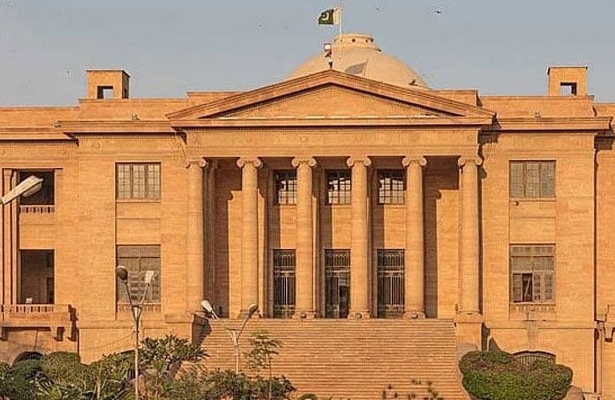
- KARACHI: The Sindh High Court (SHC) has ruled that marriage does not merge a woman’s legal identity with that of her husband, holding that a married woman remains an independent rights-bearing citizen and cannot be denied an economic or business entitlement simply because her husband is engaged in the same trade.
- The High Court accepted the legal position advanced by the petitioners and held that a woman’s constitutional rights do not depend upon her marital status.
- The court ultimately disposed of the constitutional petitions and held that the petitioners were entitled to retain their respective allotments as long as they remained engaged in the dairy business.
KARACHI: The Sindh High Court (SHC) has ruled that marriage does not merge a woman’s legal identity with that of her husband, holding that a married woman remains an independent rights-bearing citizen and cannot be denied an economic or business entitlement simply because her husband is engaged in the same trade.
The significant ruling was issued in PLD 2026 Sindh 279, Hazoor Bux and others vs Province of Sindh and others, by a Division Bench comprising Justice Muhammad Saleem Jessar and Justice Nisar Ahmed Bhanbhro. The judgment was authored by Justice Nisar Ahmed Bhanbhro.
The case concerned the cancellation of cattle-pen allotments in the Cattle Colony Sukkur. The petitioners had received provisional allotments in 2023 after establishing dairy businesses and cattle sheds in Sukkur. The government had established the colony to relocate cattle sheds from populated areas of the city.
The dispute arose after the Administrator Cattle Colony Sukkur and Assistant Commissioner Sukkur cancelled the provisional allotments through an order dated June 27, 2025. Among those affected were female petitioners whose allotments were cancelled on the basis that their husbands had also been allotted plots in the cattle colony.
The petitioners maintained that they were independently engaged in the dairy business and that their commercial rights could not be curtailed merely because their husbands were involved in the same occupation.
The High Court accepted the legal position advanced by the petitioners and held that a woman’s constitutional rights do not depend upon her marital status. The court observed that the Constitution protects individuals as independent persons rather than treating marriage as a single legal or economic unit.
Referring to Articles 4, 9, 18, 23 and 25 of the Constitution, the court emphasised that women are entitled to equal protection of law and can independently exercise their constitutionally protected right to conduct lawful business.
The court held that denying a woman the opportunity to continue her business because her husband was engaged in the same business amounted to an impermissible and regressive approach. It further observed that such a conception was inconsistent with Islamic principles, the law of the land and the constitutional guarantees available to citizens.
The judgment stressed the importance of women’s financial independence, observing that economic autonomy plays an important role in strengthening women’s independence and enabling healthier and more equitable family and social relationships.
In a significant observation, the court held that treating a woman as dependent for the enjoyment of a right or benefit was alien to law. It further noted that there was no legal basis for linking a woman’s civic or economic rights to her relationship with a man.
At the same time, the court clarified that the government retains the authority to regulate dairy activities and impose reasonable conditions concerning cattle premises and related matters, including regulation of milk and meat prices. However, such regulatory powers cannot be used to cancel an allotment solely because the allottee is married to another person involved in the same business.
The court ultimately disposed of the constitutional petitions and held that the petitioners were entitled to retain their respective allotments as long as they remained engaged in the dairy business.
The ruling is being viewed as an important judicial affirmation of women’s independent legal personality and economic rights, particularly the principle that marriage cannot by itself be used as a basis to restrict a woman’s lawful commercial activity.
We welcome your contributions! Submit your blogs, opinion pieces, press releases, news story pitches, and news features to opinion@minutemirror.com.pk and minutemirrormail@gmail.com