Summary
- Iranian state television has clarified that despite the signing of a memorandum of understanding between Tehran and Washington, the passage of ships through the Strait of Hormuz still requires coordination with Iran’s naval forces.
- According to details published by Iran’s state news agency IRNA, Tehran pledged to ensure safe passage of commercial vessels free of charge for 60 days, with shipping expected to resume immediately.
- The blockade, imposed in April, had made commercial shipping nearly impossible after Iran closed the strait in response to the war launched by the U.S.
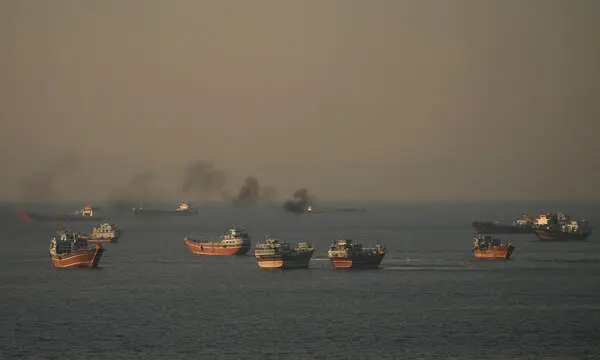
Iranian state television has clarified that despite the signing of a memorandum of understanding between Tehran and Washington, the passage of ships through the Strait of Hormuz still requires coordination with Iran’s naval forces.
The broadcaster reported that the Islamic Revolutionary Guard Corps (IRGC) continues to impose conditions on vessels seeking to transit the waterway. This comes just a day after Iranian President Masoud Pezeshkian and U.S. President Donald Trump signed a deal aimed at ending the war that began in late February.
According to details published by Iran’s state news agency IRNA, Tehran pledged to ensure safe passage of commercial vessels free of charge for 60 days, with shipping expected to resume immediately. Full restoration of transit is contingent on mine‑clearing operations and removal of military obstacles. Iran also plans discussions with Oman and consultations with other Gulf littoral states on future administration of the strait.
In exchange, the U.S. agreed to lift its naval blockade on Iranian ports. The blockade, imposed in April, had made commercial shipping nearly impossible after Iran closed the strait in response to the war launched by the U.S. and Israel on February 28.
Hours after the deal was signed, three Saudi‑flagged supertankers carrying six million barrels of crude successfully sailed through Hormuz, signaling the first tangible impact of the agreement. Shipping companies noted that vessels were now broadcasting their positions openly rather than concealing them, reflecting renewed confidence in safe transit.
Global energy markets reacted swiftly. Brent crude futures fell another 2 percent to below $78 a barrel, their lowest level since the conflict began, as traders anticipated a gradual normalization of flows through the strait.
The memorandum sets a 60‑day negotiation period for a final settlement to the war. While the agreement has already eased some restrictions, Iran’s insistence on coordination underscores that the path to full restoration of shipping remains complex and politically sensitive.
We welcome your contributions! Submit your blogs, opinion pieces, press releases, news story pitches, and news features to [email protected] and [email protected]