Summary
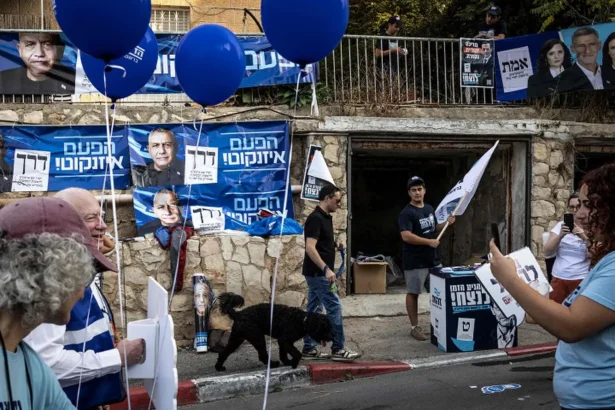
- JERUSALEM: Israeli voters headed to the polls on Tuesday in a closely contested election that could determine the political future of Prime Minister Benjamin Netanyahu, as growing divisions over security, the October 7, 2023, attacks and the country’s hard-right shift dominate the campaign.
- The election, the first since the Hamas-led October 7 attack, comes after nearly three years of regional conflict that have reshaped Israel’s security policies and international standing.
- However, Netanyahu faces criticism over his failure to accept responsibility for the security failures surrounding the October 7 attack, which marked the deadliest day in Israel’s history.
JERUSALEM: Israeli voters headed to the polls on Tuesday in a closely contested election that could determine the political future of Prime Minister Benjamin Netanyahu, as growing divisions over security, the October 7, 2023, attacks and the country’s hard-right shift dominate the campaign.
The election, the first since the Hamas-led October 7 attack, comes after nearly three years of regional conflict that have reshaped Israel’s security policies and international standing. Voters are being asked to assess Netanyahu’s leadership amid mounting questions about accountability, military strategy and the future direction of the country.
The final opinion polls published before voting showed Netanyahu running neck and neck with his main centrist rival, Gadi Eisenkot, a former military chief seeking to challenge the veteran premier’s long-standing political dominance.
Around 7.3 million Israelis are eligible to vote, including more than half a million young people casting their ballots for the first time. Tens of thousands of Israelis living abroad were also estimated to have returned to participate in the closely watched election.
“I think this is one of the most important election days in the history of the state of Israel,” Jerusalem resident Uriel Brandler told AFP, expressing hope for political change.
Netanyahu highlights security credentials
Netanyahu, 77, has served as prime minister for more than 19 years across several terms. During the campaign, he emphasised his security experience and close relationship with US President Donald Trump, presenting himself as the leader best equipped to protect Israel against regional threats.
Since October 2023, Israeli forces have conducted a devastating military campaign in Gaza, operated in southern Lebanon and, with US assistance, attacked Iran. Israel has also faced attacks from Iran, Hamas, Hezbollah and Yemen’s Houthi movement.
Supporters say Netanyahu’s experience makes him the strongest candidate to navigate continuing security challenges.
“He has the full support of the American government,” 85-year-old voter Zipporah Bennett told AFP, explaining her decision to support the prime minister.

However, Netanyahu faces criticism over his failure to accept responsibility for the security failures surrounding the October 7 attack, which marked the deadliest day in Israel’s history.
Eisenkot promises inquiry into October 7
Eisenkot, 66, has pledged to establish an independent state commission of inquiry into the intelligence and security failures that preceded the attack. Netanyahu’s government has resisted calls for such an investigation.
The opposition has also criticised the prime minister’s reliance on far-right and ultra-Orthodox coalition partners. Disputes over exemptions from military service for religious students have intensified as the armed forces face personnel shortages.
Although Eisenkot has positioned himself as an alternative to Netanyahu, he has also opposed the establishment of a Palestinian state and expressed support for Israeli settlements, while promising action against violent settlers.
Coalition talks could prolong uncertainty
Neither leading contender is expected to secure an outright parliamentary majority. Israel’s 120-seat Knesset requires at least 61 seats to form a government.
Arab-majority political lists, representing roughly 21 per cent of Israel’s population, could emerge as decisive players if the results are close, although neither Netanyahu nor Eisenkot has publicly committed to partnering with them.
Final results may take days, while coalition negotiations could stretch for weeks or months. If political leaders fail to assemble a governing majority, Israel could face another election.
The outcome will determine not only Netanyahu’s political survival but also the direction of Israel’s security policy, domestic politics and relations with the wider world.
We welcome your contributions! Submit your blogs, opinion pieces, press releases, news story pitches, and news features to opinion@minutemirror.com.pk and minutemirrormail@gmail.com