Summary
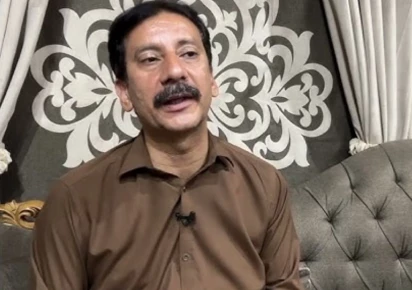
- Authorities in Azad Jammu and Kashmir (AJK) arrested Jammu Kashmir Joint Awami Action Committee (JAAC) leader Shaukat Nawaz Mir during an operation in Dhirkot on Tuesday, further intensifying political tensions in the region.
- Political tensions in Azad Kashmir have increased significantly in recent weeks following clashes between protesters and law enforcement agencies in several districts.
- Observers believe the arrest of Shaukat Nawaz Mir could further increase political uncertainty and deepen the confrontation between authorities and protest organisers in the coming days.
Authorities in Azad Jammu and Kashmir (AJK) arrested Jammu Kashmir Joint Awami Action Committee (JAAC) leader Shaukat Nawaz Mir during an operation in Dhirkot on Tuesday, further intensifying political tensions in the region.
Officials said the arrest was carried out during a joint operation involving police and district administration personnel based on intelligence reports regarding his movement.
According to local authorities, Shaukat Nawaz Mir was detained while attempting to reach an ongoing sit-in organised by supporters of the JAAC.
The arrest comes days after the AJK government imposed a ban on the organisation, citing concerns over law and order and recent violent incidents linked to protests in the region.
Despite the ban, the group has continued its demonstrations and announced that its protest movement would continue until its demands are accepted.
Soon after the arrest, the JAAC confirmed that its chairman had been taken into custody and stated that another member, Saib Javed, was also arrested during the operation.
The organisation described both men as activists working for public rights, justice and political reforms in Azad Kashmir.
JAAC leaders alleged that Mir was stopped before reaching the protest venue through a large-scale operation involving law enforcement agencies and other institutions.
The group accused authorities of attempting to weaken the movement by targeting its leadership.
However, it insisted that the detention of one leader would not affect the protest campaign or public support for the movement.
In statements issued following the arrest, JAAC leaders urged supporters to remain calm and continue participating in peaceful demonstrations.
They maintained that public movements do not depend on a single individual and that the campaign would continue despite arrests and restrictions.
The group claimed that its struggle represented the aspirations of ordinary citizens rather than the interests of political elites.
Political tensions in Azad Kashmir have increased significantly in recent weeks following clashes between protesters and law enforcement agencies in several districts.
The most serious confrontations were reported in Rawalakot and nearby areas where protests and sit-ins had been taking place.
Police authorities alleged that armed protesters attacked security personnel during the unrest, resulting in the deaths and injuries of several officers.
Protest organisers strongly rejected those allegations and claimed that excessive force had been used against demonstrators during efforts to disperse gatherings.
According to official figures, both protesters and law enforcement personnel lost their lives during the clashes, while many others were injured.
The unrest has raised concerns over the overall security situation in the region ahead of upcoming political developments.
The standoff between the government and the JAAC has intensified following the announcement of elections for the Azad Jammu and Kashmir Legislative Assembly scheduled for July 27.
The JAAC has gained significant public attention in recent years through campaigns calling for political, constitutional and governance reforms.
Among its key demands are the abolition of privileges enjoyed by the political elite, reforms to the electoral system and changes to the allocation of reserved refugee seats in the legislative assembly.
The organisation has also demanded an end to the quota system and greater accountability in public institutions.
Large protests organised by the group in previous years led to widespread unrest and eventually forced negotiations between government representatives and protest leaders.
Those talks resulted in agreements covering several constitutional and administrative issues raised by the movement.
Despite earlier negotiations, many of the group’s demands remain unresolved, contributing to renewed tensions and fresh protests across the region.
Observers believe the arrest of Shaukat Nawaz Mir could further increase political uncertainty and deepen the confrontation between authorities and protest organisers in the coming days.
We welcome your contributions! Submit your blogs, opinion pieces, press releases, news story pitches, and news features to opinion@minutemirror.com.pk and minutemirrormail@gmail.com