
Summary
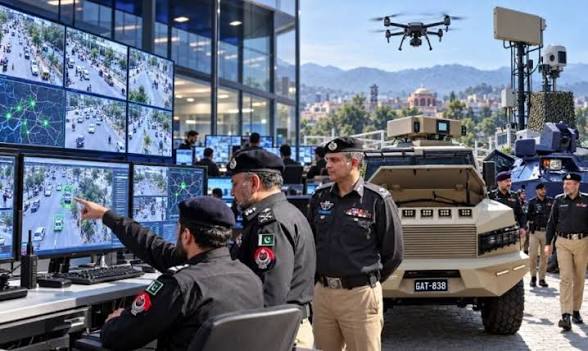
- PESHAWAR: Khyber Pakhtunkhwa Police has integrated its dedicated Drone Unit and advanced Anti-Drone System with the central control room of the Peshawar Safe City Project, introducing a technology-driven approach to surveillance, counter-terrorism and crime prevention.
- The integration was completed under the directions of Inspector General of Police Khyber Pakhtunkhwa Zulfiqar Hameed, who ordered the establishment of a specialized Drone Division earlier this year to strengthen counter-terrorism operations and improve security monitoring.
- Under the new arrangement, live video feeds from drone units operating across Khyber Pakhtunkhwa will be transmitted to the Safe City central control room in Peshawar.
PESHAWAR: Khyber Pakhtunkhwa Police has integrated its dedicated Drone Unit and advanced Anti-Drone System with the central control room of the Peshawar Safe City Project, introducing a technology-driven approach to surveillance, counter-terrorism and crime prevention.
The development marks a significant step towards centralizing aerial surveillance across the province. KP Police is scheduled to brief the media tomorrow on the system’s operational capabilities, technical features and future expansion plans.
The integration was completed under the directions of Inspector General of Police Khyber Pakhtunkhwa Zulfiqar Hameed, who ordered the establishment of a specialized Drone Division earlier this year to strengthen counter-terrorism operations and improve security monitoring.
Under the new arrangement, live video feeds from drone units operating across Khyber Pakhtunkhwa will be transmitted to the Safe City central control room in Peshawar. Officials will be able to monitor aerial activities, record footage and coordinate operations through a centralized command system.
The Anti-Drone System also features modern radar technology designed to detect unauthorized or suspicious drone activity. Each installed unit in Peshawar reportedly covers an aerial radius of five kilometres. When an unidentified or unregistered drone enters the monitored area, the system automatically generates an alert at the central control room, allowing security personnel to initiate an appropriate response.
IGP Zulfiqar Hameed said security challenges had changed significantly, requiring law enforcement agencies to adopt modern technological solutions. He described the evolving security environment as a technological war and emphasized the importance of Safe City infrastructure, drone surveillance, facial recognition and thermal imaging in strengthening security arrangements.
According to officials, the integrated network will support round-the-clock surveillance of sensitive locations, government buildings, important installations and restricted security zones. It is also expected to assist authorities in monitoring traffic, public gatherings, criminal activity and potential escape routes.
The technology will further support security personnel during search operations, encounters, counter-terrorism activities and law-and-order situations. Automated alerts are expected to help authorities identify potential threats involving suspicious drones, unauthorized aerial surveillance and possible drone-based attacks.
Beyond Peshawar, drone surveillance operations have also been established in security-sensitive southern districts, including Dera Ismail Khan, Bannu and Lakki Marwat. The expansion aims to improve the detection of suspicious movements, identify criminal and terrorist elements, and strengthen monitoring in areas facing persistent security challenges.
Sources familiar with the project said further technological upgrades were being planned. These include integrating artificial intelligence-based facial recognition with drone footage to help identify wanted suspects and missing persons. Authorities are also considering thermal imaging and night-vision capabilities to improve surveillance during nighttime operations, particularly in mountainous and forested areas.
Another proposed phase involves expanding the anti-drone radar network to divisional headquarters across the province by early 2027. Officials are also planning a centralized database of drone footage to support investigations and forensic analysis.
Authorities expect the integrated system to improve coordination, accelerate threat detection and provide security officials with a consolidated view of aerial surveillance activities across KP.
Further information regarding operational deployment, recent achievements and standard operating procedures for public and commercial drone use is expected during tomorrow’s media briefing.
We welcome your contributions! Submit your blogs, opinion pieces, press releases, news story pitches, and news features to opinion@minutemirror.com.pk and minutemirrormail@gmail.com