
Summary
- The University of Karachi and the Counter Terrorism Department, Sindh signed an MoU to launch structured internships for KU’s computer science students and technical training programs for CTD officers.
- From Lecture Halls to Live Operations Under the agreement, third and final-year students from KU’s Department of Computer Science will step out of classrooms and into CTD’s digital operations.
- “This one puts our students in the room where technology meets national security.” In return, KU’s DSC will train CTD personnel on modern computing tools, data analysis, and emerging tech.
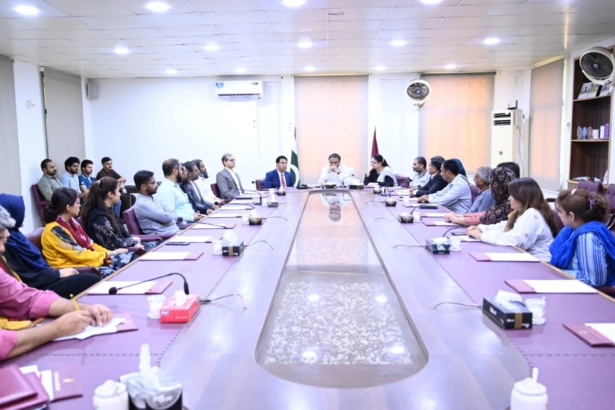
Inside the Vice Chancellor’s Secretariat at the University of Karachi last day, two worlds that rarely meet sat across the same table. On one side: academics in blazers, talking about data structures and software labs. On the other: police officers in uniform, carrying the weight of Karachi’s counterterrorism fight. By the time they stood up, they had signed more than paper. They had signed a plan to bring code into the frontlines.
The University of Karachi and the Counter Terrorism Department, Sindh signed an MoU to launch structured internships for KU’s computer science students and technical training programs for CTD officers. VC Prof. Dr. Khalid Mahmood Iraqi and CTD DIG Capt. (R) Ghulam Azfar Mahesar inked the agreement as cameras flashed behind them.
But the real story wasn’t the signatures. It was what comes next.
From Lecture Halls to Live Operations
Under the agreement, third and final-year students from KU’s Department of Computer Science will step out of classrooms and into CTD’s digital operations. They’ll work on live projects — real software, real data, real stakes. Think forensic analysis tools, data management systems, and software that could help track patterns before they become threats.
“Internships usually mean coffee runs and dummy projects,” said Prof. Dr. Sadiq Ali Khan, Chairperson of KU’s DSC. “This one puts our students in the room where technology meets national security.”
In return, KU’s DSC will train CTD personnel on modern computing tools, data analysis, and emerging tech. The department is designing short certificate and diploma courses, plus workshops tailored to what officers actually face in the field. The goal: make sure the people chasing digital trails can read them as fast as they’re created.
“We Have to Engage Young Minds”
DIG Ghulam Azfar Mahesar, who spent years in counterterrorism operations before joining CTD, framed it as more than tech transfer. For him, universities are the first line of prevention.
“Besides our main work, we’re also working on interacting with youngsters to reduce violent behavior and thinking among them,” he said at the ceremony. “Universities are the best platforms to engage with them.”
It’s a rare admission from law enforcement — that stopping extremism isn’t just about raids and investigations. It’s about conversations, access, and giving students a stake in the system.
he CTD’s DIG Capt. (R) Ghulam Azfar Mahesar emphasized that his department was willing to establish a strong liaison with academia.
“Both institutions have recognized the importance of bridging the gap between academia and law enforcement through technological innovation and capacity building”, he asserts.
VC Dr. Khalid Mahmood Iraqi echoed that urgency. Citing Pakistan’s geopolitical pressures, he argued that “only committed and skilled forces equipped with the latest technology can address the problem.” For him, the MoU closes a dangerous gap: when academia moves too slow and security agencies move without enough tech literacy.
Why This Matters Now
Terrorism in Pakistan has evolved. The battleground shifted from streets to servers. Digital forensics, encrypted chats, and data trails now decide cases. Yet for years, police departments struggled with outdated tools while graduates walked out of universities with skills that never touched real cases.
This MoU tries to fix both sides of that equation. Students get exposure that no lab can simulate. Officers get training that no manual can deliver.
Present at the signing were CTD’s In-charge Digital Forensic Zeeshan Omer, SSP Syed Irfan Bahadur, KU Deans Prof. Dr. Zaeema Asrar Mohiuddin and Prof. Dr. Nasreen Fatima, plus KU’s ORIC team — the people who’ll actually make the collaboration run.
The Bigger Picture
Karachi University has signed MoUs before. Most collect dust. This one feels different because both sides brought skin in the game. CTD is opening its operations to students. KU is committing to train officers who don’t have time for theory.
If it works, the model could spread. Imagine NUST students helping FIA’s cybercrime wing. Or LUMS graduates building tools for the FIA. Academia and security forces don’t have to be separate worlds.
As the ceremony ended, one DSC faculty member put it simply: “We teach them how to code. Now they’ll learn why it matters.”
For Karachi — a city that’s seen too much of both code and conflict — that might be the most important lesson of all.
We welcome your contributions! Submit your blogs, opinion pieces, press releases, news story pitches, and news features to [email protected] and [email protected]