Summary
- The Federal Board of Revenue (FBR) has welcomed a Lahore High Court (LHC) ruling that clarifies its authority to investigate money laundering cases without waiting for the conclusion of a related income tax dispute.
- According to the board, the ruling allows its relevant authorities to proceed with money laundering investigations even when an underlying tax case remains pending.
- The ruling also established that authorities do not need to wait for a final decision in an income tax matter before taking action under the anti-money laundering law.
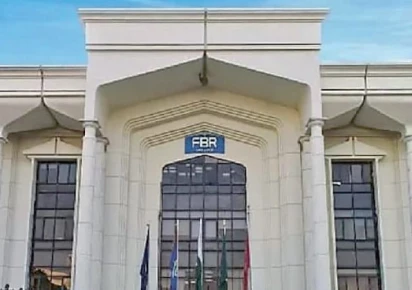
The Federal Board of Revenue (FBR) has welcomed a Lahore High Court (LHC) ruling that clarifies its authority to investigate money laundering cases without waiting for the conclusion of a related income tax dispute.
The decision came from a two-member LHC bench comprising Justice Khalid Ishaq and Justice Hassan Nawaz Makhdoom, which dismissed a writ petition and connected cases challenging the powers and actions of the FBR’s Directorate General of Intelligence & Investigation, Inland Revenue (I&I-IR).
In a statement, the FBR said the judgment provided important legal clarity by recognising money laundering and taxation proceedings as separate legal matters. According to the board, the ruling allows its relevant authorities to proceed with money laundering investigations even when an underlying tax case remains pending.
The court held that the I&I-IR possesses legal powers under the Anti-Money Laundering Act, 2010 to register cases, conduct investigations and pursue prosecutions involving suspected money laundering. The ruling also established that authorities do not need to wait for a final decision in an income tax matter before taking action under the anti-money laundering law.
The judgment explained that money laundering involves handling proceeds generated through unlawful activities and transferring, concealing or disguising those proceeds to make them appear to have originated from legitimate sources. The court further held that prosecutors do not necessarily require a prior conviction for the underlying offence before pursuing a money laundering case.
The LHC also emphasised the special status of the Anti-Money Laundering Act, noting that it takes precedence over general laws in matters specifically covered by its provisions. As a result, the court said that an ongoing tax dispute could not automatically prevent or delay proceedings initiated under anti-money laundering legislation.
The judgment also examined the role of banks and financial institutions in reporting suspicious transactions to the Financial Monitoring Unit (FMU). It held that authorities could take subsequent action on such reports within the framework established by law, while remaining subject to the safeguards and procedural requirements prescribed under the relevant legislation.
The FBR said the ruling would strengthen the legal framework for tackling financial crimes and provide greater clarity to its investigative authorities. The decision also reinforces the distinction between determining tax liability and investigating whether funds may represent proceeds of unlawful activity.
We welcome your contributions! Submit your blogs, opinion pieces, press releases, news story pitches, and news features to opinion@minutemirror.com.pk and minutemirrormail@gmail.com