Summary
- Under the agreement, the United States will begin lifting its naval blockade on Iran and remove restrictions on Iranian ports.
- In the longer term, Iran will work with Oman and other Gulf states to establish a broader regional framework for managing the Strait of Hormuz.
- This means no new sanctions will be imposed by the United States, and oil and energy exports may continue under special waivers.
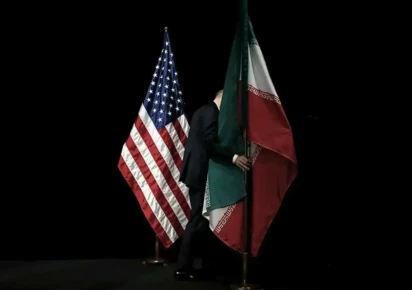
WASHINGTON / PARIS: A 14-point Memorandum of Understanding between the United States and Iran has been signed and is now in effect, marking a major attempt to extend the ceasefire and formally begin a structured peace process between the two countries.
The agreement was signed by US President Donald Trump during the G7 summit in France and also endorsed by Iranian President Masoud Pezeshkian. A White House official confirmed that the deal is now active. The accord is designed as a “performance-based” framework, meaning benefits for Iran depend on compliance with its commitments.
The first clause of the agreement declares an immediate and permanent end to military operations on all fronts, including Lebanon. Both sides have agreed not to initiate attacks against each other and to respect Lebanon’s territorial integrity and sovereignty. The document also states that any continuation of military action in Lebanon could be considered a violation of the understanding.
The agreement further commits both countries to respect each other’s sovereignty and avoid interference in internal affairs. This provision is expected to be controversial, particularly among Iranian opposition groups.
A key feature of the deal is a 60-day timeline for negotiations on a final agreement. This period can be extended with mutual consent. The countdown began immediately after the signing of the memorandum.
Under the agreement, the United States will begin lifting its naval blockade on Iran and remove restrictions on Iranian ports. This process is expected to be completed within 30 days. During this period, maritime traffic will gradually return to pre-conflict levels, including through the Strait of Hormuz.
The Strait of Hormuz is a central component of the agreement. Iran has agreed to ensure safe and uninterrupted passage of commercial vessels through the waterway, initially without charging transit fees. Traffic is expected to resume immediately, although technical and security operations such as de-mining may continue.
In the longer term, Iran will work with Oman and other Gulf states to establish a broader regional framework for managing the Strait of Hormuz. The agreement also suggests that Gulf states would not support any future tolling system for the passage of ships.
A major economic component of the deal is a proposed $300 billion reconstruction and development fund for Iran. This plan would be developed jointly with regional partners. The United States clarified that it will not directly contribute financially to the fund but will provide necessary approvals, waivers, and licenses to facilitate investment.
Sanctions relief is another major element. The United States has committed to ending all economic sanctions on Iran, including those imposed under UN Security Council resolutions and unilateral US measures. However, the exact timeline will be determined during follow-up negotiations.
Iran has agreed not to pursue or acquire nuclear weapons. The two sides will also address Iran’s existing enriched uranium stockpile. The material is expected to be diluted or processed under supervision by the International Atomic Energy Agency (IAEA), although the exact mechanism will be finalized later.
Until a final agreement is reached, both sides have agreed to maintain a “status quo” on Iran’s nuclear programme. This means no new sanctions will be imposed by the United States, and oil and energy exports may continue under special waivers.
The agreement also addresses frozen Iranian assets. The United States has committed to making restricted funds available once the memorandum is signed. The release process will be managed through agreed procedures, and some funds may be gradually unlocked during negotiations as Iran complies with key conditions.
To oversee implementation, both countries will establish a monitoring mechanism to track compliance and progress toward a final deal. The structure and operational details of this body will be defined in upcoming talks.
Finally, the memorandum sets the stage for full negotiations on a comprehensive peace agreement. Once implementation begins, both sides will work toward a long-term settlement covering nuclear issues, sanctions, security arrangements, and regional stability. The final agreement is expected to be endorsed through an international legal framework.
The deal is being viewed as a significant diplomatic shift, although several issues remain unresolved and dependent on future negotiations.
We welcome your contributions! Submit your blogs, opinion pieces, press releases, news story pitches, and news features to [email protected] and [email protected]