Summary
- A state strips millions of their basic political rights under the justification of order or national integration.
- By denying Kashmiris the freedom to assembly, political self-expression, and uninhibited digital communication, state machinery replaces organic democratic engagement with enforced compliance.
- Mill would argue that invoking national security to silence reporting—especially during conflicts where independent oversight is most vital—is a classic instrument of state self-protection, not public safety.
In his 1859 political treatise On Liberty, Victorian philosopher John Stuart Mill issued this timeless warning. The greatest threat to humanity is not monarchical despotism, but the tyranny of the majority enforced through state power.
The Harm Principle
At the heart of Mill’s philosophy lies the Harm Principle. The radical assertion that authority can only be legitimately exercised over a member of a civilized community against their will to prevent harm to others. Beyond this minimal threshold, individual autonomy over mind, body, and speech must remain absolute.
Re-reading Mill today reveals a truth. His warnings are no longer abstract political theory. They provide a precise mirror for contemporary state overreach. This overreach is illustrated by the erosion of civil liberties in Indian-administered Kashmir and the systemic suppression of media outlets like Al Jazeera.
The Harm Principle and the Disfranchisement of Kashmir
Mill argued that suppressing individual self-determination degrades both the citizen and the state. In Kashmir, the unilateral revocation of constitutional autonomy, prolonged blackouts, and detentions of political leaders represent a case of majoritarian coercion. A state strips millions of their basic political rights under the justification of order or national integration. So, it violates the core of Millian liberty: consent and self-governance.
Mill cautioned against treating entire populations as passive subjects incapable of directing their own political destiny. By denying Kashmiris the freedom to assembly, political self-expression, and uninhibited digital communication, state machinery replaces organic democratic engagement with enforced compliance. In Mill’s framework, a government that fears the peaceful political expression of its people reveals the fragility of its own moral authority.
Ban on Al Jazeera
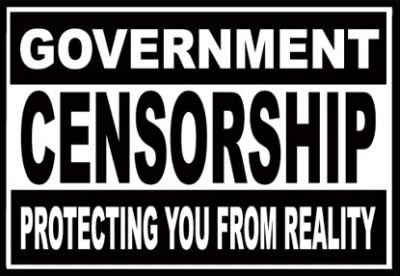
Mill’s second chapter, dedicated to freedom of thought provides the intellectual critique of state censorship. He argued that silencing an opinion is a unique crime against humanity because it presumes the state possesses infallibility. Even if an perspective is deemed antagonistic, banning it deprives the public of testing truth against error.
This principle directly challenges the recent enforcement of the Al Jazeera Law, under which the Israeli government shut down the Qatari broadcaster’s local operations, confiscated equipment, and blocked access to its platforms. Citing national security threats, state authorities effectively declared themselves the sole arbiters of acceptable news coverage. Mill would argue that invoking national security to silence reporting—especially during conflicts where independent oversight is most vital—is a classic instrument of state self-protection, not public safety. When a state decides which facts citizens and the international community are allowed to hear, it undermines the very foundation of a free society.
Why Mill Matters Today
On Liberty remains an indispensable framework because it demonstrates that liberty is not a luxury granted by governments, but an essential condition for truth and justice. Whether in the militarized silence enforced upon Kashmir or the legislative bans silencing journalists, the modern state increasingly employs legal mechanisms to enforce conformity. Mill reminds us that a society that trades fundamental liberties for state-defined security ultimately preserves neither.
We welcome your contributions! Submit your blogs, opinion pieces, press releases, news story pitches, and news features to opinion@minutemirror.com.pk and minutemirrormail@gmail.com