Summary
- Yet many of us, knowingly or unknowingly, fall into that temptation when we presume to judge another person’s faith.
- What is not legitimate is a Muslim looking at another Muslim ,a human being created from the same dust as Hazrat Adam (A.S.) ,and deciding they are lesser.
- If we cannot recognise that shared humanity in one another, then the divisions we defend say far more about us than they ever could about our faith.
My father is Shia. My mother is Sunni.
They have been married for decades. They have built a home, raised children, and navigated life together in a country where that sentence alone is enough to make some people uncomfortable. Growing up in Chakwal, I watched my parents pray differently, observe certain days differently, and yet never once question whether the other was less Muslim, less worthy, or less deserving of love and dignity.
For a long time, I thought that was normal. It took growing up to realize how rare it actually is.
Pakistan is a country of deep faith. Walk into any neighbourhood, any bus, any classroom, and you will find people who fast, who pray, who love the Prophet ﷺ deeply and genuinely. Yet that same faith that teaches us we are all equal before God has become the very tool we use to declare ourselves superior to each other.
Too often, we have allowed social hierarchies to take root in our religious lives ,whether in the form of Syed over non-Syed, Sunni over Shia, or one school of thought claiming moral superiority over another. We do not just disagree ,we disown, we distance, we sometimes do far worse. And we do it in the name of Islam, a faith whose Prophet ﷺ spent his last sermon telling us to stop doing exactly that.
In the Farewell Sermon at Hajj, the Prophet Muhammad ﷺ said clearly: no Arab has superiority over a non-Arab, no non-Arab over an Arab, no white person over a black person, no black person over a white person ,except through taqwa, through piety, through God-consciousness. That is the only measure. The only one.
Surah Al-Hujurat (49:13) says the same: “Indeed, We created you from male and female and made you peoples and tribes that you may know one another. Verily, the most honoured of you in the sight of Allah is the most righteous of you.”
Not the most well-born. Not the most well-sectioned. The most righteous.
And yet here we are.
We have decided, somewhere along the way, that we know better. That the caste someone was born into, the sect their parents belonged to, the particular way they hold their hands during prayer ,these things tell us something meaningful about the quality of their soul.
There is a word for assuming authority that belongs only to God. Yet many of us, knowingly or unknowingly, fall into that temptation when we presume to judge another person’s faith.
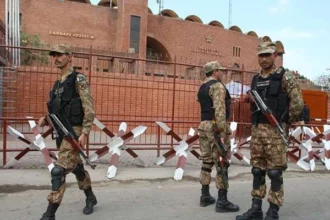
For the families who have lost loved ones to sectarian hatred, these divisions are not abstract theological debates. They are lived tragedies.
These attitudes do not remain confined to private conversations. They shape whom families allow their children to marry, whom neighbours trust, whose funerals people attend and, at their worst, create an environment where hatred grows into discrimination and violence. Sectarian violence rarely begins with a weapon. It begins with the quiet belief that another Muslim is somehow outside the circle of dignity. Every attack on a mosque, every targeted killing and every hate-filled slogan is simply the final expression of an idea that has already taken root in hearts and minds.
I think about my parents when I think about this. Two people from different sects, different backgrounds ,one from a family where the Syed lineage was a source of enormous pride, the other from a background that carries none of that social currency. By the logic of caste and sectarian hierarchy, they should not have worked. They should not have been equal.
But they were. They are. Because the only thing that has ever mattered between them is the kind of people they chose to be ,not the bloodline they were born into.
I am not writing this to say all theological differences are meaningless or that disagreement within Islam does not exist. It does, and scholars far more learned than me have spent centuries engaging with those differences seriously and respectfully. That is legitimate.
What is not legitimate is using those differences as weapons. What is not legitimate is a Muslim looking at another Muslim ,a human being created from the same dust as Hazrat Adam (A.S.) ,and deciding they are lesser. What is not legitimate is teaching children, in homes, in mosques, in the quiet prejudices of everyday life, that their sect alone deserves trust while others should be viewed with suspicion or hostility.
We are so busy policing each other’s faith that we have forgotten to practice our own. Our energy is consumed by asking who is a “true” Muslim while neglecting the qualities the Qur’an repeatedly emphasises ,honesty, justice, mercy, humility and compassion.
Taqwa is a deeply personal thing. You cannot inherit it. You cannot claim it by birth. You cannot measure it in another person. The Prophet ﷺ knew this, which is why he made it the only standard that matters ,not because he was being idealistic, but because he understood something we seem to keep forgetting: only God knows what is in a person’s heart.
We simply do not.
Our faith teaches us that every believer deserves dignity. Yet too often, we deny one another that dignity simply because we belong to different sects or lineages.
My parents built a life on that understanding without ever calling it theology. They simply decided that the person in front of them was a person ,fully, unconditionally, and without qualification.
Before we were Sunni or Shia, Syed or non-Syed, we were children of Adam. If we cannot recognise that shared humanity in one another, then the divisions we defend say far more about us than they ever could about our faith.
We welcome your contributions! Submit your blogs, opinion pieces, press releases, news story pitches, and news features to opinion@minutemirror.com.pk and minutemirrormail@gmail.com