Summary
- More than 100,000 people have lost their lives in Myanmar since the military seized power in February 2021, according to new figures released by the Armed Conflict Location and Event Data project.
- Many joined newly formed pro democracy resistance groups that began fighting alongside ethnic armed organisations that have opposed military rule for decades.
- Rebel groups achieved major gains during a coordinated offensive in late 2023, but the military has since regained momentum with support from China and ceasefire agreements involving some powerful ethnic armed organisations.
More than 100,000 people have lost their lives in Myanmar since the military seized power in February 2021, according to new figures released by the Armed Conflict Location and Event Data project. The milestone reflects the devastating human cost of a civil war that has spread across nearly every part of the country and continues to displace millions while worsening poverty and instability.
The conflict began after the military removed the elected government led by Aung San Suu Kyi and detained the Nobel Peace Prize winner, bringing an end to Myanmar’s decade long democratic transition. Peaceful demonstrations against the takeover were met with a harsh crackdown, prompting thousands of activists to take up arms. Many joined newly formed pro democracy resistance groups that began fighting alongside ethnic armed organisations that have opposed military rule for decades.
According to the latest data from ACLED, at least 100114 people have been killed in violence linked to the conflict over the past five years. Although no official casualty figures have been released, researchers consider Myanmar’s civil war to be the deadliest ongoing conflict in Asia. The monitoring group collects information from media reports and other verified sources to track violence across the country.
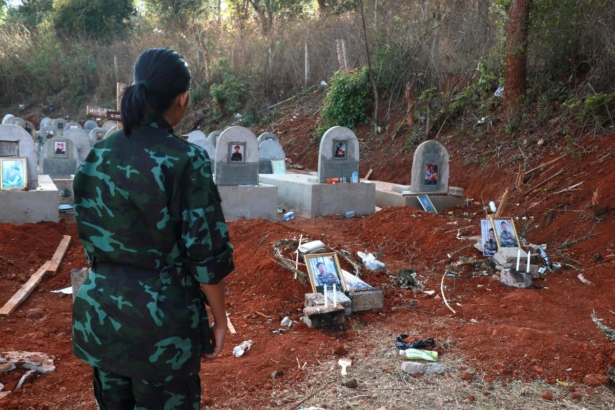
The continuing war has left countless families grieving. Thein Aye Nu, whose husband was killed in an airstrike in Rakhine State last month, said she feels overwhelmed by pain and uncertainty. She described struggling to cope with her loss and said she no longer knows where to direct her anger after years of relentless violence.
Another father from the central Magway region spoke about losing his teenage son, who left home to join pro democracy fighters. He said the family was unable to perform proper Buddhist funeral rites because heavy shelling continued during the burial. The grieving parent said his son’s death had left behind painful memories and a lasting sense of regret.
Myanmar’s political situation has also changed since the coup. Military leader Min Aung Hlaing ruled the country directly for five years before stepping down from the armed forces and assuming the presidency following tightly controlled elections held earlier this year. Opposition groups and international democracy observers rejected the vote, arguing it was neither free nor fair because many areas under rebel control did not participate and the party led by Aung San Suu Kyi was effectively excluded.
The humanitarian situation continues to worsen. The United Nations estimates that more than 3.7 million people have been displaced inside Myanmar while millions more face severe food shortages as the country’s economy deteriorates. Violence varies across different regions. In Yangon, targeted killings occur from time to time, while many rural areas face regular clashes and airstrikes carried out by the military.
Researchers say Myanmar experienced the second highest level of conflict in the world last year after the Palestinian territories. ACLED estimates that more than 1200 armed groups are now involved in the fighting, making it one of the most fragmented conflicts globally. Analysts note that control of territory has shifted repeatedly. Rebel groups achieved major gains during a coordinated offensive in late 2023, but the military has since regained momentum with support from China and ceasefire agreements involving some powerful ethnic armed organisations.
In an effort to strengthen its forces, the military activated compulsory military service in 2024. Former conscripts have described being sent to dangerous front line positions with little preparation, saying many recruits felt they had little chance of survival.
The conflict has also affected neighbouring countries as large numbers of refugees have fled into Thailand and Bangladesh. At the same time, criminal networks have expanded in Myanmar’s border regions through drug trafficking and online scam operations run from heavily guarded compounds. Analysts warn that unless meaningful progress is made towards peace, the humanitarian and security crisis is likely to continue deepening across the region.
We welcome your contributions! Submit your blogs, opinion pieces, press releases, news story pitches, and news features to opinion@minutemirror.com.pk and minutemirrormail@gmail.com