Summary
- LAHORE: With online scams, cyber harassment and digital fraud increasingly threatening internet users, the National Cyber Crime Investigation Agency (NCCIA), Lahore Zone, has decided to expand its awareness campaign to schools, colleges, social organisations and households to help protect citizens, particularly children and students, from online crimes.
- During the sessions, NCCIA Deputy Directors Waqas Saeed and Mudassar Shah highlighted various forms of cybercrime, including online financial fraud, phishing, cyber harassment, identity theft and the unsafe use of social media.
- At UET, NCCIA officials focused on cyber threats affecting young internet users, including online gambling, phishing, financial scams, digital identity misuse and cyberbullying.
LAHORE: With online scams, cyber harassment and digital fraud increasingly threatening internet users, the National Cyber Crime Investigation Agency (NCCIA), Lahore Zone, has decided to expand its awareness campaign to schools, colleges, social organisations and households to help protect citizens, particularly children and students, from online crimes.
The initiative aims to equip people with practical knowledge to recognise digital threats, safeguard personal information and respond effectively to cybercrime incidents.
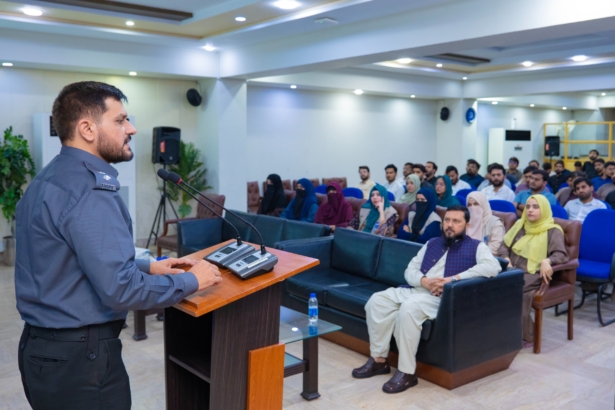
On the directions of Additional Director Lahore Zone Atif Ameer, the NCCIA organised special awareness sessions at Alkhidmat Foundation Pakistan and the University of Engineering and Technology (UET), Lahore, where participants were briefed on emerging cyber threats and ways to stay safe online.
During the sessions, NCCIA Deputy Directors Waqas Saeed and Mudassar Shah highlighted various forms of cybercrime, including online financial fraud, phishing, cyber harassment, identity theft and the unsafe use of social media.
At Alkhidmat Foundation’s central office, participants included Chief Executive Officer Khubaib Bilal, Group Chief Financial Officer Atiq Rashid and Shoaib Hashmi.
In his presentation, Waqas Saeed explained how fraudsters exploit fake websites, suspicious links, fraudulent calls and messages to deceive internet users and steal sensitive financial or personal information.
He advised participants to create strong passwords, enable multi-factor authentication and regularly secure their social media accounts. They were also cautioned against sharing confidential information or responding to suspicious financial requests.
At UET, NCCIA officials focused on cyber threats affecting young internet users, including online gambling, phishing, financial scams, digital identity misuse and cyberbullying.
Students were informed that illegal activities conducted through the internet and social media fall under Pakistani law and may result in legal action.
The officers also explained what victims should do if their accounts are hacked or they become targets of cyberattacks. Recommended steps included changing passwords, disconnecting affected devices from networks, preserving digital evidence and submitting complaints to the relevant authorities.
The speakers urged victims of online fraud and harassment to report incidents promptly rather than remain silent.
Additional Director Atif Ameer said the campaign would be extended to more educational institutions, while special efforts would be made to educate children and parents about online safety at home.
He stressed that public awareness and cooperation were essential to preventing cybercrime, adding that the agency would continue organising awareness activities to promote responsible digital behaviour.
The Alkhidmat Foundation presented a commemorative shield to Deputy Director Waqas Saeed at the conclusion of the session, while Atiq Rashid thanked the NCCIA officers for sharing their expertise.
We welcome your contributions! Submit your blogs, opinion pieces, press releases, news story pitches, and news features to opinion@minutemirror.com.pk and minutemirrormail@gmail.com