Summary
- KATHMANDU: Families in Nepal are turning to a wall covered with photographs of missing and unidentified people as they continue searching for relatives after one of the country’s deadliest natural disasters.
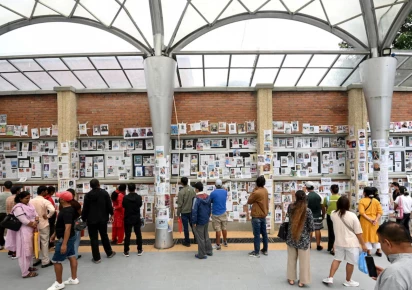
- The wall outside Tribhuvan University Teaching Hospital in Kathmandu has become a painful meeting point for families desperate for information.
- Hundreds of photographs have been placed there, showing people who remain missing as well as bodies recovered during rescue operations but not yet identified.
KATHMANDU: Families in Nepal are turning to a wall covered with photographs of missing and unidentified people as they continue searching for relatives after one of the country’s deadliest natural disasters.
The wall outside Tribhuvan University Teaching Hospital in Kathmandu has become a painful meeting point for families desperate for information. Hundreds of photographs have been placed there, showing people who remain missing as well as bodies recovered during rescue operations but not yet identified.
Sati Sigdel visits the wall every day in search of her cousin, Sweety Paithan. Her photograph was placed on the wall three days ago, but the family has yet to receive any information about her whereabouts.
Paithan is among more than 4,200 people reported missing following catastrophic flooding triggered by the collapse of a glacier. More than 1,200 people have reportedly died in the disaster.
More than a week after the floods, hopes of finding survivors are fading. However, rescue teams continue searching through devastated areas. Authorities fear that around 900 people could still be trapped inside or near hydroelectric power facilities.
On Wednesday evening, families from different parts of mountainous Nepal gathered around the hospital wall. They carefully examined photographs and questioned security guards in the hope that someone might have information about their missing relatives.
Sapna Neupane was among those searching. Her maternal uncle and his family of four remain missing.
She said looking at thousands of photographs was extremely difficult, but families continued coming because they were still hoping for a miracle.
The photographs on the wall vary in size and style. Some are attached to detailed posters carrying names, descriptions and contact numbers. Others contain only handwritten information. Several photographs include distinctive physical features to help families identify their loved ones.
One poster shows a couple marked as missing, while another features a young man with a visible tattoo on his left arm.
For some families, however, the search has ended in grief.
At Pashupatinath Temple, near the Bagmati River, relatives of some missing people have begun performing funeral rituals after failing to find them. Hindu families have been cremating symbolic straw effigies in ceremonies normally performed for those confirmed dead.
Tapindra Prasad Timalsina took part in one such ceremony for his 21-year-old relative, Sabin. As a priest recited prayers, family members poured water over the effigy before it was placed on the funeral pyre.
The ritual reflected the painful decision some families have been forced to make as rescue operations continue.
Yet others refuse to abandon hope.
We welcome your contributions! Submit your blogs, opinion pieces, press releases, news story pitches, and news features to opinion@minutemirror.com.pk and minutemirrormail@gmail.com