Summary
- Authorities said at least 1,050 people had been killed, while nearly 4,000 remained missing.
- Officials said rescuers were particularly focused on several hydropower projects where people could still be trapped inside tunnels and underground facilities.
- Prime Minister Balendra Shah said authorities were shifting greater attention towards restoring communities while continuing to protect people in affected areas.
KATHMANDU: Hopes of finding survivors are rapidly diminishing in Nepal, a week after a massive glacier collapse triggered devastating flash floods across the Himalayan region.
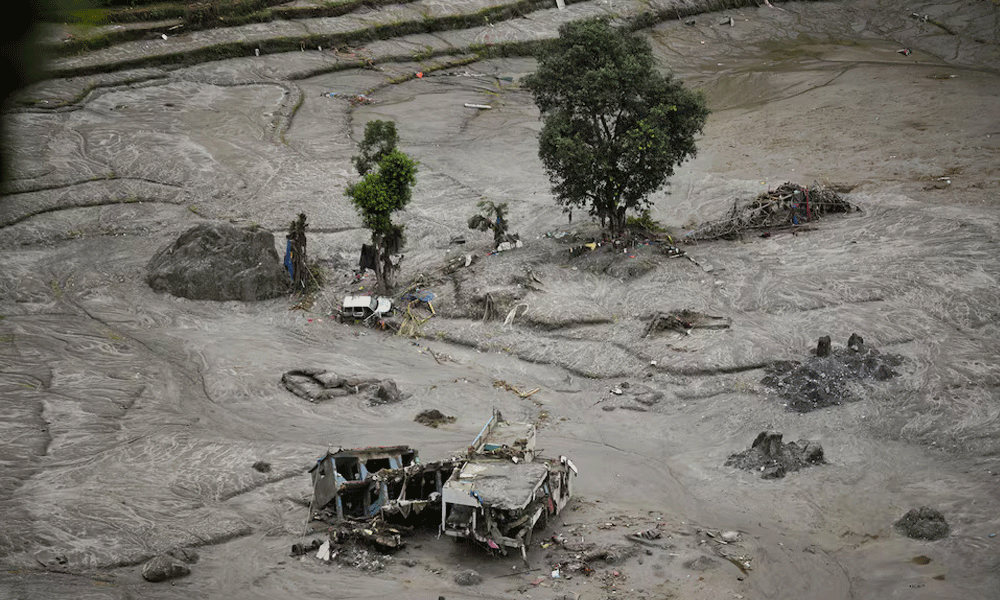
Authorities said at least 1,050 people had been killed, while nearly 4,000 remained missing. Many of those unaccounted for are feared to be trapped beneath huge piles of rocks, mud and building debris swept away by the floods.
The disaster severely affected settlements and valleys near Nepal’s border with China. Rescue teams have been working in difficult terrain to reach isolated communities and search damaged infrastructure.
Officials said rescuers were particularly focused on several hydropower projects where people could still be trapped inside tunnels and underground facilities.
Army spokesperson Raja Ram Basnet said 279 people had so far been rescued from damaged hydropower sites. However, another 639 people remained missing from those areas, with some believed to be inside tunnels.
A senior government emergency official said the passage of time was reducing the likelihood of finding people alive. Rescue teams, however, continued searching affected areas.
The disaster has also caused significant losses across the border in Tibet. China’s official figures remained unchanged, with 16 deaths reported and 546 people still missing.
With the immediate rescue operation becoming increasingly difficult, Nepal’s government has begun preparing for a major rehabilitation and reconstruction effort.
Prime Minister Balendra Shah said authorities were shifting greater attention towards restoring communities while continuing to protect people in affected areas.
The government is also increasing medical support and psychological assistance for survivors who have lost homes, relatives and livelihoods.
The scale of destruction has created another major challenge. A preliminary assessment by the United Nations Development Programme estimated that around 2.2 million tonnes of debris had been left behind.
The debris includes destroyed buildings, rocks, mud and sediment. Clearing roads, homes and public spaces is expected to take considerable time and resources.
Humanitarian agencies have warned that the crisis could develop into a serious public health emergency.
Thousands of displaced people are living in temporary shelters, where overcrowding, contaminated water and damaged healthcare facilities are increasing the risk of disease outbreaks.
UN officials said nearly 3,500 people were staying at 27 displacement sites in some of the worst-hit districts, including Nuwakot and Rasuwa.
Women and children are considered particularly vulnerable as the monsoon season continues. Authorities have therefore increased disease surveillance and emergency health measures in affected communities.
The disaster has also renewed concerns about the growing threat posed by climate change in the Himalayas.
UN officials have warned that the region faces serious risks from future glacial lake outbursts and other glacier-related disasters.
Nepal’s prime minister called for international efforts to determine what caused the massive collapse and how such an enormous volume of water was suddenly released.
Scientists and authorities are increasingly examining the connection between rising temperatures, unstable glaciers and the growing threat of catastrophic floods across the Himalayan region.
We welcome your contributions! Submit your blogs, opinion pieces, press releases, news story pitches, and news features to opinion@minutemirror.com.pk and minutemirrormail@gmail.com