Summary
- Global oil prices surged by more than 4% on Monday after renewed military action between the United States and Iran intensified concerns over the security of energy shipments through the Strait of Hormuz, one of the world’s most important oil transit routes.
- The Strait of Hormuz is considered one of the world’s most critical maritime chokepoints, handling nearly 20% of global oil and liquefied natural gas (LNG) shipments before the conflict escalated earlier this year.
- Although global oil production increased by approximately 4.1 million barrels per day in June following the agreement, supplies remain around 9.4 million barrels per day below levels recorded before the outbreak of hostilities, according to the International Energy Agency’s latest monthly report.
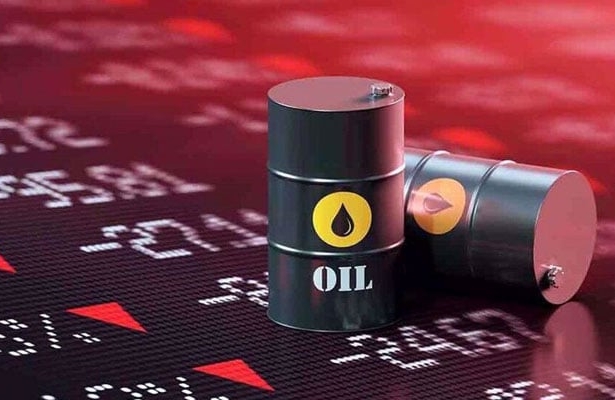
Global oil prices surged by more than 4% on Monday after renewed military action between the United States and Iran intensified concerns over the security of energy shipments through the Strait of Hormuz, one of the world’s most important oil transit routes.
During early trading, Brent crude futures gained $3.10, or 4.08%, reaching $79.11 per barrel by 0325 GMT. Meanwhile, U.S. West Texas Intermediate (WTI) crude rose $2.95, or 4.11%, to $74.36 per barrel, reflecting growing anxiety among investors about potential disruptions to global energy supplies.
The sharp increase followed fresh military exchanges over the weekend. According to the U.S. Central Command, American forces launched another series of precision strikes on multiple targets inside Iran on Sunday. The operation reportedly targeted dozens of military-related sites in response to escalating regional hostilities.
In retaliation, Iran’s Islamic Revolutionary Guard Corps (IRGC) announced on Monday that it had carried out missile attacks against U.S. military bases located in Kuwait and Bahrain, further heightening fears of a wider regional conflict.
The Strait of Hormuz remains at the center of the crisis. U.S. President Donald Trump stated on Sunday that commercial shipping continues to pass through the strategic waterway. However, Iranian authorities had earlier claimed that the strait had been closed after a vessel allegedly traveled along an unauthorized route and was subsequently struck.
The Strait of Hormuz is considered one of the world’s most critical maritime chokepoints, handling nearly 20% of global oil and liquefied natural gas (LNG) shipments before the conflict escalated earlier this year. Any disruption to traffic through the narrow passage has the potential to trigger significant volatility in international energy markets.
Shipping activity has already slowed noticeably. Data from ship-tracking firm Kpler showed that only six vessels crossed the Strait of Hormuz on Sunday, marking the lowest daily traffic recorded in the past five weeks and raising concerns about the safety of commercial shipping in the region.
The renewed violence has also cast doubt over the future of the interim agreement reached between Washington and Tehran last month. The temporary deal had aimed to restore safe navigation through the Strait of Hormuz and create a 60-day window for diplomatic negotiations to bring an end to the conflict.
Although global oil production increased by approximately 4.1 million barrels per day in June following the agreement, supplies remain around 9.4 million barrels per day below levels recorded before the outbreak of hostilities, according to the International Energy Agency’s latest monthly report.
Market analysts believe investors are closely monitoring developments, with concerns growing that the latest escalation could derail diplomatic efforts.
Analysts at ANZ said in a research note that expectations of a swift resolution have weakened after tensions intensified over the weekend, increasing uncertainty across global energy markets.
Meanwhile, IG market analyst Tony Sycamore noted that despite the latest price rally, oil markets appear to believe the recent military actions represent a temporary escalation rather than the complete collapse of the existing ceasefire. However, he cautioned that the situation remains highly uncertain and could change rapidly depending on future developments.
We welcome your contributions! Submit your blogs, opinion pieces, press releases, news story pitches, and news features to opinion@minutemirror.com.pk and minutemirrormail@gmail.com