Summary
- The problems include a chronically narrow tax base, high debt servicing costs, low productivity, inefficient state enterprises, energy sector losses, fragmented fiscal federalism, weak project execution, regulatory uncertainty and public expenditure dominated by recurrent commitments.
- The country risks creating a cycle in which taxes weaken disposable income, expensive energy suppresses manufacturing, duties raise input costs, low investment limits job creation, weak growth reduces the future tax base and new borrowing is then needed to close the resulting fiscal gap.
- He has coauthored with Huzaima Bukhari many books that include, Tax Reforms in Pakistan: Historic & Critical Review, Towards Broad, Flat, Low-rate, and Predictable Taxes (third edition, 2024), Pakistan: Enigma of Taxation, Towards Flat, Low-rate, Broad and Predictable Taxes (revised/enlarged edition of December 2020), Law & Practice of Income Tax, Law , Practice of Sales Tax, Law and Practice of Corporate Law, Law & Practice of Federal Excise, Law & Practice of Sales Tax on Services, Federal Tax Laws of Pakistan, Provincial Tax Laws, Practical Handbook of Income Tax, Tax Laws of Pakistan, Principles of Income Tax with Glossary and Master Tax Guide, Income Tax Digest 1886-2011 (with judicial analysis).
The fiscal challenge is being faced by Pakistan is no longer simply a question of collecting more revenue. The deeper problem is the way revenue is raised, expenditures are managed and borrowing is used. The state continues to extract maximum from already visible taxpayers and consumers through income and sales taxes, customs duties, petroleum levies, electricity charges and numerous indirect imports, at the same time significant parts of the economy remain inadequately taxed.
The result is a fiscal system that can generate revenue without generating confidence. The federal budget for fiscal year (FY) 2026-27 targets Rs. 15.264 trillion in FBR tax revenue, whereas interest payments alone are budgeted at Rs. 8.054 trillion out of total federal expenditure of Rs. 18.771 trillion. In effect, roughly 43 percent of federal spending is absorbed by interest payments before the state begins financing much of its development and service delivery agenda.
The pressure on citizens is intensified by the growing reliance on revenue instruments embedded in everyday consumption. The federal budget for the ongoing fiscal year projects approximately Rs. 1.677 trillion from the petroleum levy alone, alongside other energy and climate related levies. The electricity consumer faces another layer of fiscal and sectoral adjustment through base tariffs, fuel adjustments, quarterly adjustments, debt service charges and federal taxes.
The IMF itself records that Pakistan’s power pricing structure continues to incorporate these components, but the authorities pursue full cost recovery. The economic logic of cost recovery may be defensible, but continuously transferring inefficiency, losses, poor collections, capacity costs and accumulated sector debt to households and productive businesses cannot substitute for restructuring the sector itself.
The fundamental weakness is not taxation alone but unequal taxation. The World Bank has observed that Pakistan continues to collect relatively low revenues from a narrow group of taxpayers and that repeatedly increasing rates on existing instruments would deepen distortions and inequity.
Its reform analysis identifies agriculture, property and retail among the major areas where the tax base can be expanded. It estimates potential revenue gains of around one percent of GDP from agriculture taxation and as much as two percent of GDP from improved land and property taxation, alongside substantial gains from reducing tax expenditures and improving the GST system. The IMF similarly identifies retailers, property owners and agricultural income among sectors that should contribute more effectively to direct taxation.
The disparity is particularly difficult to justify when agriculture contributes more than one fifth of Pakistan’s economy whereas agricultural income remains largely outside effective taxation. Urban property taxation is also exceptionally weak, with the World Bank estimating collections at only about 0.13 percent of GDP, below the levels achieved by many comparable economies.
The objective should not be punitive taxation of subsistence farmers, small shopkeepers or ordinary homeowners. The objective should be to identify high income agricultural earners, large commercial traders, valuable urban property, speculative real estate holdings and businesses operating at scale but outside normal documentation and place them under transparent taxation comparable to taxpayers earning similar incomes elsewhere in the economy.
The tax reform agenda must consequently move away from searching for another withholding tax, another import charge or another levy on an already documented transaction. The more durable approach is a single digital taxpayer view linking federal and provincial data, electronic invoicing, property records, banking information permitted under law, customs information and corporate ownership records.
The GST base should be harmonized between goods and services, provincial agricultural income tax systems should be implemented effectively, property values should move closer to credible market values, unnecessary exemptions should be reduced, and tax expenditures should be disclosed and evaluated annually. The World Bank has specifically warned that fragmented tax responsibilities across jurisdictions increase compliance costs and create opportunities for avoidance.
The government’s own foreign assistance figures provide an important window into the consequences of weak domestic fiscal capacity. The Ministry of Economic Affairs reports provisional foreign economic assistance of US$1.703 billion during July and August 2026, comprising approximately US$1.681 billion in loans and only US$21.86 million in grants. This means roughly 98.7 percent of the reported assistance consisted of borrowing rather than grants. The distinction matters because these inflows support present financing needs but create future repayment obligations that ultimately return to the budget, taxpayers and foreign exchange position.
The composition of that assistance is even more important from a fiscal perspective. The report shows that US$1.218 billion, or about 71.5 percent of total July and August assistance, was classified as non-project financing, while only US$484.56 million, about 28.5 percent, went to project financing. Budgetary support alone amounted to US$929.76 million, while short term Islamic Development Bank financing accounted for US$191.26 million and program financing for US$96.98 million.
The figures do not establish misuse, and budget support can legitimately protect reserves, meet financing needs and preserve macroeconomic stability. They do, however, explain why rising external borrowing does not automatically appear before the public like new roads, power plants, schools, export capacity or other visible national assets. Much of the borrowing is financing the state rather than financing a discrete productive asset.
The project component does contain investments capable of generating tangible economic returns. The detailed schedules identify financing for power transmission, hydropower, irrigation, roads, water and sanitation, Karachi transport and water systems, education, health, social protection, digital development and flood reconstruction.
The later pages show significant IDA financing for health, agriculture, social protection, hydropower, digital economy projects and provincial programs, together with financing for Mohmand Dam and other infrastructure. Similarly, the same report also records US$300 million from UBL Dubai for budgetary support and US$629.76 million through conventional and Islamic Naya Pakistan Certificates during the first two months of the fiscal year. The pattern reflects an economy still dependent on borrowing not merely for transformation but for financing continuity.
The failure of debt to generate proportionate growth is consequently rooted in several structural weaknesses rather than one spending decision. The problems include a chronically narrow tax base, high debt servicing costs, low productivity, inefficient state enterprises, energy sector losses, fragmented fiscal federalism, weak project execution, regulatory uncertainty and public expenditure dominated by recurrent commitments.
The government’s own budget documents acknowledge that tax concessions remain a significant fiscal risk and that interest rate, refinancing and state enterprise risks continue to threaten the fiscal position. The World Bank adds that after fiscal devolution, federal expenditure did not adjust sufficiently while provincial revenues remained weak and more than 80 percent of provincial expenditure in FY2023 was absorbed by recurrent costs.
The continued preference for tariff increases over structural correction in the power sector shows the same policy problem. Pakistan cannot indefinitely ask paying consumers to finance theft, technical losses, poor recoveries, excess capacity and legacy circular debt.
The IMF notes progress but still identifies distribution reform, private participation in DISCOs, competitive electricity markets, transmission improvement and better targeting of subsidies as central to reducing the underlying cost of electricity. The policy objective should therefore be lower system cost first, targeted protection for vulnerable households second and cost reflective tariffs only within a system that is visibly reducing inefficiency.
The consequences of delaying these reforms extend beyond household hardship. The country risks creating a cycle in which taxes weaken disposable income, expensive energy suppresses manufacturing, duties raise input costs, low investment limits job creation, weak growth reduces the future tax base and new borrowing is then needed to close the resulting fiscal gap.
The social consequence is declining confidence in the fairness of the state. The external consequence is equally serious because creditors and investors increasingly distinguish between a country that borrows to build productive capacity and one that repeatedly borrows to finance structural gaps.
The fiscal challenges also sit uneasily beside Pakistan’s emerging strategic ambitions. Pakistan has recently positioned itself as a contributor to regional security through the Makkah Joint Defense Agreement with Saudi Arabia and Türkiye and continuing diplomatic efforts surrounding the United States and Iran. The agreement formally seeks collective deterrence and deeper defense cooperation, and Pakistan is playing an institutional role in its development.
The country has also presented itself as a facilitator of regional dialogue in the Iran and United States. The credibility of a state seeking to become a provider of security and stability, however, ultimately rests on economic resilience. Persistent dependence on external financing limits strategic autonomy, weakens negotiating power and makes foreign policy achievements harder to convert into investment, trade, technology transfer and long-term economic partnerships.
The way forward is not another round of taxation imposed on the same already taxed citizens and businesses. Pakistan needs a fiscal compact based on fairness, documentation and productivity. The highest income agricultural earners should enter an effective income tax regime, valuable property should be taxed on realistic valuations, and large retailers should be documented through digital transactions.
The exemptions should face strict economic tests, loss making state enterprises should be restructured or transferred to competent private management, energy losses should be attacked before tariffs are raised, development projects should be selected according to measurable economic returns and debt should increasingly be linked to projects capable of producing exports, productivity, infrastructure or human capital.
The genuine step towards reforms will be whether Pakistan can gradually replace taxation by pressure with taxation by inclusion, borrowing for survival with borrowing for investment and energy price increases with genuine efficiency gains. The government has an opportunity to convert recent diplomatic visibility and strategic relevance into economic credibility, but that opportunity will narrow if domestic fiscal governance remains unchanged.
The strongest message Pakistan can send to its citizens, investors, development partners and strategic allies is not that it can raise another levy or secure another loan. The stronger message is that it can finally build a state in which those with the greatest capacity contribute fairly, public money produces measurable value, debt creates productive assets and economic growth begins to reduce rather than continually redistribute the burden carried by ordinary Pakistanis.
_____________________________________________________________
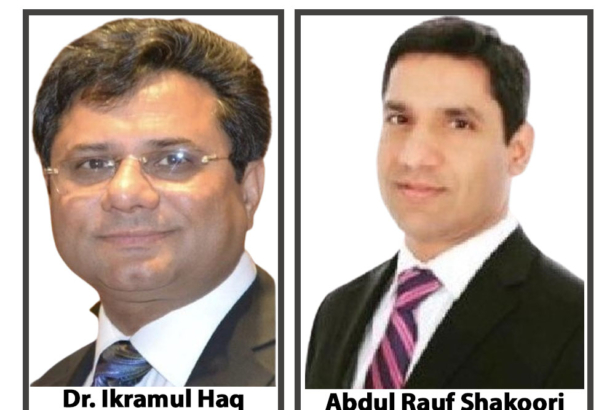
Dr. Ikramul Haq, Advocate Supreme Court, specializes in constitutional, corporate, environment, media, ML/CFT related laws, IT, intellectual property, arbitration and international tax laws. He holds an LLD in tax laws with specialization in transfer pricing. He was full-time journalist from 1979 to 1984 with Viewpoint and Dawn. He served Civil Services of Pakistan from 1984 to 1996.
He established Huzaima & Ikram in 1996 and is presently its chief partner. He studied journalism, English literature and law. He is Chief Editor of Taxation. He is country editor and correspondent of International Bureau of Fiscal Documentation (IBFD) and member of International Fiscal Association (IFA). He is Visiting Faculty at Lahore University of Management Sciences (LUMS) and member Advisory Board and Visiting Senior Fellow of Pakistan Institute of Development Economics (PIDE).
He has coauthored with Huzaima Bukhari many books that include, Tax Reforms in Pakistan: Historic & Critical Review, Towards Broad, Flat, Low-rate, and Predictable Taxes (third edition, 2024), Pakistan: Enigma of Taxation, Towards Flat, Low-rate, Broad and Predictable Taxes (revised/enlarged edition of December 2020), Law & Practice of Income Tax, Law , Practice of Sales Tax, Law and Practice of Corporate Law, Law & Practice of Federal Excise, Law & Practice of Sales Tax on Services, Federal Tax Laws of Pakistan, Provincial Tax Laws, Practical Handbook of Income Tax, Tax Laws of Pakistan, Principles of Income Tax with Glossary and Master Tax Guide, Income Tax Digest 1886-2011 (with judicial analysis).
He is author of Commentary on Avoidance of Double Taxation Agreements, Pakistan: From Hash to Heroin, its sequel Pakistan: Drug-trap to Debt-trap and Practical Handbook of Income Tax. Two books of poetry are Phull Kikkaran De (Punjabi 2023) and Nai Ufaq (Urdu 1979 with Siraj Munir and Shahid Jamal).
He regularly writes columns/article/papers for many Pakistani newspapers and international journals and has contributed over 3500 articles on a variety of issues of public interest, printed in various journals, magazines and newspapers at home and abroad.
_______________________________________________________________
Abdul Rauf Shakoori, Advocate High Court, is a subject-matter expert on AML-CFT, Compliance, Cyber Crime and Risk Management. He has been providing AML-CFT advisory and training services to financial institutions (banks, DNFBPs, Investment companies, Money Service Businesses, insurance companies and securities), government institutions including law enforcement agencies located in North America (USA & CANADA), Middle East and Pakistan.
His areas of expertise include legal, strategic planning, cross-border transactions including but not limited to joint ventures (JVs), mergers & acquisitions (M&A), takeovers, privatizations, overseas expansions, USA Patriot Act, Banking Secrecy Act, Office of Foreign Assets Control (OFAC). Over his career he has demonstrated excellent leadership, communication, analytical, and problem-solving skills and have also developed and delivered training courses in the areas of AML/CFT, Compliance, Fraud & Financial Crime Risk Management, Bank Secrecy, Cyber Crimes & Internet Threats against Banks, E–Channels Fraud Prevention, Security and Investigation of Financial Crimes. The courses have been delivered as practical workshops with case study driven scenarios and exams to ensure knowledge transfer.
His notable publications are Rauf’s Compilation of Corporate Laws of Pakistan, Rauf’s Company Law and Practice of Pakistan and Rauf’s Research on Labour Laws and Income Tax and others.
His articles include: Revenue collection: Contemporary targets vs. orthodox approach, It is time to say goodbye to our past, US double standards, Was Due Process Flouted While Convicting Nawaz Sharif?, FATF and unjustly grey listed Pakistan, Corruption is no excuse for Incompetence, Next step for Pakistan, Pakistan’s compliance with FATF mandates, a work in progress, Pakistan’s strategy to address FATF Mandates was Inadequate, Pakistan’s Evolving FATF Compliance, Transparency Curtails Corruption, Pakistan’s Long Road towards FATF Compliance, Pakistan’s Archaic Approach to Addressing FATF Mandates, FATF: Challenges for June deadline, Pakistan: Combating the illicit flow of money, Regulating Crypto: An uphill task for Pakistan. Pakistan’s economy – Chicanery of numbers. Pakistan: Reclaiming its space on FATF whitelist. Sacred Games: Kulbhushan Jadhav Case. National FATF secretariat and Financial Monitoring Unit. The FATF challenge. Pakistan: Crucial FATF hearing. Pakistan: Dissecting FATF Failure, Environmental crimes: An emerging challenge, Countering corrupt practices .
The recent publication, coauthored by these writes with Huzaima Bukhari is:
Pakistan Tackling FATF: Challenges & Solutions, available at:
https://aacp.com.pk/book-detail/pakistan-tackling-fatf-challenges-and-solutions-35
https://www.amazon.com/dp/B08RXH8W46
We welcome your contributions! Submit your blogs, opinion pieces, press releases, news story pitches, and news features to opinion@minutemirror.com.pk and minutemirrormail@gmail.com