Summary
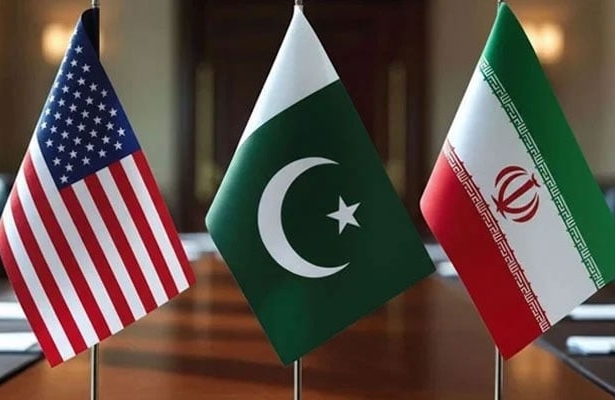
- Security sources have stated that Pakistan is handling a highly complex issue regarding relations between the United States and Iran, emphasizing that Islamabad’s role in the matter is that of a mediator focused on peace and stability.
- Remarks on Kashmir and Regional Security Security sources also commented on the situation in Kashmir, stating that India has failed to achieve results through military means in Indian-administered Kashmir and, according to their claim, has attempted to create instability in Azad Jammu and Kashmir.
- Regarding unrest in Azad Jammu and Kashmir, sources said protests initially began as rights-based movements and that Pakistan’s default approach is dialogue.
Security sources have stated that Pakistan is handling a highly complex issue regarding relations between the United States and Iran, emphasizing that Islamabad’s role in the matter is that of a mediator focused on peace and stability.
According to senior security officials speaking to journalists, the only interest of Field Marshal Asim Munir in any Iran–US understanding is peace and regional stability. They added that the world is gradually recognizing Pakistan’s diplomatic efforts.
Officials said that the “greatest form of conflict is one where victory is achieved without fighting,” adding that Pakistan is not interested in headline diplomacy. They claimed that Pakistan has fulfilled all requirements expected of a mediator, while noting that certain elements continue to attempt to create disruptions. They also pointed to the influence of Israel in international media narratives.
Security sources further stated that several countries—including Qatar, Saudi Arabia, Türkiye, Egypt, and the United Arab Emirates—also deserve credit for contributing to peace efforts. According to them, all these states supported Pakistan’s broader vision for peace. Pakistan maintains separate and balanced relations with Iran, Saudi Arabia, the United States, and other regional actors.
On the visit of Iran’s Foreign Minister Abbas Araghchi to India, officials said it does not affect Pakistan’s position, adding that Islamabad does not view international relations through a narrow lens and is not concerned about who meets whom.
Counterterrorism Operations in Pakistan
Security sources highlighted that Pakistan continues to face internal security challenges, particularly terrorism, which they described as now being driven by modern technology.
Officials said there were 2,170 recorded terrorist incidents, with 64% occurring in Khyber Pakhtunkhwa and 34% in Balochistan.
They added that a total of 32,092 intelligence-based operations have been conducted by 15 June 2026. During these operations, 1,861 terrorists were killed, while 640 individuals—including military personnel, law enforcement officers, and civilians—were martyred.
According to the sources, 862 militants were killed in operations described as “cross-border intelligence-based actions” in Afghanistan, while 999 were killed inside Pakistan.
Remarks on Kashmir and Regional Security
Security sources also commented on the situation in Kashmir, stating that India has failed to achieve results through military means in Indian-administered Kashmir and, according to their claim, has attempted to create instability in Azad Jammu and Kashmir.
They said Pakistan’s first Nishan-e-Haider award recipient came from Kashmir and emphasized that Pakistan’s issue is with “terrorist elements, not the civilian population.” They also noted that a significant proportion of personnel in the armed forces have links to Kashmir.
Officials alleged that political and financial influence has been used in Indian-administered Kashmir and questioned whether local sentiment could be controlled through such means. They further stated that movement and freedom of expression remain restricted in the region.
Regarding unrest in Azad Jammu and Kashmir, sources said protests initially began as rights-based movements and that Pakistan’s default approach is dialogue. They added that authorities were aware of the objectives of groups such as the Joint Awami Action Committee (JAAC) and Baloch Yakjehti Committee (BYC), and claimed these groups have gradually become more exposed.
Officials also stated that the Azad Kashmir government has urged people to reopen businesses, alleging that roadblocks are being imposed by protest groups, which they claim have threatened to burn shops if they reopen. They emphasized that the state continues to pursue a political process and prefers engagement, describing its approach as initially compassionate and later firm if required.
We welcome your contributions! Submit your blogs, opinion pieces, press releases, news story pitches, and news features to [email protected] and [email protected]