

Summary
- Punjab has around 128 million residents, while Balochistan has fewer than 15 million spread across a considerably larger territoryThese demographic differences raise questions about whether the current administrative system can effectively deliver public services, distribute resources and ensure accountability.
- Options for Pakistan Pakistan could consider several administrative models, including dividing existing provinces into smaller units or reorganising governance around population balance and geographical requirements.
- One proposal would establish 16 administrative units, reducing the average population per unit from approximately 60 million to 15 million.
Pakistan’s rapidly growing population has intensified the need to reform its administrative structure, as existing institutions struggle to meet the needs of increasingly large, diverse and unequal communities.
Since 1951, the country’s population has increased more than sevenfold, reaching approximately 260 million. However, Pakistan continues to operate through four main provinces with substantial differences in population, geography and development needs. Punjab has around 128 million residents, while Balochistan has fewer than 15 million spread across a considerably larger territory
These demographic differences raise questions about whether the current administrative system can effectively deliver public services, distribute resources and ensure accountability.
Decentralisation and Governance
Administrative boundaries influence how governments collect taxes, allocate budgets, plan infrastructure and respond to emergencies. When these structures fail to reflect population changes, decision-making can become disconnected from local communities.
Pakistan has introduced reforms to strengthen decentralisation. The 18th Constitutional Amendment transferred significant responsibilities, including health and education, to provincial governments. Meanwhile, the 7th National Finance Commission Award increased the provinces’ share of federal tax revenues from 47.5 per cent to 57.5 per cent.
Despite these developments, many decisions remain concentrated in provincial capitals, creating challenges for remote districts with different economic and social conditions.
Educational disparities illustrate the problem. According to the cited figures, approximately 28 per cent of Pakistani children aged five to 16 are out of school, with the rate standing at 21 per cent in Punjab and 45 per cent in Balochistan.
Lessons from Other Countries
International experience demonstrates that administrative structures can evolve alongside demographic and economic changes. Nigeria expanded from three regions at independence to 36 states, while Indonesia now has 38 provinces. Kenya introduced 47 elected county governments in 2013, giving local administrations constitutionally defined responsibilities and a share of national revenue.
These examples suggest that administrative reform can improve representation when accompanied by appropriate funding and institutional capacity.
However, creating additional administrative units alone does not guarantee better governance. Lebanon’s experience illustrates how numerous municipalities with limited financial resources can struggle to provide effective public services.
Options for Pakistan
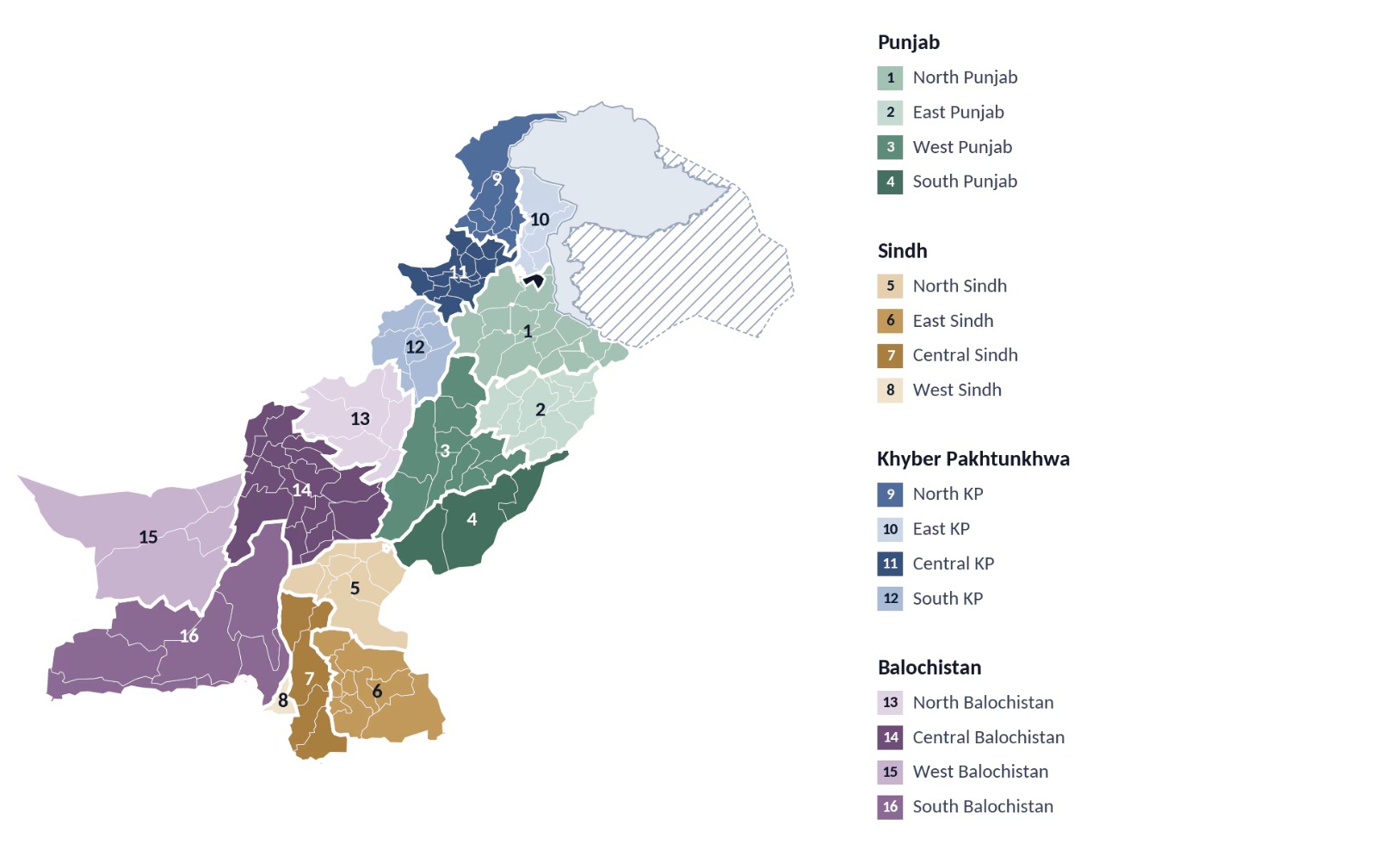
Pakistan could consider several administrative models, including dividing existing provinces into smaller units or reorganising governance around population balance and geographical requirements.
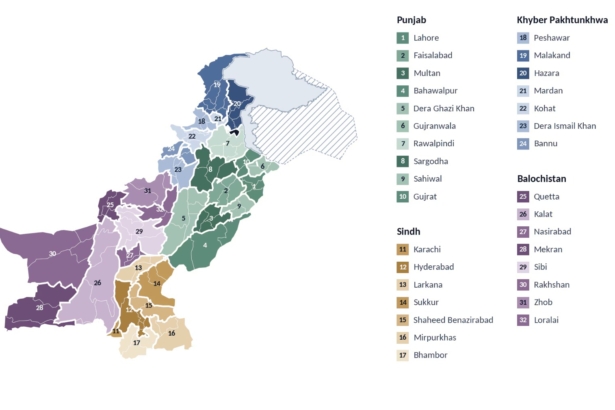
One proposal would establish 16 administrative units, reducing the average population per unit from approximately 60 million to 15 million. More extensive models could create 23 to 25 units or build on existing divisions to establish more than 30 units.
Each option presents different challenges. Fewer units could be easier to finance and administer, while smaller units might bring political leadership, budgets and decision-making closer to citizens. However, additional administrations would also increase transition costs and require trained personnel and effective institutions.
Fiscal Reforms and Accountability
Administrative restructuring must go hand in hand with stronger revenue collection and transparent financial arrangements. Provincial governments collected approximately Rs983 billion in taxes during 2024-25, equivalent to less than 0.9 per cent of gross domestic product, according to the cited figures.
Weak tax enforcement, limited administrative capacity and inadequate information-sharing have also constrained agricultural income tax collection.
Improved automation, coordination with the Federal Board of Revenue and stronger provincial enforcement could help address these weaknesses.
Ultimately, Pakistan needs an administrative system that matches its demographic realities. Smaller units may improve responsiveness, but lasting progress requires adequate funding, clear responsibilities, capable institutions and measurable accountability.
The objective should not simply be to create more provinces or administrative boundaries. It should be to ensure that public resources and decisions reach communities efficiently, strengthening governance, economic resilience and public trust.
We welcome your contributions! Submit your blogs, opinion pieces, press releases, news story pitches, and news features to opinion@minutemirror.com.pk and minutemirrormail@gmail.com