Summary
- He said Deputy Prime Minister and Foreign Minister Ishaq Dar had held separate telephone conversations with his Iranian and Egyptian counterparts on October 18 to discuss regional developments.
- The spokesperson highlighted Maldivian President Dr Mohamed Muizzu’s state visit to Pakistan from October 20 to 22 at the invitation of Prime Minister Shehbaz Sharif.
- The spokesperson also said Pakistan had reaffirmed its commitment to multilateralism and the principles of the UN Charter during a United Nations Day ceremony in Islamabad on October 22.
Pakistan on Friday rejected India’s criticism of resolutions on Jammu and Kashmir adopted by the Organisation of Islamic Cooperation (OIC), describing New Delhi’s remarks as baseless. Islamabad also expressed concern over an eviction notice issued to a historic mosque in the Indian capital, warning against measures that could threaten Muslim places of worship.
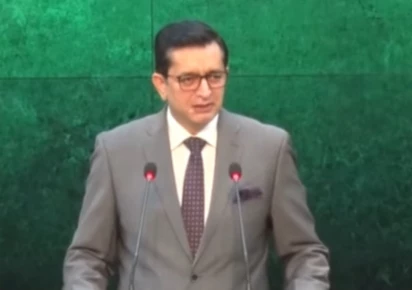
Speaking at the Foreign Office’s weekly briefing, spokesperson Sajjad Haider Khan said the resolutions adopted during the 52nd session of the OIC Council of Foreign Ministers in Baghdad reflected the collective and longstanding position of member states on the Kashmir dispute.
He said the OIC’s stance was based on relevant United Nations Security Council resolutions and rejected India’s unilateral actions aimed at changing the internationally recognised disputed status of Jammu and Kashmir.
According to the spokesperson, the OIC had urged the international community, including the Security Council, to take effective steps to implement the relevant resolutions. He said the organisation’s continued support reaffirmed that Kashmir remained an internationally recognised dispute.
Khan said India should meet its international obligations, respect the fundamental rights of Kashmiris and work towards a peaceful settlement in line with UN resolutions and the wishes of the Kashmiri people.
The Foreign Office spokesperson also expressed serious concern over an eviction notice issued to the Race Course Mosque in New Delhi. He described the mosque as a Waqf property and heritage site facing the threat of demolition under the government led by the Bharatiya Janata Party (BJP).
Khan said the matter reflected what Pakistan viewed as growing Islamophobia in India. He called on the international community to take notice of reported demolitions and threats involving places of worship, particularly those belonging to Muslims.
He also urged Indian authorities to refrain from discriminatory measures and protect religious sites.
During the briefing, a journalist asked about Field Marshal Asim Munir’s visit to Tehran alongside Interior Minister Mohsin Naqvi, particularly amid renewed threats by the US president to resume hostilities. The journalist also sought details about Pakistan’s contacts with Washington and its efforts to reduce tensions.
Khan declined to comment on the specific questions, saying they could be addressed on another occasion. However, he reiterated Pakistan’s commitment to diplomacy, regional coordination and peaceful conflict resolution.
He said Deputy Prime Minister and Foreign Minister Ishaq Dar had held separate telephone conversations with his Iranian and Egyptian counterparts on October 18 to discuss regional developments.
According to the Foreign Office, Dar and Iranian Foreign Minister Abbas Araghchi exchanged views on the evolving regional situation and the OIC ministerial meeting held in Baghdad on October 17 and 18. Dar stressed the need for dialogue and diplomatic engagement to address regional challenges.
In his conversation with Egyptian Foreign Minister Badr Abdelatty, Dar discussed regional developments and Houthi attacks against Saudi Arabia. Both ministers reaffirmed solidarity with the Kingdom and support for its sovereignty, territorial integrity and security.
They also reviewed cooperation under the Regional Four framework, which includes Pakistan, Egypt, Turkiye and Saudi Arabia, and expressed interest in further strengthening coordination on regional matters.
The spokesperson highlighted Maldivian President Dr Mohamed Muizzu’s state visit to Pakistan from October 20 to 22 at the invitation of Prime Minister Shehbaz Sharif.
During the visit, Muizzu met President Asif Ali Zardari and held talks with the prime minister. The two countries reviewed bilateral relations and agreed to broaden cooperation in trade, investment, healthcare, education, tourism, agriculture, defence, maritime security, climate change and people-to-people exchanges.
The visit resulted in the exchange of 20 agreements and memorandums of understanding covering several areas of cooperation.
Khan said it was the first visit by a Maldivian president to Pakistan in 11 years. It also coincided with the 60th anniversary of diplomatic relations between the two countries.
The spokesperson also referred to Dar’s participation in the Shanghai Cooperation Organisation (SCO) Council of Heads of Government meeting in Dushanbe, Tajikistan, on October 19 and 20.
Dar reaffirmed Pakistan’s commitment to the Shanghai Spirit and highlighted the importance of regional connectivity, economic integration and multilateral cooperation.
He called for increased trade and investment among SCO members, stronger financial cooperation and closer business links. He also advocated joint efforts in climate resilience, technological development, energy connectivity, education and cultural exchanges.
President Zardari’s official visit to Germany from October 22 to 24 was another key diplomatic engagement highlighted by the spokesperson. The visit focused on expanding trade, investment and economic cooperation and coincided with the 75th anniversary of diplomatic relations between Pakistan and Germany.
Pakistan also held bilateral political consultations with Lithuania on October 19 and Latvia on October 21. Discussions covered trade, investment, information technology, digital services, education and the movement of students, professionals and businesspeople.
Pakistan and the European Union held their 10th round of bilateral counterterrorism talks in Islamabad on October 22. Both sides discussed regional and international security developments and condemned terrorism in all its forms.
Khan said the EU condemned recent terrorist attacks in Pakistan, expressed solidarity with affected civilians and acknowledged the country’s counterterrorism efforts.
The discussions also addressed violent extremism, terrorist financing, radicalisation and the use of cyberspace by terrorist groups. Both sides raised concerns about security threats linked to terrorism originating from Afghanistan and agreed to hold the next round of talks in Brussels in 2027.
Pakistan, Qatar, Turkiye and Indonesia signed the Badr Multilateral Memorandum of Understanding in Doha on October 21 to enhance cooperation in defence industries.
The agreement covers manufacturing, technical training, research and development, technological innovation and industrial capacity-building.
The spokesperson also said Pakistan had reaffirmed its commitment to multilateralism and the principles of the UN Charter during a United Nations Day ceremony in Islamabad on October 22.
Dar had arrived in Istanbul to attend a meeting of foreign ministers from Pakistan, Saudi Arabia, Turkiye and Egypt. The Regional Four meeting was scheduled to be followed by a gathering involving the same countries alongside the United Kingdom, France and Germany.
Khan said the seven-country meeting would be the first in this format. The discussions were expected to focus on regional developments, diplomatic coordination and efforts to promote peace and stability.
We welcome your contributions! Submit your blogs, opinion pieces, press releases, news story pitches, and news features to opinion@minutemirror.com.pk and minutemirrormail@gmail.com