Summary
- Shehbaz Sharif and Asim Munir: Advancing the Vision of Quaid-e-Azam As Pakistan celebrates its 79th Independence Day, there is a growing sense that the country is witnessing a moment that would have deeply pleased its founding father, Quaid-e-Azam Muhammad Ali Jinnah.
- Prime Minister Muhammad Shehbaz Sharif and Field Marshal Syed Asim Munir are working together to translate that vision into reality.
- The country is standing taller on the world stage, and the partnership between Prime Minister Shehbaz Sharif and Field Marshal Asim Munir has helped project a message of unity and national purpose.
Shehbaz Sharif and Asim Munir: Advancing the Vision of Quaid-e-Azam
As Pakistan celebrates its 79th Independence Day, there is a growing sense that the country is witnessing a moment that would have deeply pleased its founding father, Quaid-e-Azam Muhammad Ali Jinnah.


For decades, Pakistanis have carried Jinnah’s vision of a strong, sovereign and respected Pakistan in their hearts. Today, as Pakistan’s diplomatic and strategic importance continues to grow, that vision appears increasingly visible on the international stage.


Prime Minister Muhammad Shehbaz Sharif and Field Marshal Syed Asim Munir are working together to translate that vision into reality. Their close coordination has provided Pakistan with a sense of direction, unity and confidence at a time when the world itself is undergoing profound geopolitical change.
The Pakistan of today is increasingly being recognised as a country whose voice matters.
Jinnah envisaged a Pakistan that would not merely exist on the world map, but would stand with dignity, sovereignty and confidence among the nations of the world. His vision was of a country capable of determining its own destiny and making a meaningful contribution to international affairs.
There is a powerful resonance between that vision and the Pakistan we are witnessing today.
Jinnah once spoke of a future in which the world’s decisions would be influenced by Pakistan. For many years, that aspiration seemed distant. But recent developments suggest that Pakistan is moving closer to that position.
From facilitating dialogue between major powers to strengthening strategic partnerships with Türkiye, Saudi Arabia and China, Pakistan is demonstrating that it can engage with countries across different geopolitical blocs while protecting its own national interests.
The country’s ability to host US-Iran talks is particularly significant. In an increasingly polarised world, being trusted to provide a platform for dialogue is itself an indication of diplomatic relevance.
Pakistan’s relationship with China remains a cornerstone of its foreign policy, while ties with Türkiye and Saudi Arabia continue to deepen. At the same time, engagement with the United States has entered a phase in which Washington is once again recognising Pakistan’s strategic importance.
The positive remarks by US President Donald Trump about Prime Minister Shehbaz Sharif and Field Marshal Asim Munir have also attracted international attention.
Perhaps most importantly, Pakistan is projecting itself with greater confidence.
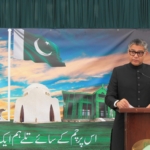
The scenes in Islamabad surrounding the inauguration of Yadgar-e-Fateh, commemorating the sacrifices and achievements associated with Operation Bunyan-un-Marsoos, captured this changing mood. Political and military leaders standing together alongside the families of martyrs and veterans conveyed a powerful message that Pakistan’s strength lies in unity.
As an overseas Pakistani who has lived in the West for more than two decades, this transformation is particularly striking. I have witnessed different phases of Pakistan’s image abroad. There were years when Pakistan was frequently discussed through the prism of instability, terrorism and political uncertainty.
Today, the conversation is different.
Pakistan is increasingly being discussed in terms of its strategic importance, diplomatic role, defence capabilities, regional influence and economic potential.
This should make every Pakistani proud—but it should also make us more responsible.
International recognition alone cannot build a prosperous Pakistan. The next challenge is to convert diplomatic and strategic gains into economic prosperity, stronger institutions, better education, employment opportunities and an improved quality of life for ordinary Pakistanis.
That is where Jinnah’s vision must ultimately lead.
At 79, Pakistan has every reason to celebrate. The country is standing taller on the world stage, and the partnership between Prime Minister Shehbaz Sharif and Field Marshal Asim Munir has helped project a message of unity and national purpose.
But this is not the end of the journey.
It is the beginning of a new chapter.
Jinnah gave Pakistan a dream. The responsibility of this generation is to turn that dream into a lasting reality.
Pakistan Zindabad.
We welcome your contributions! Submit your blogs, opinion pieces, press releases, news story pitches, and news features to opinion@minutemirror.com.pk and minutemirrormail@gmail.com