Summary
- Since the 18th National Congress of the Communist Party of China (CPC), the CPC Central Committee with General Secretary Xi Jinping at its core has put forward a series of new ideas, new thinking and new strategies centered on the major issue of the era—what kind of long-term governing Marxist party to build and how to build it—giving rise to Xi Jinping Thought on Party Building.
- Practice since the 18th National Congress of the Communist Party of China (CPC) has fully demonstrated that the historic achievements and transformative changes in the cause of the Party and the country are fundamentally attributable to the steady guidance of General Secretary Xi Jinping as the core of the CPC Central Committee and of the Party as a whole, and to the scientific guidance of Xi Jinping Thought on Socialism with Chinese Characteristics for a New Era.
- This fully demonstrates the CPC’s capacity to mobilize resources to accomplish major undertakings, and embodies two core principles highlighted in Xi Jinping Thought on Party Building, which is “adhering to the leadership by the CPC as the defining feature of socialism with Chinese characteristics” and “upholding the centralized, unified leadership of the Party Central Committee.
Since the 18th National Congress of the Communist Party of China (CPC), the CPC Central Committee with General Secretary Xi Jinping at its core has put forward a series of new ideas, new thinking and new strategies centered on the major issue of the era—what kind of long-term governing Marxist party to build and how to build it—giving rise to Xi Jinping Thought on Party Building.
As an important component of Xi Jinping Thought on Socialism with Chinese Characteristics for a New Era, Xi Jinping Thought on Party Building carries significant practical relevance and far-reaching guiding significance for strengthening the Party and the nation.
It explicitly sets forth the “14 commitments”, namely: adhering leadership by the CPC as the defining feature of socialism with Chinese characteristics; upholding the centralized, unified leadership of the Party Central Committee; exercising full and rigorous Party self-governance; staying true to the Party’s original aspiration and founding mission; taking strengthening the Party politically as the overarching principle; building cohesion and inner strength with the Party’s latest theory; forging strong Party spirit; improving the organizational system to ensure vertical coherence and effective implementation; cultivating high-caliber officials capable of shouldering the mission of national rejuvenation; making sustained and effective efforts to improve conduct; governing the whole Party with strict discipline; taking integrated steps to ensure that officials do not have the audacity, opportunity or desire to conduct corruption; governing the Party through systems and regulations, and ensuring that the political responsibility for Party self-governance is fulfilled.
The “14 commitments” represent a concentrated summary of General Secretary Xi Jinping’s landmark, guiding new ideas and strategies on party building in the new era. They serve as the fundamental guideline for the CPC in strengthening party building, as well as a Chinese approach for political parties around the world to enhance self-improvement and state governance.
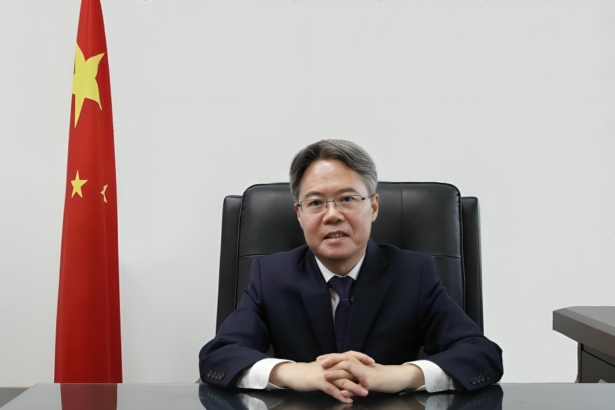
China and Pakistan are ironclad friends and all-weather strategic cooperative partners. We are ready to deepen exchanges and mutual learning with Pakistan on party building and governance, work together to improve people’s well-being and promote prosperity and development, and accelerate the building of an even closer China-Pakistan community with a shared future in the new era.
We must put people first and ensure that China-Pakistan cooperation delivers greater benefits to the two peoples. The CPC has always upheld building the Party for the public good and exercising state power for the people. Xi Jinping Thought on Party Building explicitly stresses “remaining true to the original aspiration and founding mission”, namely to seek happiness for the Chinese people and rejuvenation for the Chinese nation.
Back in 2012, General Secretary Xi Jinping pointed out that our Party is dedicated to serving the people wholeheartedly; the people’s desire for a better life is the goal we strive to work for. Guided by this profound devotion to the people, in the well-known poverty elimination campaign in China, General Secretary Xi Jinping set a shining example through personal commitment. He conducted more than 50 field research visits on poverty alleviation, covering all 14 contiguous poor regions across China. Based on thorough investigations, he put forward and applied the concept of targeted poverty alleviation, setting a brilliant example of integrating the power of truth with moral integrity. Under his leadership, China won the poverty alleviation campaign, built a moderately prosperous society in all respects, and embarked on a new journey of advancing national rejuvenation and building a great modern socialist country through Chinese modernization.
Practice since the 18th National Congress of the Communist Party of China (CPC) has fully demonstrated that the historic achievements and transformative changes in the cause of the Party and the country are fundamentally attributable to the steady guidance of General Secretary Xi Jinping as the core of the CPC Central Committee and of the Party as a whole, and to the scientific guidance of Xi Jinping Thought on Socialism with Chinese Characteristics for a New Era.
Under the strong leadership of General Secretary Xi Jinping and the Party Central Committee, over 3 million first secretaries of CPC village committees and village-based officials, together with nearly 2 million township officials and millions of village officials, fought in unison to eliminate absolute poverty. This fully demonstrates the CPC’s capacity to mobilize resources to accomplish major undertakings, and embodies two core principles highlighted in Xi Jinping Thought on Party Building, which is “adhering to the leadership by the CPC as the defining feature of socialism with Chinese characteristics” and “upholding the centralized, unified leadership of the Party Central Committee. It is precisely because the CPC always puts people first and regards delivering people’s wellbeing as its paramount achievement that it enjoys enduring popular support and stands as the most reliable backbone for the Chinese people.
Beyond seeking happiness for the Chinese people and rejuvenation for the Chinese nation, the CPC also strives for progress for humanity and the common good for the world. As General Secretary Xi Jinping noted, we Chinese not only aspire for good living for ourselves, but also hope people in other parts of the world lead a decent life. This is fully reflected in the development of China Pakistan relations in the new era.
General Secretary Xi Jinping has always been concerned about and supported Pakistan’s national development and the improvement of people’s livelihoods. He and Pakistani leaders established the all-weather strategic cooperative partnership between the two countries and reached important consensus on building an even closer China-Pakistan community with a shared future in the new era. General Secretary Xi Jinping has stressed that China’s friendly policy toward Pakistan is always oriented toward all Pakistani people, the planning and layout of the China-Pakistan Economic Corridor (CPEC) should take into account all regions of Pakistan, so that the fruits of development can benefit all the Pakistani people.
To date, CPEC has brought in over 25.9 billion US dollars in direct investment, created more than 260,000 jobs, added over 8,000 MW of power generation capacity, built 510 kilometers of highways and 886 kilometers of core national power transmission networks. It has injected strong momentum into Pakistan’s economic and social development and improvement of people’s livelihood, served as a powerful exemplar for high-quality Belt and Road cooperation, and become a vivid embodiment of the China-Pakistan community with a shared future.
This year marks the 75th anniversary of the establishment of the diplomatic relations between China and Pakistan. General Secretary Xi Jinping has reached important new consensus with President Asif Ali Zardari and Prime Minister Shehbaz Sharif on advancing bilateral cooperation, which our two sides are working earnestly to implement.
Less than two weeks ago, we visited the industrial park in Faisalabad. We were pleased to learn that 39 Chinese private enterprises operate there, most of them soundly run and profitable, thanks to the enabling business environment fostered by Pakistan. These enterprises also give back actively to local communities. Five ceramic enterprises alone pay nearly 20 million US dollars in annual taxes and provide more than 5 000 local jobs. There are many such inspiring examples of mutual commitment delivering tangible benefits for our peoples. We stand ready to work with Pakistan to fully apply the people-centered philosophy of development, advance both major signature projects and “small and beautiful” livelihood projects, and march hand-in-hand toward greater people’s wellbeing and common prosperity.
To better strengthen practical cooperation and benefit the two peoples, we must pursue mutual learning and continuously deepen exchanges on party building and governance. As changes unseen in a century accelerate and the world enters a new period of turbulence and transformation, humanity is once again at a crossroads about where to go. Political parties worldwide face the common challenge of “what kind of political party to build and how to build it”. In this turbulent world, the CPC stands firm on the right side of history and on the side of human civilization and progress. Through unremitting struggle, it has profoundly reshaped global development trends and landscape, led the people in advancing Chinese modernization and created a new form of human advancement.
In this great endeavor, Xi Jinping Thought on Party Building embraces a global vision, linking the CPC’s self-improvement to the future of humanity and contributing Chinese wisdom to global party governance. In particular, Xi Jinping Thought on Party Building stays committed to self-confidence, self-reliance, upholding fundamental principles and breaking new ground. It has opened new pathways for addressing internal challenges through one’s own efforts, regarding “exercising full and rigorous Party self-governance” as the strategic policy for party building in the new era, advancing the coordinated efforts to ensure officials “do not have the audacity, opportunity or desire to conduct corruption” with the sense of mission that “failing several corrupt officials rather than failing 1.4 billion”, continuously promoting the Party’s self-reform with the tenacity of “always being on the road”, and guiding a great social revolution through a great self-revolution, ensuring that the Party always remains the strong leadership core for the cause of socialism with Chinese characteristics.
It is precisely because Xi Jinping Thought on Party Building demonstrates noble values and distinctive intellectual strength that it offers valuable reference for political parties especially in developing countries to strengthen themselves and independently explore paths toward modernization, thus contributing to progress in human political civilization. An increasing number of political parties and statesmen around the world are asking: “Why is the CPC capable?”
General Secretary Xi Jinping has pointed out that political parties in different countries should enhance mutual trust, strengthen communication and close coordination, and explore to build a new type of party-to-party relationship based on a new type of international relations, featuring seeking common ground while shelving differences, mutual respect, and mutual learning. They should establish a network of international party-to-party exchanges and cooperation in various forms and at multiple levels, pooling a mighty force for building a community with a shared future for humanity.
We are pleased to see that exchanges and mutual learning between the CPC and political parties in Pakistan continue to deepen. Our two sides have signed MOUs on inter-party exchanges and cooperation, established the CPEC Political Parties Joint Consultation Mechanism, and convened the China-Pakistan Political Parties Forum. Each year, China invites multiple groups of Pakistani political party representatives to visit and attend conferences in China, and continues to support “small and beautiful” livelihood projects in Pakistan through platforms such as the Silk Road Workshop.
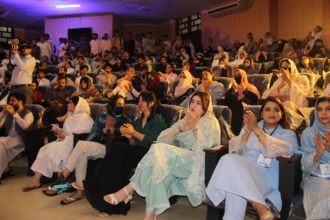
In this milestone year of the 75th anniversary of diplomatic relations, a high-level Pakistani political party delegation visited Hubei in May, making positive contributions to advancing sub-national cooperation. Also in May, the second China-Pakistan Political Parties Forum and Meeting of CPEC Political Parties Joint Consultation Mechanism was held, drawing leaders from 12 major Pakistani political parties. Broad consensus was reached on consolidating traditional friendship and advancing practical cooperation. On August 12th, we hosted the Symposium on Xi Jinping Thought on Party Building, putting us at the forefront of the CPC’s global exchanges with political parties on party building and governance experience.
We want to extend our sincere gratitude to Pakistani political parties, and stand ready to continue to implement the important consensus reached by our leaders, further expand “political party plus” cooperation on the existing basis, and carry forward our ironclad China-Pakistan friendship through successive rounds of inter-party mutual learning.
We will also continue to deepen exchanges on party building and governance with Pakistani political parties, inject fresh impetus into China-Pakistan all-weather strategic cooperation, enable new achievements in Chinese modernization to bring new opportunities for our Pakistani brothers and sisters, and accelerate the building of an even closer China-Pakistan community with a shared future in the new era.