Summary
- Over the subsequent decade, the North African nation split into two competing power centers: the internationally recognized Government of National Unity (GNU) based in Tripoli to the west, and the House of Representatives aligned with Field Marshal Khalifa Haftar’s Libyan National Army (LNA) in the east.
- Saudi Arabia, which signed a mutual defense pact with Pakistan last year, is lending its support.
- Simultaneously, Qatar and Türkiye, two nations that have historically been the strongest financial and military lifelines for the western-based Tripoli government, reportedly encouraged Pakistan to take on the mediator mantle.
A quiet but highly significant diplomatic initiative has emerged from South Asia, as Pakistan has covertly stepped into the role of a mediator. Pakistan is trying to connect Libya’s long-divided eastern and western factions. This unpublicized peace push, if successful, could elevate Islamabad’s international standing and mark a major shift in its foreign policy trajectory towards active global conflict resolution.
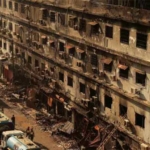
Libya has been fractured since the 2011 NATO-backed uprising that overthrew Muammar Qadhafi. Over the subsequent decade, the North African nation split into two competing power centers: the internationally recognized Government of National Unity (GNU) based in Tripoli to the west, and the House of Representatives aligned with Field Marshal Khalifa Haftar’s Libyan National Army (LNA) in the east. Multiple international attempts to unify the country have stalled, leaving Libya in a state of fragile, fractured peace. According to insider reports, Pakistan’s mediation track actually began late last year after both Libyan factions independently approached Islamabad, requesting its neutral intervention. While the initiative was kept strictly under wraps for months, the geopolitical alignment behind it is vast. Sources indicate that the United States is fully aware and deeply involved in supporting Pakistan’s role, viewing it as a viable complement to Washington’s own diplomatic pushes in North Africa.
Furthermore, regional heavyweights are backing the play. Saudi Arabia, which signed a mutual defense pact with Pakistan last year, is lending its support. Simultaneously, Qatar and Türkiye, two nations that have historically been the strongest financial and military lifelines for the western-based Tripoli government, reportedly encouraged Pakistan to take on the mediator mantle. This unique cross-alliance backing positions Pakistan as one of the few global actors capable of talking to all sides without carrying the heavy baggage of direct regional intervention.
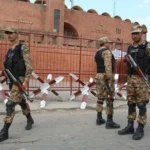
The scope of Pakistan’s involvement isn’t strictly limited to diplomatic talk; it is heavily intertwined with defense diplomacy. Last month, Pakistan’s Chief of Defence Forces, Field Marshal Asim Munir, hosted Saddam Haftar who’s powerful Libyan military commander and son of eastern strongman Khalifa Haftar in Rawalpindi. Strikingly, just days after his meetings in Pakistan, Saddam Haftar flew to Washington D.C. for a high-profile huddle with US Secretary of State Marco Rubio. The State Department later released a statement noting that Rubio welcomed efforts to mend Libyan divisions, hinting at the quiet choreography taking place behind closed doors.
Islamabad has also been navigating complex military defense talks with the eastern-based LNA. Reports suggest discussions have included the potential sale of Pakistani-manufactured JF-17 Thunder fighter jets and Super Mushshak trainer aircraft, a bold move considering the active United Nations arms embargo on Libya. However, Pakistan has balanced this by keeping its doors wide open to the rival western GNU, which recently requested its own direct line of communication with Pakistani leadership. This secret foray into North African politics is not an isolated event for Pakistan. It follows a highly praised mediation effort earlier this year between the United States and Iran, where Pakistani diplomats successfully managed a backchannel that earned repeated commendations from the Trump administration.
While official bodies including Pakistan’s Foreign Office, the military’s media wing (ISPR), and the foreign ministries of the US, Saudi Arabia, and Libya have yet to publicly comment, the underlying strategy is clear. By positioning itself as an intermediary backed by Washington, Riyadh, and Ankara alike, Islamabad is attempting to transition from a nation frequently consumed by regional security crises into an active, stabilizing force on the global stage.
We welcome your contributions! Submit your blogs, opinion pieces, press releases, news story pitches, and news features to opinion@minutemirror.com.pk and minutemirrormail@gmail.com