Summary
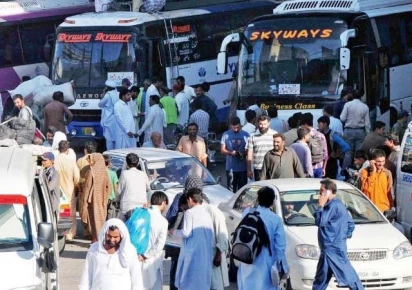
- KARACHI: Pakistan needs to shift its transport policy towards public buses and other affordable public transport options to reduce commuting costs, lower carbon emissions and strengthen local manufacturing, experts say, as a new mobility index highlights the limited share of public transport in the country’s urban transport system.
- The BusCaro and Pakistan & Counting Mobility Index, launched on Thursday, revealed that public transport accounts for less than 0.5% of the index’s overall vehicle-based weight.
- The findings have renewed debate over Pakistan’s transport priorities, particularly as private cars and electric vehicles (EVs) receive considerable attention despite limited car affordability and inadequate public transport facilities in major cities.
KARACHI: Pakistan needs to shift its transport policy towards public buses and other affordable public transport options to reduce commuting costs, lower carbon emissions and strengthen local manufacturing, experts say, as a new mobility index highlights the limited share of public transport in the country’s urban transport system.
The BusCaro and Pakistan & Counting Mobility Index, launched on Thursday, revealed that public transport accounts for less than 0.5% of the index’s overall vehicle-based weight. The findings highlight the dominance of privately owned motorcycles, cars and rickshaws in Pakistan’s transport landscape.
According to the index, the average cost of travelling one kilometre across eight transport modes declined by 7.9% between May and September, falling from Rs10.48 to Rs9.65. However, privately owned motorcycles, cars and rickshaws account for 98.7% of the index’s total weight, leaving public transport with a comparatively small representation.
The findings have renewed debate over Pakistan’s transport priorities, particularly as private cars and electric vehicles (EVs) receive considerable attention despite limited car affordability and inadequate public transport facilities in major cities.
Experts argue that buses offer a more practical solution for a country where only around 22 out of every 1,000 people can afford a car. Expanding affordable bus services could provide mobility to a larger section of the population while reducing dependence on private vehicles and easing pressure on urban roads.
Auto expert Mashood Ali Khan emphasised the importance of developing efficient public transport networks in major cities and industrial centres. Referring to examples from Europe, China and India, he said successful transport systems required carefully planned routes that served both residents and businesses.
He noted that developed countries had invested in transport infrastructure, including underground networks and flyovers, to make commuting more convenient, efficient and environmentally friendly. Pakistan had also made progress in developing public transport systems, particularly in Punjab, followed by Islamabad and Sindh, but expansion needed to accelerate.
Khan called for government policies and incentives to promote public transport and facilitate the transition towards electric bus fleets. He said services must become cleaner, more accessible and user-friendly to encourage commuters to leave their private vehicles at home.
He also proposed a coordinated national strategy under which all four provinces would assess their bus transport requirements. The federal government could then combine these assessments into a long-term plan addressing the country’s public transport needs.
Rather than relying heavily on imported buses, Pakistan should engage established original equipment manufacturers to establish electric bus production facilities locally. Developing domestic manufacturing capacity could reduce dependence on imported vehicles and components while creating employment opportunities and supporting industrial growth.
However, such an initiative would require reliable estimates of provincial demand, appropriate financing and the infrastructure needed to operate electric buses effectively.
Khan identified poor infrastructure as a major obstacle, particularly in Karachi, the country’s economic hub. Deteriorating roads and inadequate transport facilities have contributed to an uncomfortable commuting experience. He also highlighted communication gaps between federal and provincial governments, saying delays in coordination could increase project costs.
He stressed that public transport should be treated as a basic necessity and developed through a time-bound national policy rather than disconnected provincial initiatives.
Khan estimated that Pakistan’s existing bus fleet stood at around 2,000, while annual demand could reach between 18,000 and 20,000 buses, potentially creating significant opportunities for local manufacturers.
The mobility index also showed a contrasting trend in transport costs. Fuel-only running costs for private motorcycles, cars and rickshaws declined by 7.5% between May and September. Meanwhile, public transport costs increased by 77%, rising from Rs1.22 to Rs2.16 per seat-kilometre.
This increase largely reflected the restoration of fares following a period of free travel on Punjab’s Metro Bus, Bus Rapid Transit and Orange Line services, rather than simply higher operating expenses.
The index covers 36.7 million vehicles, including 30.3 million motorcycles and 5.1 million cars, based on the Pakistan Economic Survey 2024-25.
The findings underline the need for a transport strategy that places greater emphasis on affordable public mobility, infrastructure development and domestic manufacturing.
We welcome your contributions! Submit your blogs, opinion pieces, press releases, news story pitches, and news features to opinion@minutemirror.com.pk and minutemirrormail@gmail.com