
Summary
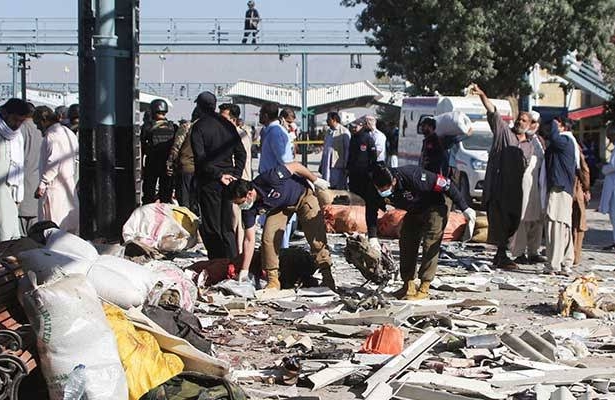
- ISLAMABAD: Pakistan’s decades-long struggle against terrorism has entered a new phase as security and law-enforcement agencies continue intelligence-based operations against militant networks, while federal institutions are being strengthened to improve the country’s counter-terrorism capacity.
- They highlight an ongoing national security challenge that has evolved over decades, requiring intelligence-led policing, stronger institutions, judicial oversight and sustained coordination among federal and provincial agencies.
- For Pakistan, the central challenge remains the same: preventing militant networks from exploiting the country’s security environment while protecting citizens, economic activity and public institutions.
ISLAMABAD: Pakistan’s decades-long struggle against terrorism has entered a new phase as security and law-enforcement agencies continue intelligence-based operations against militant networks, while federal institutions are being strengthened to improve the country’s counter-terrorism capacity.
Sources familiar with security developments told Minute Mirror that the present wave of counter-terrorism operations should be viewed against the backdrop of Pakistan’s prolonged involvement in regional conflicts and its heavy human and economic losses caused by terrorism.
Pakistan played a frontline role during the Soviet-Afghan war of the 1980s, hosting millions of Afghan refugees and supporting efforts against the Soviet intervention. The conflict later contributed to the emergence and expansion of militant networks in the region, leaving Pakistan to deal with serious security challenges in subsequent decades.
According to official Pakistani estimates cited over the years, terrorism has claimed tens of thousands of lives in the country, including civilians, soldiers and police personnel, while the economy and public infrastructure have also suffered substantial losses.
The current security environment has again brought the issue of militant infiltration and foreign-linked networks into focus.
In Punjab, the Counter-Terrorism Department conducted 158 intelligence-based operations and arrested 23 suspected terrorists, according to a CTD spokesperson. The department said a suspect allegedly linked to India’s Research and Analysis Wing (RAW) was arrested in Sahiwal. Security teams also recovered explosives, seven improvised explosive devices, 26 detonators and 48 feet of fuse wire. The CTD said 22 cases were registered in connection with the arrests.
In Karachi, a joint intelligence-based operation by the CTD and a federal intelligence agency in the Ghazi Goth area of Manghopir resulted in the deaths of two suspected militants, according to officials. The CTD said the suspects were associated with Fitna al-Hindustan and were allegedly planning terrorist activity in the city. A Kalashnikov, 9mm pistol and motorcycle were recovered, while further investigation was launched to identify their associates and wider network.
Alongside field operations, Pakistan is expanding the institutional capacity of its federal law-enforcement agencies. The Federal Investigation Agency recently posted 127 newly appointed officers, comprising 65 Sub-Inspectors and 62 Assistant Sub-Inspectors, across its formations in several cities. The new officers are being placed under a four-month structured training and mentorship programme before receiving independent investigative responsibilities.
The developments come amid broader efforts under Interior Minister Mohsin Naqvi and FIA Director General Dr Usman Anwar to strengthen investigation, manpower, training and coordination among federal security institutions.
The establishment and operational expansion of the National Cyber Crime Investigation Agency, along with continued strengthening of the FIA, Anti-Narcotics Force, Rangers and other attached institutions, reflects the changing nature of security threats, which increasingly extend beyond conventional militancy into cybercrime, terror financing, recruitment and cross-border networks.
The latest operations therefore represent more than isolated arrests or encounters. They highlight an ongoing national security challenge that has evolved over decades, requiring intelligence-led policing, stronger institutions, judicial oversight and sustained coordination among federal and provincial agencies.
For Pakistan, the central challenge remains the same: preventing militant networks from exploiting the country’s security environment while protecting citizens, economic activity and public institutions.
We welcome your contributions! Submit your blogs, opinion pieces, press releases, news story pitches, and news features to opinion@minutemirror.com.pk and minutemirrormail@gmail.com